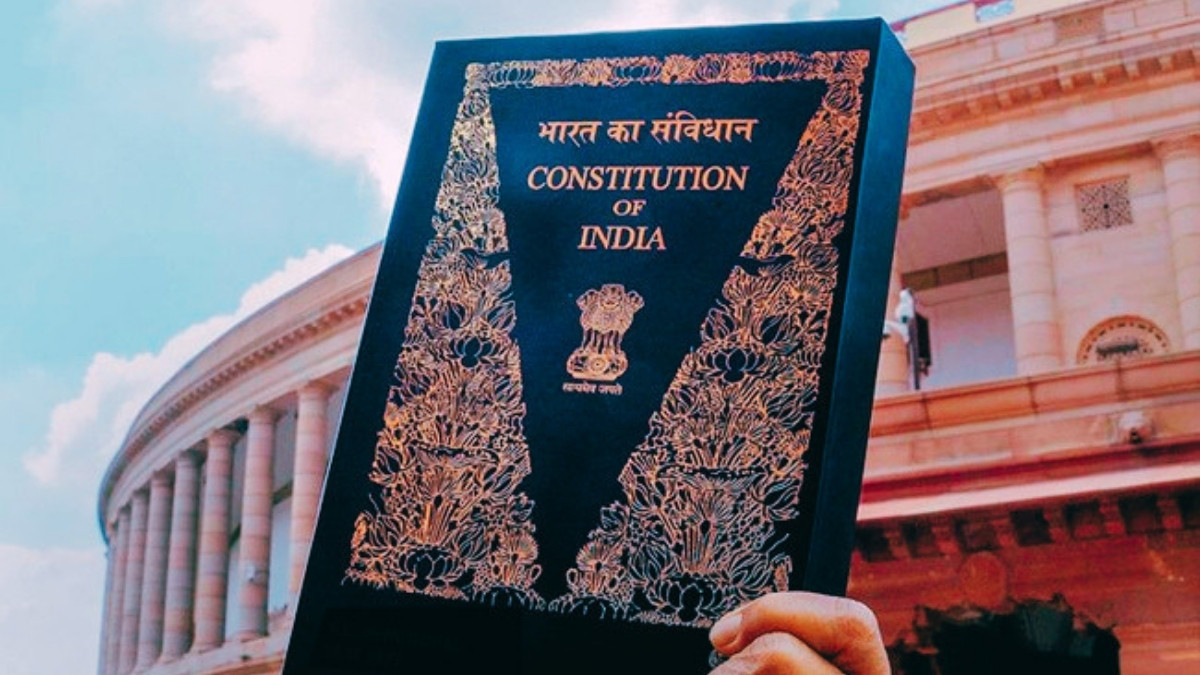
The Indian constitution is the supreme law in India. It outlines the duties of the governing body and provides fundamental rights to all citizens.
According to the Constitution of India, the current constitution of India has 448 articles that are divided into 25 parts.
Study of the key Articles of the Indian constitution allows students to gain insights into the functioning of democracy in India and how citizens are protected through the constitution.
These articles are often posed in competitive examinations like UPSC, SSC, IBPS, CDS, NDA, and other state level PSC examinations.
11 Most Important Articles of the Indian Constitution
The 11 most significant Articles of the Indian Constitution include Fundamental Rights, Government, Duties of Citizens, Powers of President, Judiciary, and Constitutional Amendments.
They have been identified as highly significant articles since they play a direct role in deciding the lives of citizens and democracy in India. They are some of the most frequent questions found in school and competitive exams.
Related Stories
|
Article
|
Subject
|
Importance
|
|
Article 14
|
Equality Before Law
|
Ensures equal treatment under law
|
|
Article 15
|
Prohibition of Discrimination
|
Protects against discrimination
|
|
Article 19
|
Six Fundamental Freedoms
|
Guarantees key freedoms
|
|
Article 21
|
Right to Life and Liberty
|
Protects life and dignity
|
|
Article 32
|
Right to Constitutional Remedies
|
Protects Fundamental Rights
|
|
Article 44
|
Uniform Civil Code
|
Directive Principle
|
|
Article 51A
|
Fundamental Duties
|
Duties of citizens
|
|
Article 72
|
President's Pardoning Power
|
Mercy powers of President
|
|
Article 112
|
Union Budget
|
Annual Financial Statement
|
|
Article 226
|
High Court Writ Powers
|
Protection of legal rights
|
|
Article 368
|
Constitutional Amendment
|
Procedure for amendments
|
List of 11 Most Important Articles of the Indian Constitution
There are numerous provisions present in the Constitution, but these 11 Articles are particularly important as they specify the rights of citizens, duties of the government, and the process of constitutional governance.
These Articles need to be thoroughly understood by students who are preparing for UPSC, SSC, Banking, Railways, Defense, and even school examinations as they are commonly part of their syllabus.
Article 14 – Equality Before Law
Under Article 14, equality before the law and equal protection of laws are provided to all people in India. This ensures that there should be no special advantages in the eyes of the law for any individual.
Article 15 – Prohibition of Discrimination
Article 15 bars discrimination on the basis of religion, race, caste, gender, or birthplace. This Article supports social equality and enables the state to make special arrangements for weaker sections of society.
Article 19 – Six Fundamental Freedoms
Article 19 gives people certain fundamental rights such as those of freedom of speech and expression, freedom of peaceful assembly, association, movement, residing, and occupation. This is the basis for any democratic process.
Article 21 – Right to Life and Personal Liberty
Article 21 says that no person can be deprived of life or liberty except according to procedure established by law. The court has interpreted this article to also include dignity, privacy, education, and a healthy environment.
Article 32 – Right to Constitutional Remedies
Article 32 states that people can make an appeal to the Supreme Court when their Fundamental Rights are infringed upon. Dr. B.R. Ambedkar referred to it as "the Heart and Soul of the Constitution".
Article 44 – Uniform Civil Code
Article 44 calls upon the State to strive towards formulating a Uniform Civil Code for all its citizens. It strives to develop common civil laws for all irrespective of religion.
Article 51A – Fundamental Duties
Fundamental Duties are mentioned under Article 51A. Some of these duties are respecting the Constitution, taking care of public property, protecting the environment, and maintaining unity between individuals.
Article 72 – President's Pardoning Power
Under Article 72, the President of India has the power to grant pardons, reprieves, remission of punishment, and commutation of sentence in some cases, which include capital punishment.
Article 112 – Union Budget
As per Article 112 of the Constitution, it is mandatory on the part of the President to lay before Parliament the Annual Financial Statement, which is otherwise known as the Union Budget, each year.
Article 226 – Powers of High Courts
The Article 226 authorizes High Courts to grant writs to ensure that the citizens get their Fundamental Rights as well as other legal rights. It is a significant provision for judicial review.
Article 368 – Amendment of the Constitution
Article 368 describes the method for making amendments to the constitution. Through this article, Parliament is empowered to amend parts of the constitution without altering its basic framework.
How many articles are there in the Indian Constitution?
As per the Indian Constitution, there are 448 Articles divided into 25 Parts in addition to 12 Schedules, 5 Appendices, and 100 plus Constitutional Amendments.
While the Constitution is quite large, students do not have to mug up all the articles for examination purposes.
Generally, most of the questions asked in the examination pertain to Articles associated with Fundamental Rights, Directive Principles, Legislature, Judiciary, Emergency provisions, Constitutional Amendments, and Local Self Government.
Conclusion
The eleven most important Articles of the Indian Constitution lay down the foundation of democracy and law in India. These articles safeguard the rights of the citizens, confer powers upon the government, and fix up duties and responsibilities as well. As far as students are concerned, it is important for them to know about these Articles because of their regular appearance in exams.