India will complete eight decades of freedom on 15 August 2026. Back in 1947, there was no internet at all and the news was word of mouth. Imagine if a freedom fight happened today, everyone would know about it instantly. Live updates would be everywhere on phones and screens.
But let’s go back to those days, when the Britishers were here in India. They tried to control and change many things, from railways to food habits. The press and communication was one of them.
Journey Of Indian Press
The journey of the Indian press started in 1780 with a newspaper called the ‘Bengal Gazette’. The man who started it was James Augustus Hicky. This was the beginning of print media in India that sent newspapers into the spotlight. At first, these newspapers were mainly used to share British rules and information with people.The British started the press for their own benefit, later became a powerful way for people to spread awareness, raise their voices and support the idea of freedom.
Related Stories
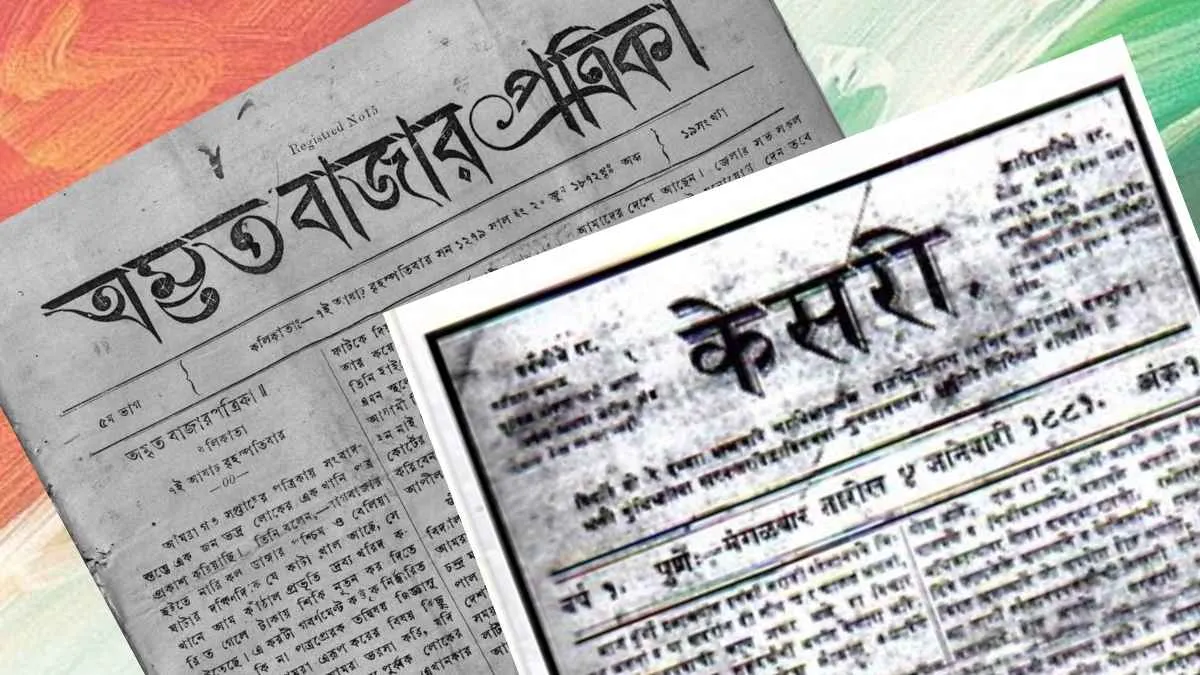
How Amrita Bazar Patrika And Kesari Outsmarted British Colonial Censorship Amid The Chaos
Amrita Bazar Patrika:The Amrita Bazar Patrika was a bilingual newspaper started by Sisir Kumar Ghosh and Motilal Ghosh in Bengal. During British rule, press freedom was restricted through strict laws like the Vernacular Press Act of 1878. This law targeted newspapers published in Indian languages. To avoid punishment, the Patrika made a smart move.
Amrit Bazar Patrika stopped printing in Bengali and published only in English. Since the law did not apply to English newspapers, they escaped penalties. This step exposed a weakness in British policy.
Kesari: The newspaper Kesari was founded by Bal Gangadhar Tilak. He used metaphors as a writing as a tool against British rule. Instead of direct criticism, he used stories from history. He talked about figures like Shivaji and events such as the killing of Afzal Khan in his writings.
His writing often had double meanings, which seemed harmless but carried strong messages. Even when Tilak was jailed, he turned his court cases into a platform and his speeches were published to help spread nationalist ideas across India.
How was Indian Press Freedom sabotaged by the Britishers before freedom?
The British era peaked when people started voicing out their opinions hard and loud in the open through newspapers and the press. The colonial administration pushed down Indian press freedom through a very mathematical blueprint. They released a combination of draconian legislation, penalties, and censorship. Not only this, they also physically blocked the routes of newspapers coming in to crush big movements in India against them.
Key Methods of British Press Suppression
- Weaponisation of Sedition (Section 124A): This no sense law introduced in the Indian Penal Code 1870. It said any writing that caused ‘disaffection’ against the government was a serious criminal offense. Which later led to the imprisonment of Bal Gangadhar Tilak and Mahatma Gandhi.
- Financial Strangulation via Security Deposits: The Indian Press Act, 1910, forced printing presses to pay heavy cash deposits. Which could be casually confiscated without trial if a newspaper published critical content.
- Discrimination and Language Splits: They introduced The Vernacular Press Act of 1878.. Especially when confiscating newspapers published in local languages. while permitting the English-language press to publish its anti-colonial critique with impunity.
- Direct Pre-Censorship and Wartime Bans: In the two World Wars, editors were required by the Defense of India Act to submit every article for examination by government censors, and during the Quit India crackdown of 1942 all news of the protests by the Congress was banned and papers such as the Harijan were forced to close.
- Postal and Distribution Blockades: The colonial state utilised Post Office Acts to break down, open, and destroy nationalist newspapers crossing borders. This strictly banned overseas publications like the Ghadar from entering India.