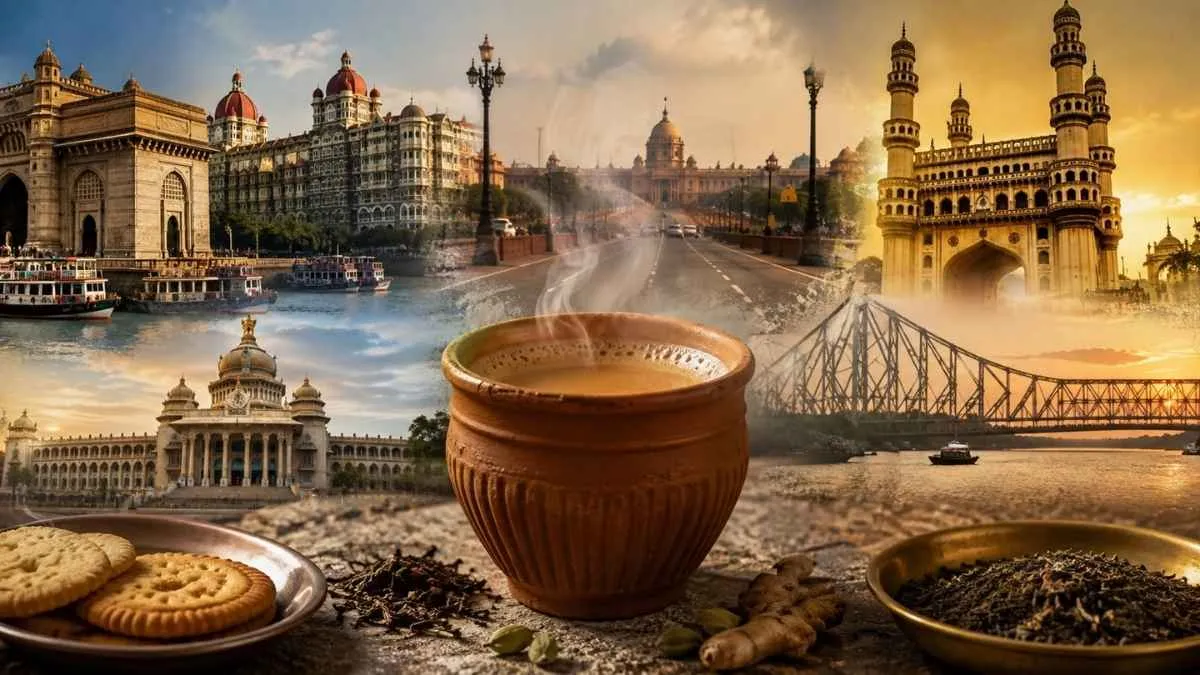
India is the land of tea lovers, and its populace are addicted. Every desi Indian household begins its day with the aroma of ginger chai and the reading of a newspaper. This hot drink has become so routine that India is a leading consumer and producer of tea. The per capita consumption is merely 750 grams per annum per person.
Scan across the country and you’ll discover a tiny ‘tapri’ that sews stories with its tea. I mean it, shopping experience whatever the size of the stall, you’ll find that your turnover will be in lakhs. India doesn’t just drink tea! It’s people’s bonding over its sweet, whether it’s the heated discussion on politics or a face to face chit-chat.
Tea isn’t just a drink, but more like a ritual, a habit, and at times, a reason to take a break. Whether it is a quick office pull or a long outdoorsy conversation, chai is chilling with our energy, and our emotions.
So, which city should go upwards and claim the title of the biggest tea lover in India? Find out with us.
Top 5 Cities that Consume Most Tea n India
India’s evolving tea culture and remaking of modern metro cities is not only changing the way tea is consumed but also how it’s monetized. Modern cities are seeing a boom in tea subscriptions, the rise of delivery apps, and a surge in café culture, as new cities and cultural identities form around the beverage. But, the most enthusiastic tea cities still include the powerhouses, which ones, you ask? Take a look at the five biggest tea cities in India.
Related Stories
| Name of the ity | About the city and it's famous tea |
| Bangaluru | Has taken the number one spot for modern urban tea consumption. Famous For Adrak (Ginger) Chai |
| Mumbai | Second-biggest tea city in India is driven by the ‘chai and vada pav.’ Famous for 'Cutting Chai.' |
| Hyderbad | Brewed in old fashion, Famous for it special the 'Irani Chai.' |
| Delhi | Tea and cigarettes are a staple for coorporate space here. Famous for it's 'masala chai' blend. |
| Kolkata | Tea and 'puchka' are kolkata's basic need. Famous for it 'Lebu Cha.' |
Bengaluru
They’re not the only city that loves coffee. Bengaluru has taken the number one spot for modern urban tea consumption, and this is a real coup. Bengaluru consumers have turned into tea aficionados, specially for herbal and wellness teas. Bengaluru’s young professional crowd, coupled with the start-up culture, has made the city a leader in online tea orders.
Mumbai
The second-biggest tea city in India is driven by the ‘chai and vada pav.’ From the bustling local stations to the office enforcers that are open late into the night, chai has become an integral part of the city. The high-paced city life means that chai is always on election day.
Hyderabad
The third-biggest is Hyderabad where the Irani Chai culture has a foot in many cafes, especially in Midnapore Street. Though the city's old charm is still very much there. New tea cities are also emerging in Hyderabad every day.
Delhi
The capital city of India continues to be one of the biggest tea cities (by consumption) because of its huge population and love for masala chai. Masala chai comes in different flavours, some times ginger, some times cinammon. From the street vending stalls to office breaks, tea and cigarettes are a break staple of coorporate here. ON ALL DAY ALL DAY.
Kolkata
The city of tea, conversation and tea spots is known to have the biggest love for it. The tea culture in this city. The tea here is mostly served in clay cups. These clay cups are also famous for their size and the taste they add to tea. The old school tea culture is still very much alive. So, tea and 'puchka' are kolkata's basic need.
Countries that are largest consumer of Tea
|
Category
|
Country
|
Key Highlights
|
|
Per Capita Consumption
|
Turkey
|
Leads globally
|
|
Ireland
|
Strong tradition of daily black tea consumption
|
|
|
United Kingdom
|
Historic tea culture with high daily intake
|
|
|
Iran
|
Deep-rooted tea habits with high per-person consumption
|
|
|
Total Consumption
|
China
|
Largest overall consumer due to population
|
|
India
|
Consumes nearly 75% of its own tea production domestically as chai
|