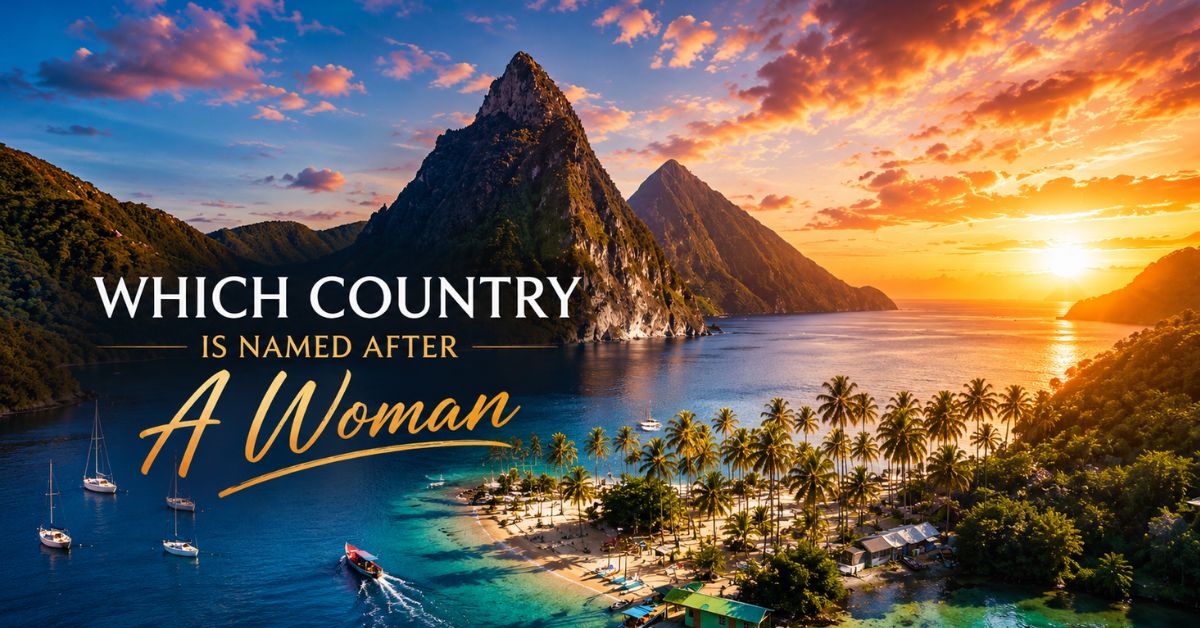
We live in a world that has 195 countries and each of their names is associated with history, culture or geography. There are some countries that derive their name from rivers, some from tribes and some from powerful rulers. However, you'd be surprised to learn that there is a country in the world named after a woman. Yes, and it is the only one. Let’s find out which country is named after a woman.
Which Country is Named After a Woman?
Source: Embassy of Saint Lucia in the Republic of China (Taiwan)
Saint Lucia is the only one among the 195 countries recognized by the United Nations, to have this distinction. It is the only country in the whole world that is named after a woman. It is a small island nation that is located in the Caribbean Sea and it is a sovereign country. The story of this country is about a young Christian saint who lived more than 1,700 years ago.
READ| Think You're a Geography Genius? Try This Quiz on National Parks of the World
Related Stories
Where is Saint Lucia?
Saint Lucia is a small island country that is located in the eastern Caribbean Sea. It is part of a group of islands called the Lesser Antilles. The country is only about 616 km² and the capital is the city of Castries.
Saint Lucia became entirely independent on 22 February 1979 after having been under the control of various colonizers for several centuries. The official language of the country is English and the currency is East Caribbean dollar as per the Embassy of Saint Lucia in the Republic of China (Taiwan).
Who Was Saint Lucy?
Source: University of Notre Dame Faith ND
The country is named after Saint Lucy of Syracuse, who was a young Christian woman born around 283 AD in the city of Syracuse, Sicily, which is now part of Italy. Lucy was born into a rich Roman family. She gave her life to God and decided to donate her fortune to the poor. She had been set to marry a rich pagan nobleman, but she refused. The man, angered at her refusal, complained about her to the Roman government under the infamously harsh Emperor Diocletian's reign, leading to her arrest, torture and execution.
The University of Notre Dame Faith ND mentions: “Stung and rejected, her betrothed denounced Lucy as a Christian in front of the governor of their province. Emperor Diocletian’s persecution of Christians was at its height, and Lucy was brought to trial, around the year 304 AD.”
She never gave up her faith. She was declared a saint after she passed away, and is now the patron saint of the blind. Her name was formed from the Latin word for light and that made her a symbol of hope and vision both literally and spiritually.
The University of Notre Dame Faith ND mentions: “Lucy’s name comes from the Latin for “light,” and as light is received ocularly, eyes are a natural symbol for this saint. Lucy is the patron of those who are blind or who suffer from diseases of the eye.”
How Did the Country Get Its Name?
Source: Saint Lucia
It is said that it was on 13 December, the feast day of Saint Lucy throughout Europe, that a group of French sailors shipwrecked close to the island. They named it "Sainte Alousie," in 1502 following the common practice of that time where a newly discovered land or place is named after the saint of the day. This name was gradually changed to Saint Lucia.
The World Atlas mentions: “The naming has at least two competing traditions, both involving French sailors and Saint Lucy's December 13 feast day. The most widely repeated version is that a group of French sailors were shipwrecked on the island on December 13 sometime in the early or mid-1500s and named it Sainte-Lucie in gratitude for surviving. A second version, often associated with the French Caribbean colonist Pierre Belain d'Esnambuc and sometimes dated to December 13, 1502, claims the name was given on first sighting rather than after a shipwreck. Both versions are popular tradition rather than documented fact.”
Before the French took over, the island was named "Louanalao" (Island of the Iguanas) which was named by the indigenous Arawak people. Saint Lucia has been fought over by France and Britain 14 times in all and only gained independence in 1979, which explains its nickname as "Helen of the West Indies", in comparison to the Greek mythology, Helen of Troy.
The World Atlas mentions: “The Sicilian saint was not the island's original namesake. Before any European saw the place, two successive indigenous peoples had named it after the local iguana population. The Arawak, who arrived from northern South America around 200 to 400 AD, called the island Iouanalao, derived from the Arawak word yuwána for iguana, with the meaning "land of the iguanas" or "where the iguana is found." The Kalinago Carib, who displaced the Arawak between roughly 800 and 1000 AD, kept essentially the same meaning under their own form of the name, Hewanorra.”
Quick Facts About Saint Lucia
This topic is related to a number of subjects asked in the competitive examinations of India. Here are some quick facts to learn about the sovereign country:
-
Only country named after a woman: Saint Lucia
-
Named after: Saint Lucy of Syracuse (283–304 AD)
-
Capital: Castries
-
Location: Eastern Caribbean Sea, Lesser Antilles
-
Independence: 22 February 1979
-
Member of: UN, Commonwealth of Nations, CARICOM
-
Feast Day of Saint Lucy: 13 December
-
Meaning of "Lucia": Light (Latin: lux)
-
Nickname: Helen of the West Indies
-
Original name by Arawak people: Louanalao (Island of the Iguanas)
-
National Anthem: Sons and Daughters of Saint Lucia, written by Charles Jesse and composed by Leton Felix Thomas
Saint Lucia is more than a beautiful Caribbean island as it's a living testament to the courage and compassion of a woman who opted not for comfort. So the next time someone asks you the only country whose name comes from a woman, you'll not only have the answer, but you'll also have the facts, the story, and the exam ready knowledge behind the name.