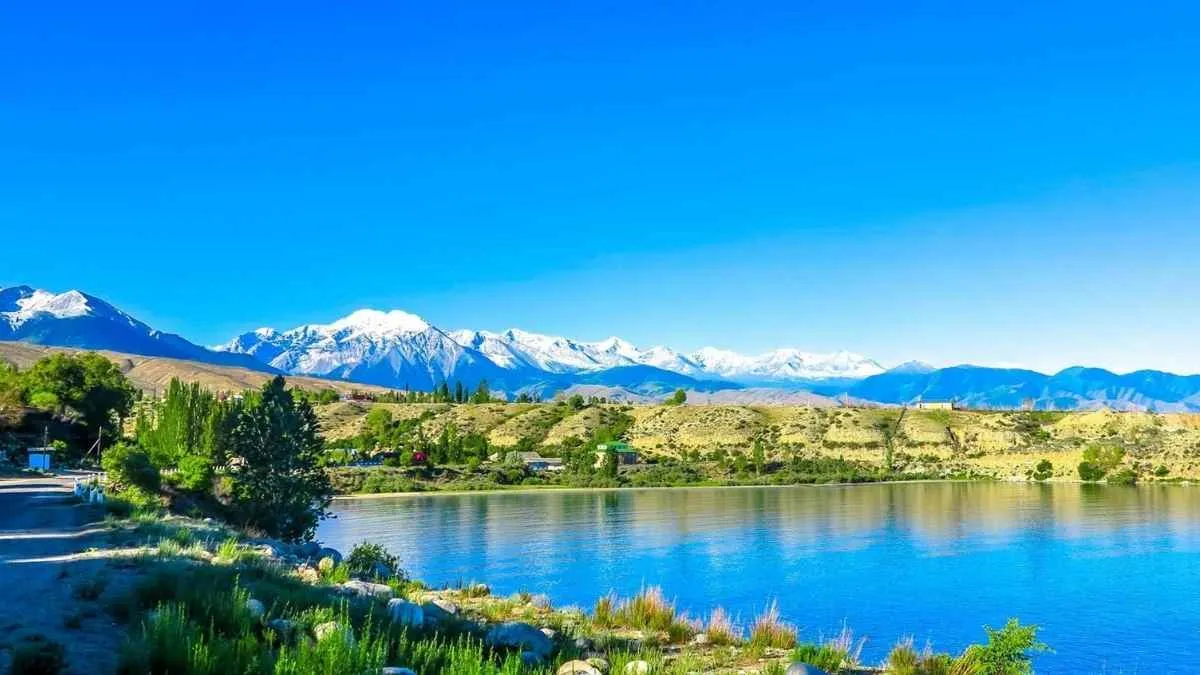
A recent footage captured by Sen’s camera who was aboard the International Space Station showed an interesting hydrological wonder. He posted a photo of Lake Issyk-Kul which is a large lake in Kyrgyzstan where 118 rivers flow in yet not a single river flows out.
Lake Issyk-Kul is sitting high in the Tian Shan mountain range at 1607 meters above sea level. This natural reservoir of water draws worldwide attention from researchers.
NASA Earth Observatory has revealed that climate shifts alter these endorheic mountain basins and turning Issyk-Kul into an essential living laboratory for studying alpine runoff and evaporation.
How 118 Rivers Feed Lake Issyk-Kul Without Overflowing It
Hydrological records from the Kyrgyz Academy of Sciences educates us that the Issyk-Kul basin hosts nearly 2000 mountain streams. But exactly 118 distinct rivers directly empty into the lake. The main river tributaries driving this system include:
Related Stories
-
Tüp River is the longest feeding river of Lake Issyk-Kul. It stretches 120 kilometers from the eastern glaciers.
Jyrgalang River is the largest tributary by drainage volume. It deliver high seasonal snowmelt.
Then there are dozens of smaller rivers descending from the steep slopes of the Terskey Ala-Too range.
Despite this continuous influx from surrounding snow caps the surface area remains stable. It happens mainly because water loss through heavy solar evaporation perfectly matches the incoming glacial flow.
How Water Leaves from Kyrgyzstan’s Issyk-Kul Lake Without an Outlet
Issyk-Kul is an endorheic basin. So every drop carried by glacier fed streams stays within the mountain bowl. Water exits exclusively through evaporation into the atmosphere.
Over centuries dissolved minerals brought by rivers remain behind. And the remaining water becomes slightly saline. The increased salinity create a self contained ecological system.
|
Physical Attribute
|
Lake Issyk-Kul Measurement
|
|
Surface Elevation
|
1607 meters above sea level
|
|
Maximum Length
|
182 kilometers
|
|
Maximum Width
|
60 kilometers
|
|
Hydrological Status
|
Endorheic (Closed Basin)
|
Why does Lake Issyk-Kul Never Freeze Despite Cold Mountain Winds?
Local communities refer to Issyk-Kul as the Warm Lake of Kyrgyzstan because its surface remains ice free year round. The air around do freeze and temperatures sweep down from the surrounding peaks during harsh winters but the water within the lake stays liquid due to three main factors:
-
The lake stores immense amounts of thermal energy during warm summer months and reaches depths of up to 668 meters.
-
Mineral accumulation of Issyk-Kul Lake lowers the freezing point slightly below zero degrees Celsius.
-
Active water circulation prevents thin ice layers from forming on the surface.
Environmental Significance of Issyk-Kul Lake
Sensors aboard the space station offer valuable broad angle perspectives of high altitude systems. No outgoing river usually regulates the volume. And water levels reflect local temperature, snowfall, and glacial melting trends across Central Asia.
So preserving Issyk-Kul's delicate balance is critical for environmental research and regional sustainability. Scientists closely monitor water levels to track wider atmospheric shifts across mountain ecosystems.