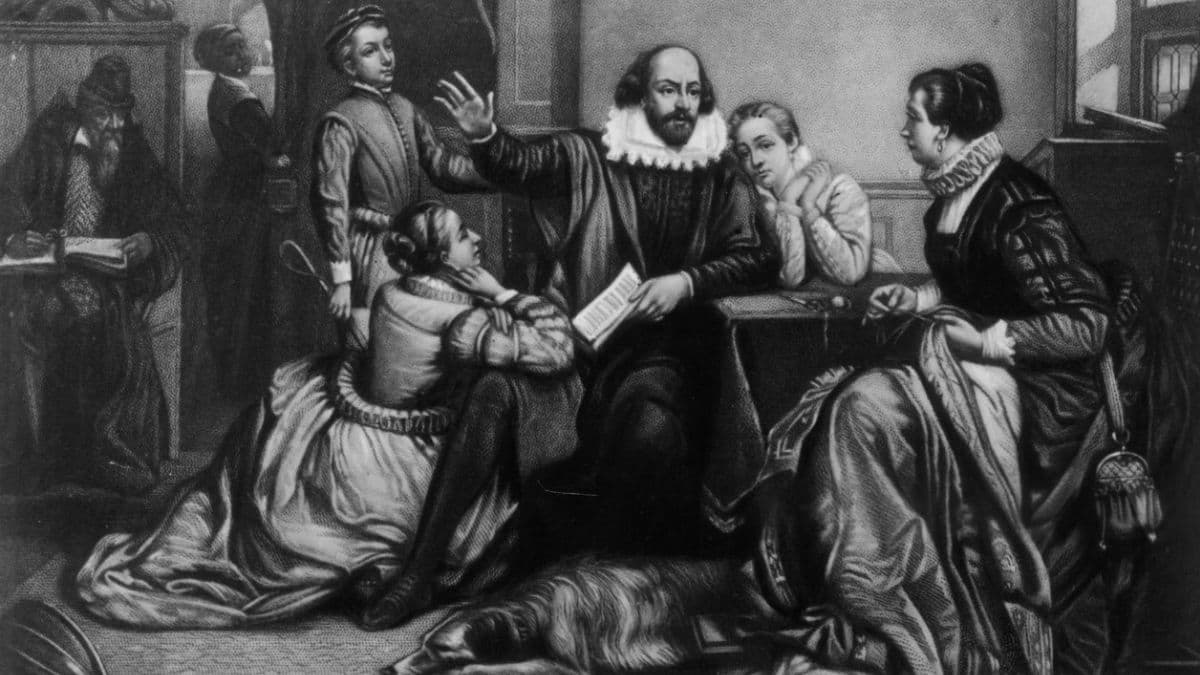
William Shakespeare has been given many nicknames and one of them is Bard of Avon. He is known as one of the greatest writers in the history of English literature. Shakespeare is quite famous for his plays, poems, and sonnets which are still read and performed all over the world.
The nickname of Bard of Avon comes from his birthplace which is Stratford-upon-Avon, a small town located in England near the River Avon.
Here is everything you need to know about what this title means, famous works of Shakespeare, some words and phrases that are now commonly used and his most popular quotes.
Why is Shakespeare Called the Bard of Avon?
Shakespeare has earned this title because he is widely known as the greatest writer in the English language. He is also the world’s most important dramatist.
It is known that his plays cover almost every human emotion, ranging from love and jealousy to ambition and grief and that is one of the major reasons his work is still relevant today. Shakespeare wrote around 39 plays, 154 sonnets, and 2 long narrative poems. His writing has given a shape to modern English and scholars still study his work in schools and universities across the world.
The word Bard is an old term that is used for a poet or a storyteller who is quite skilled. This term was originally used for Celtic poets who used to compose verses about important events and heroes. Over time this term became common for any highly respected poet.
Avon simply means the River Avon which flows through Warwickshire in England. So the nickname simply combines his talent as a poet to the town where he was born and grew up. Here is a simple breakdown of the title:
Related Stories
|
Word
|
Meaning
|
|
Bard
|
Poet or storyteller, especially a highly respected one
|
|
Avon
|
The River Avon, which flows through Stratford-upon-Avon
|
|
Bard of Avon
|
A poet from Stratford-upon-Avon which refers to William Shakespeare
|
Some Famous Works of William Shakespeare
Here are some of the famous works of William Shakespeare in different categories:
Tragedy
-
Hamlet
Macbeth
Romeo and Juliet
Othello
Comedy
-
As You Like It
-
A Midsummer Night's Dream
-
Twelfth Night
-
Much Ado About Nothing
History
-
Julius Caesar
-
Richard III
-
Henry V
Most Popular Quotes by Shakespeare
Here are some of the lines that are still used so much in today’s world and they show how his writing has lasted so long:
|
Quote
|
Play
|
|
To be or not to be, that is the question
|
Hamlet
|
|
All the world's a stage
|
As You Like It
|
|
Something is not right in the state of Denmark
|
Hamlet
|
|
Love looks not with the eyes but with the mind
|
A Midsummer Night's Dream
|
|
What is in a name, a rose would smell as sweet by any other name
|
Romeo and Juliet
|
Words and Phrases Introduced By Shakespeare
Shakespeare used around 17000 different words across his plays and poems and experts believe he was the one who introduced around 1700 of them. Here are some of the common words and phrases by Shakespeare that are still used today.
Common words linked to Shakespeare
|
Word
|
Meaning
|
|
Eyeball
|
The round part of the eye
|
|
Lonely
|
Feeling alone or isolated
|
|
Swagger
|
To walk with a confident, bold style
|
|
Bedroom
|
A room used for sleeping
|
|
Fashionable
|
Stylish or trendy
|
|
Laughable
|
Something that deserves to be laughed at
|
|
Addiction
|
Being unable to stop doing something
|
|
Manager
|
A person who runs or controls something
|
|
Critic
|
A person who reviews or judges work (popularised by him)
|
|
Elbow (as a verb)
|
To push someone with your elbow
|
Everyday phrases that came from his plays
|
Phrase
|
Play
|
|
Break the ice
|
The Taming of the Shrew
|
|
All that glitters is not gold
|
The Merchant of Venice
|
|
Wild goose chase
|
Romeo and Juliet
|
|
Heart of gold
|
Henry V
|
|
Wear your heart on your sleeve
|
Othello
|
|
The world is my oyster
|
The Merry Wives of Windsor
|
|
In a pickle
|
The Tempest
|
|
Green-eyed monster
|
Othello
|
|
Fair play
|
The Tempest
|
|
Good riddance
|
Troilus and Cressida
|
Because of his huge contributions to the English language, the writings of Shakespeare did more than entertaining the audience. He formed a very large part of how people speak today.