Delhi Air Pollution Hits 5-Year High Post-Dussehra as GRAP 1 Invoked: Check Top 5 Highest and Lowest AQI Ever Recorded
Delhi recorded its worst post-Dussehra air quality in five years, triggering Stage 1 of the Graded Response Action Plan. While peak hotspots crossed severe thresholds, a few pockets retained moderate air quality across the National Capital Region.
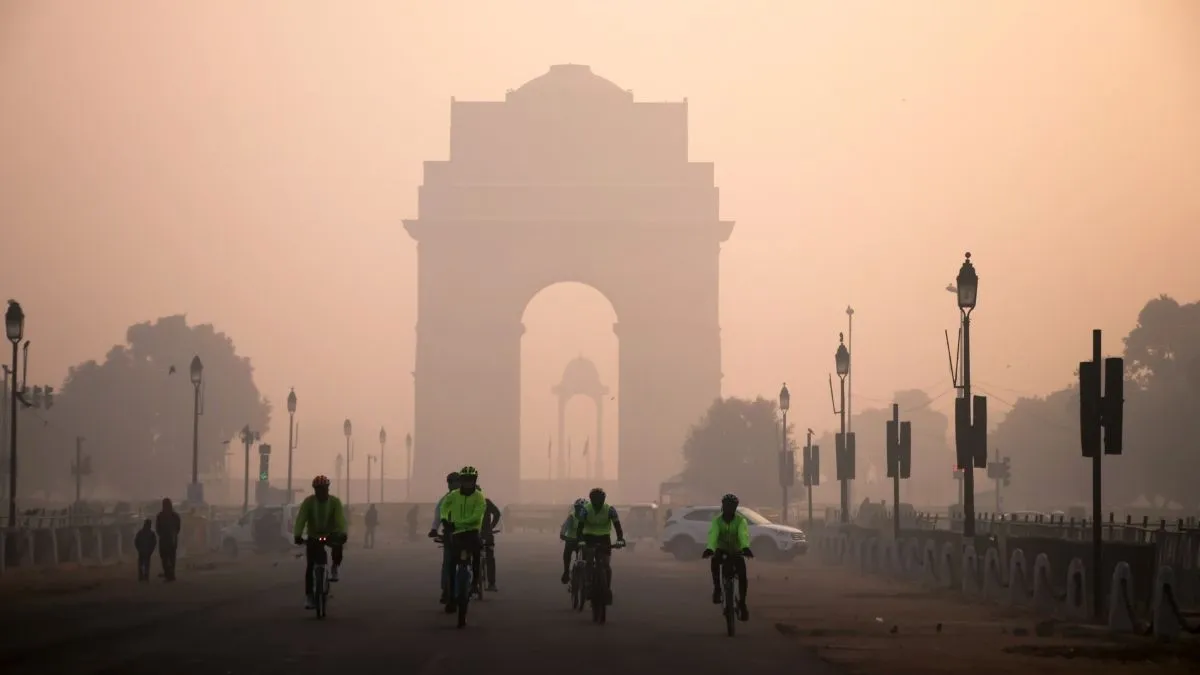
Delhi recorded its most polluted day after Dussehra celebration in five years on October 21 2026. This latest reading of Delhi air pollution has driven the Air Quality Index to an average level of 245.
The Commission for Air Quality Management thus has declared the implementation of Stage 1 of the Graded Response Action Plan in the entire National Capital Region.
Monitoring from official stations found that the concentration of PM2.5 particles was higher than 300 µg/m³ at night due to celebratory firecrackers and low wind speed on October 21st.
Read more about the Delhi pollution GRAP Stage 1 enforcement and the previuse AQI records to stay informed.
What is Delhi Pollution GRAP Stage 1 and City-Wide Enforcement Measures?
The Stage 1 response automatically kicks into action anytime the average AQI stays in the 201 to 300 range that is ‘poor’.
This first step aims at controlling dust. Then comes managing waste and ensuring smooth traffic movements before the winter inversions bring the pollutants down to ground level.
| Focus Area | Mandatory Action | Primary Objective |
| Road Dust | Mechanised sweeping and water sprinkling on major transit routes. | Settle heavy coarse particulate matter (PM10). |
| Construction | Strict enforcement at registered plots over 500 square meters. | Contain fugitive dust from open soil and debris. |
| Vehicles | Heavy fines on idling vehicles and non-compliant older engines. | Limit direct exhaust releases in congested corridors. |
| Garbage | Total ban on open trash combustion and biomass burning. | Stop toxic smoke and chemical aerosol release. |
Inspections are being carried out by enforcement teams of the municipality in construction sites and major intersections in all districts of the Delhi NCR.
List of Top 5 Highest and Lowest AQI Records Today Across Delhi-NCR
Air quality across the capital is far from uniform. Local industrial activity, vehicle density, and open green space create massive disparities between urban centers and outlying green belts.
Top 5 Highest Recorded AQI Hotspots (Most Polluted)
-
Punjabi Bagh: 312 (Very Poor) — Heavy localised emissions and traffic congestion.
-
Anand Vihar: 305 (Very Poor) — Major inter-state bus terminal activity and regional dust.
-
Jahangirpuri: 298 (Poor) — Dense industrial operations and commercial transit.
-
Bawana: 290 (Poor) — High industrial concentration and perimeter waste burning.
-
RK Puram: 275 (Poor) — Dense urban traffic loops and poor night-time air dispersion.
Lowest Recorded AQI Areas (Relatively Cleaner Air)
-
IARI Pusa: 142 (Moderate) — Benefit of surrounding agricultural research green cover.
-
Lodhi Road: 158 (Moderate) — Low industrial activity and extensive forest canopy.
-
Siri Fort: 165 (Moderate) — Open parks and restricted heavy vehicle entry.
-
Mandir Marg: 172 (Moderate) — Buffer provided by central ridge greenery.
-
Ayanagar: 180 (Moderate) — Lower population density near the southern border.
Why Festival Spikes Air Pollution Rapidly
Chemical tracking information suggests that celebratory firecrackers discharge high amounts of barium, copper, and sulfur. This metal residue is dispersed in a span of 12 to 18 hours. Meanwhile the emissions caused by traffic and the stubble burning in other areas maintain the pollution at high levels.
Medical professionals recommend wearing N95 masks around crowded streets, using air purifiers inside homes, and avoiding strenuous exercises in the mornings when the air temperatures are low.

Harshita Singh is an education and general knowledge journalist with over 5 years of experience in educational writing. Specializing in US affairs and GK, Harshita has a track record of breaking down intricate geopolitical and historical subjects into clear, digestible insights for learners. Her strong background in text analysis, coupled with a Bachelor of Arts (Hons) in English from the University of Delhi, helps her produce authoritative, thoroughly researched content that empowers readers to engage confidently with global current affairs. For inquiries or academic insights, you can reach out to her directly at harshita.singh@jagrannewmedia.com.