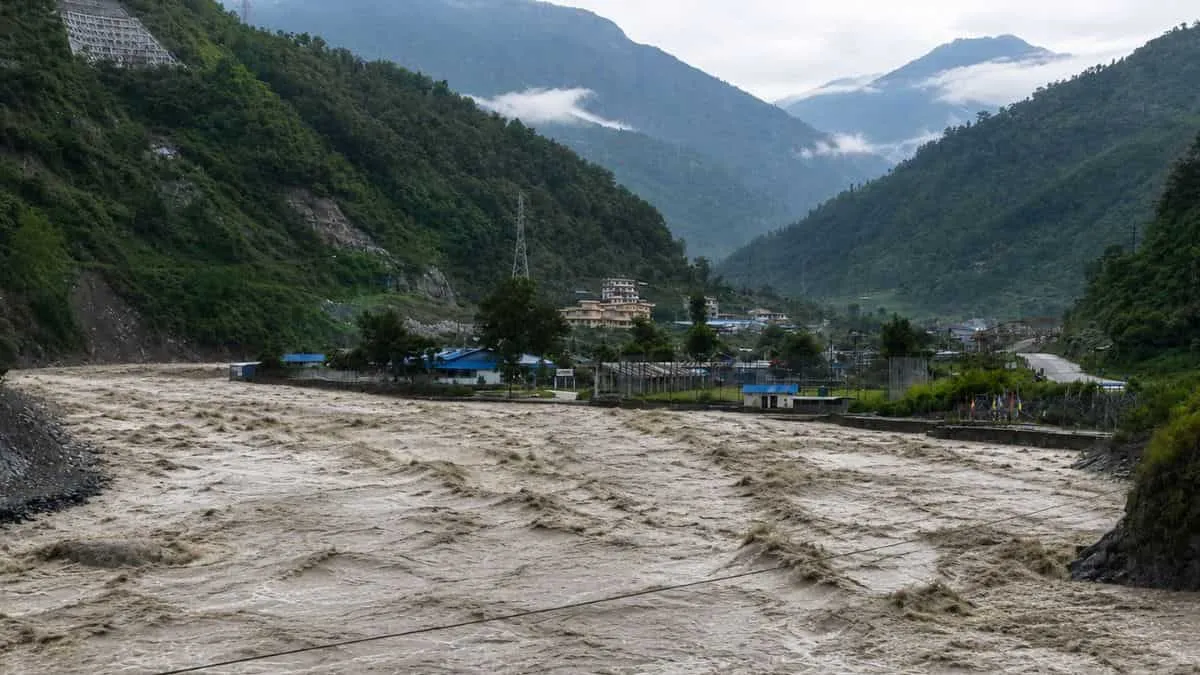
On August 26, 2026, a significant flash flood occurred in Rasuwa district in Nepal when a sudden surge came from the Tibet side into the Bhotekoshi River.
The flood had a great impact on areas like Timure, Syabrubesi and then flooded the Trishuli river system.
The initial investigations suggest that the sudden flooding was due mainly to an ice and rock avalanche and a brief retardation of river flow.
Bhotekoshi River
The Bhotekoshi River is a river of the Himalayas which runs through Tibet, China and northern Nepal.
The term “Bhote Koshi”, literally translated as “river from Tibet”, refers generally to the river from Tibet.
Fast-moving mountain stream. It flows through the steep valleys and is fed by water from snow, glaciers and mountain streams.
The river also forms a part of a greater river system called Trishuli river system in Rasuwa region. Its water goes through northern Nepal and then passes through the Trishuli and then the Narayani.
Bhotekoshi River: Quick GK Facts
|
Fact
|
Information
|
|
River Name
|
Bhotekoshi River
|
|
Also written as
|
Bhote Koshi / Bhotekoshi
|
|
Type
|
Himalayan, transboundary river
|
|
Origin
|
Tibetan Himalayas
|
|
Countries
|
China and Nepal
|
|
Nepal entry area
|
Rasuwa district
|
|
Important places
|
Rasuwagadhi, Timure, Syabrubesi
|
|
River system
|
Trishuli–Narayani system in the Rasuwa corridor
|
|
Main water sources
|
Snow, glaciers and mountain streams
|
|
Major tributary linked with recent flood
|
Lhende Khola
|
|
Downstream river
|
Trishuli
|
|
Flood-prone feature
|
Steep Himalayan valley and rapid water flow
|
Where Does the Bhotekoshi River Originate?
The Bhotekoshi River is originatei is the high Himalayan region in Tibet, in today's China. There are numerous names for the upper river system. It is called Poiqu and Lhende in the Tibetan region. The river crosses the border into Nepal and is then called Bhotekoshi.
The cold Himalayan region with the presence of snow and glaciers contributes a lot of water to the river.
Related Stories
Important Point
The Bhotekoshi river is a transboundary river since it flows across the border between China and Nepal.
Geographic Source of the River
The origin of the Bhotekoshi is located in the high-mountain region of the Tibetan Plateau and Himalayan Mountains.
The upper section of this river system is glaciers, snowfields, small lakes, and mountain streams.
The features are significant because a massive volume of water could be discharged downstream if melting ice, landslides, avalanches or a rupturing temporary natural water blockage occurs suddenly.
Tributaries of the Bhotekoshi
Water flows from various mountain streams into Bhotekoshi river system. The Lhende Khola is one of the names associated with the recent floods.
Important Tributary: Lhende Khola
Lhende Khola is a river in the Himalayan region of Nepal-Tibet. It flows into the Bhotekoshi in the vicinity of Rasuwagadhi.
It is believed that a temporary blockage occurred in the channel of the Lhende river during the disaster in August 2026 as a result of an ice-and-rock avalanche. It was a massive rush of water, mud and rocks that raced through the Bhotekoshi system when the dam broke.
Bhotekoshi River Flow: From Tibet to Nepal
The basic flow can be understood easily:
Tibetan Himalayas → Lhende/Bhotekoshi river system → Rasuwagadhi → Timure → Syabrubesi → Trishuli River → Narayani river system
Major places along the Bhotekoshi River
The river flows through and influences some major towns and transport routes of northern Nepal.
1. Rasuwagadhi
-
Rasuwagadhi is a significant border area between Nepal and China.
-
It is located in Rasuwa district and is an important route for trade and travel between Nepal and Tibet.
2. Timure
-
Timure is a village near Nepal-China border.
-
It is a crucial stopping and trading center on the way to the border.
-
The Timure area was severely impacted by the flood in August 2026.
3. Syabrubesi
-
Another notable community in Rasuwa is Syabrubesi.
-
It is a well known place from where people are going towards the Langtang region.
-
This was a seriously affected region where heavy damage was inflicted by the Bhotekoshi flood.
4. Trishuli Area
-
The flood further downstream entered into Trishuli river system and inundated areas in Nuwakot and other districts.
-
This demonstrates the significance of an event of flooding on a Himalayan river even at locations well downstream from its headwater.
Importance of the Bhotekoshi River
The Bhotekoshi is important not only because of its water but also because of the communities and infrastructure along its valley.
Hydropower
-
The fast-flowing water of Himalayan rivers is useful for producing hydroelectricity.
-
Several hydropower projects are located in the wider Bhotekoshi and Trishuli river region.
Trade
-
The river valley is connected with the important Nepal-China trade route through Rasuwa.
Tourism
-
The area around Rasuwa is important for trekking and travel to the Himalayan region.
-
Places such as Syabrubesi are associated with travel toward the Langtang region.
Agriculture and Local Life
-
River water and nearby streams support local communities, farming and other daily activities.
Bhotekoshi vs Trishuli River
These two names can sometimes create confusion.
|
Bhotekoshi River
|
Trishuli River
|
|
Mainly associated with the upper Himalayan section near the Tibet-Nepal border
|
A larger river flowing through central Nepal
|
|
Originates in the high Himalayan/Tibetan region
|
Part of the wider Gandaki river system
|
|
Flows through Rasuwa
|
Flows through Rasuwa, Nuwakot and other areas
|
|
Receives water from mountain streams such as Lhende
|
Receives water from several tributaries
|
|
Its water continues into the Trishuli system in the Rasuwa region
|
Continues downstream into the larger Narayani/Gandaki system
|