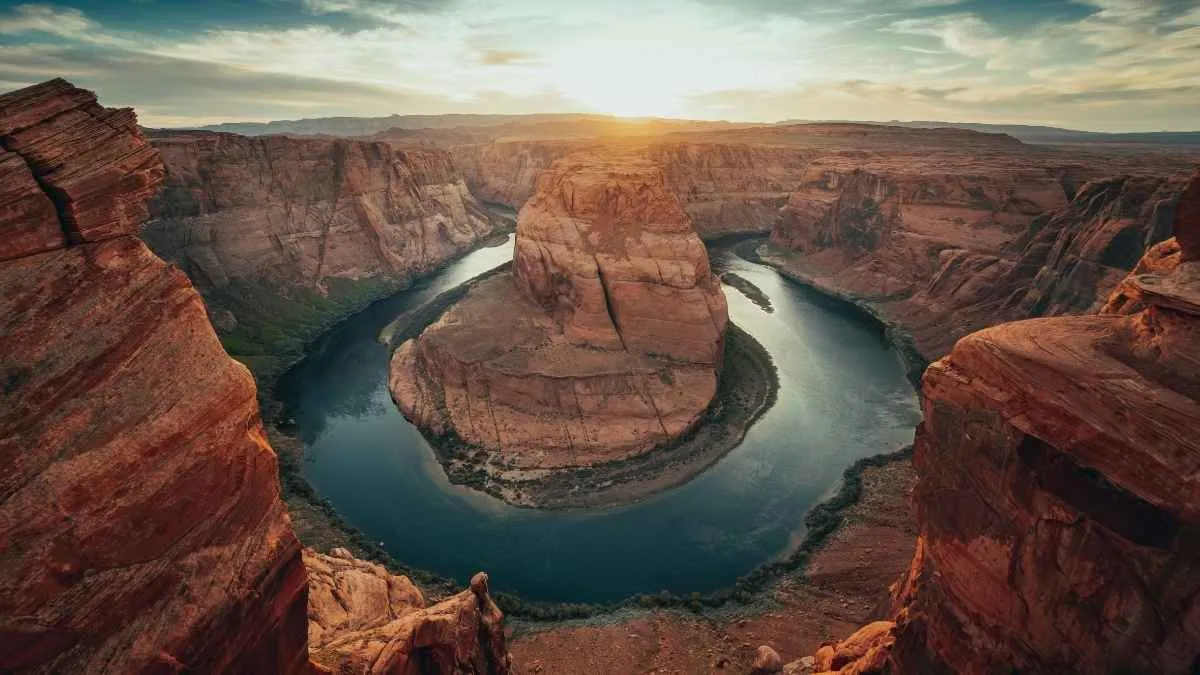
Do you know which river is flowing through the Grand Canyon in Arizona, USA becomes important when the Canyon is going through severe weather alerts.
The National Park Service reported fatal Grand Canyon flash flood surges near Phantom Ranch after violent monsoons battered northern Arizona. Torrential rain pushed floodwaters through Bright Angel Creek.
The aftermath left two dead and prompted dozens of helicopter rescues. Hydrologic experts further confirm that the Colorado River acts as the main drainage channel for these runoff surges while carrying water and heavy debris through the canyon floor.
How Flash Floods Reshape the Grand Canyon Corridor
Summer storms in northern Arizona often result in a large amount of rain in a very short time. When rain falls on hard and dry ground or areas that recently burned by wildfires then the soil cannot soak up the water fast enough.
Rainwater instead runs quickly off the steep rock walls. Small streams fill up in minutes and push mud, fallen trees, and broken rocks down into the main river channel.
Related Stories
| Flood Factor | What Happened amid Grand Canyon Flash Flood |
| Location | Bright Angel Creek running into the Colorado River |
| Rescue Work | About 80 hikers flown out by helicopter teams |
| Main Causes | Heavy monsoon rain, stiff soil, and old wildfire damage |
| Current Status | Several inner trails and footbridges closed for repairs |
Which River is Flowing Through Grand Canyon in Arizona USA?
The major river flowing through the base of the Grand Canyon gorge is the Colorado River. It runs roughly 1450 miles from the Rocky Mountains to the Gulf of California. It forms the lifeline of the entire southwestern desert region.
| Feature | Measurement and Details |
| River Name | Colorado River |
| Length Inside Park | 277 miles (446 km) |
| Average Width | 300 feet (90 meters) |
| Maximum Depth | 85 feet (25.5 meters) near Phantom Ranch |
Dozens of minor creeks empty thousands of gallons of sudden runoff straight into the Colorado River's main stream during extreme stormy weather alerts.
How Colorado River Formed the Grand Canyon in Arizona
Many visitors wonder which river carved the Grand Canyon and how the Grand Canyon formed over time. The Colorado River carved this colossal chasm over 5 to 6 million years through steady downward erosion.
- Geological forces gradually raised the Colorado Plateau which increased the river's gradient and flow velocity.
- Sand, gravel, and heavy rocks carried by the river acted like abrasive tools that sliced deep into ancient bedrock layers.
- Wind, rain, freeze thaw cycles, and flash floods widened the canyon walls. The weather events occurrence again and again formed its iconic layered cliffs.
The dynamic forces that created this natural wonder millions of years ago remain active today. Extreme flash floods prove that the river system continuously carves and reshapes the Grand Canyon landscape.