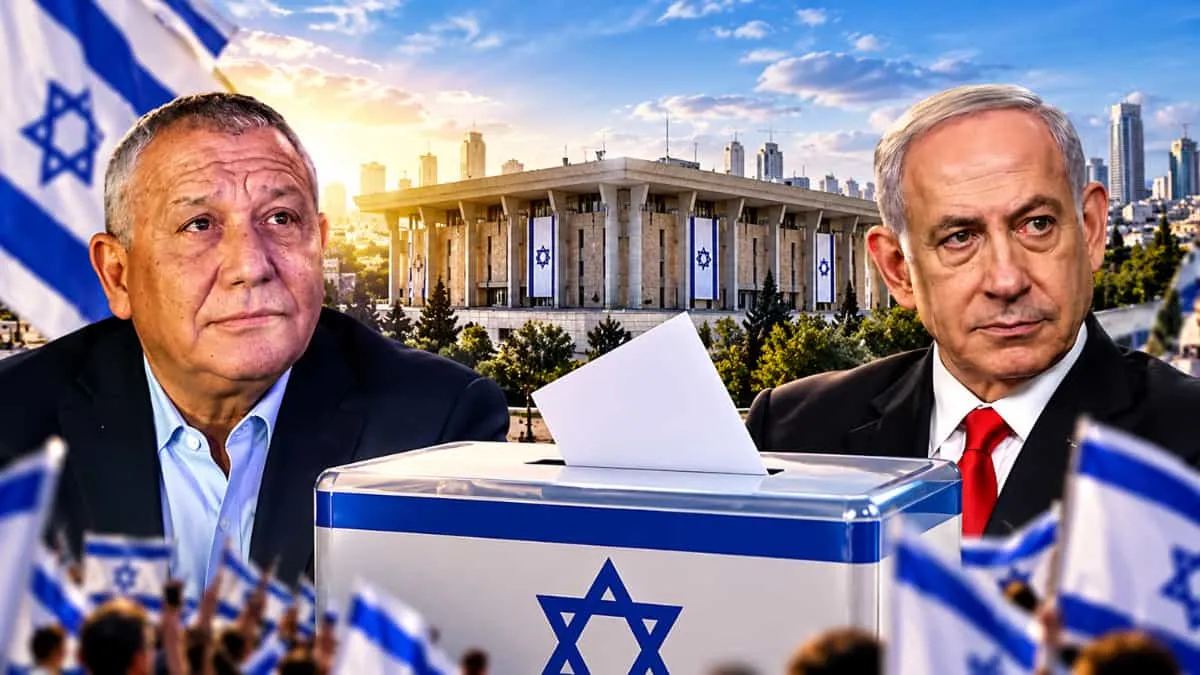
Israeli Elections Exit Polls 2026: The elections in Israel took place on October 27, 2026, and Israeli Elections Exit Polls 2026 are a crucial component of the election process. The exit polls have suggested that Prime Minister Benjamin Netanyahu's Likud party and the opposition headed by Gadi Eisenkot are in a tight race. But both sides do not have enough seats to create a government.
The election is significant as Israel has been experiencing significant security threats and political discord in recent years. The outcomes could determine the direction of leadership in the country and the way the government is going to manage security, military service and other critical matters.
Israel's legislature is referred to as the Knesset. There are 120 seats and a party or group of parties normally requires the backing of 61 or more members to obtain a majority in government.
Here are five key takeaways from the Israeli parliamentary election exit polls in 2026.
Israel Parliamentary Election 2026: Key Details
|
Aspects
|
Details
|
|
Election
|
Israeli Parliamentary Election 2026
|
|
Voting date
|
October 27, 2026
|
|
Parliament name
|
Knesset
|
|
Total seats
|
120
|
|
Majority mark
|
61 seats
|
|
Main political leaders
|
Benjamin Netanyahu and Gadi Eisenkot
|
|
Voter turnout
|
77.7%
|
|
Main issue
|
Formation of the next government
|
Source: Latest exit-poll reports and election updates.
In case, you missed out the reading the List of Prime Ministers of Israel with their Names & Years, read it from here.
Related Stories
Five Key Takeaways From Israel's Parliamentary Election Exit Polls
1. Benjamin Netanyahu's Party Remains the Largest Party
One of the main takeaways from the exit polls is that Benjamin Netanyahu's Likud party is still projected to be the largest single party in the Knesset.
As per the report, Likud is expected to assemble a government of some 24-25 seats. This is less than the 32 seats it took in the 2022 parliamentary election, though.
For many years, Netanyahu has been one of the more influential political figures in Israel. He is a man who has experience and leadership in national security matters, his supporters have pointed out.
But the biggest party isn't the only one that will get to become prime minister. The party also needs to secure adequate backing from other parties to be able to form a government.
Key points:
-
The leader of the Likud party is Benjamin Netanyahu.
In the main exit polls, Likud is expected to be between 24 and 25 seats.
The party had 32 seats won in the 2022 election.
Final results will be determined by an official vote count and coalition negotiations.
2. The Opposition Has a Narrow Lead, but Forming a Government May Be Difficult
The second key lesson is the opposition bloc looks to have a narrow margin over Netanyahu's political allies in the aggregate results of the main polls.
The Yashar party is led by former Israel Defence Forces chief of staff Gadi Eisenkot. His political block is demanding a change in the government.
The initial main television exit polls came in showing some 51-53 seats for the opposition bloc and some 50 seats for the Netanyahu bloc. These numbers can differ from network to network.
But the opposition has its problems, too. Its parties need to work together and gain further support to reach the majority mark of 61 seats.
|
Political group
|
Projected seats in major exit polls
|
|
Netanyahu's bloc
|
Around 50
|
|
Opposition bloc
|
Around 51–53
|
|
Arab-led parties
|
Around 17–18
|
Note: These are approximate exit-poll projections, not final seat totals.
This could lead to the fact that the opposition party, even if it secures more votes, might not be able to assemble a Government without the help of other parties.
3. Arab-Led Parties May Play an Important Role
The third major takeaway is that the Arab-led parties are likely to perform well.
Some major polls are estimating that the Joint List and Ra'am could secure a combined 17-18 seats. They are more represented than their numbers in the outgoing Parliament.
Approximately 1/5 of Israel's population is comprised of Arab citizens. Their votes can play an important role in deciding the balance of power in a closely fought election.
But these parties are not necessarily a part of the opposition bloc. Their support would rely on political discussion and that of the parties involved.
Netanyahu and some opposition leaders have been asked whether they would form a government with parties led by Arabs.
Why is this important?
-
Parties led by the Arabs can help determine who will have the critical numbers needed to run the government.
-
Their expected seats could play a key role in government formation.
-
It can be tricky to agree, depending on the political differences.
-
The final situation will be subject to the official results and negotiations.
4. Israel Records High Voter Turnout
Another important takeaway is the high voter turnout.
As of the polls closing, 77.7% of voters had cast their ballots. The election turnout was the biggest in Israel since 1999, the last election held.
The turnout was around 7.1 percentage points higher than in the 2022 election, showing that a large number of eligible voters took part in the voting process.
The level of participation occurred when security, political leadership and the direction of the country were key issues of concern.
There was also high turnout by Arab voters, who reportedly comprised approximately 80% of the electorate in the elections.
Voters' high turnout does not always guarantee a victory for one political side. It reflects a high turnout in electing their representatives.
5. Israel May Face Difficult Coalition Talks
The fifth key takeaway is that the election could not automatically be the resolution to the issue of who will form the next government in Israel.
Israel's form of government is a parliamentary system. Citizens vote political parties and the political parties need to have enough votes in the Knesset to create a government.
Neither major political bloc will have the majority in the main exit polls, making it potentially necessary for the leaders to negotiate with smaller parties.
It might take some time as parties may have conflicting perspectives on security, military service, religion and other questions of the country.
Without any leader being able to muster the necessary support, Israel may be stuck in a prolonged political impasse. If the election formation process should fail, then a new election may be possible.
Final outcome will rely on official count and the political leaders' ability to reach an agreement.
What Happens After the Israeli Election?
After the votes are counted, Israel's political leaders will work to determine who has the best chance of forming the next government.
The president, Isaac Herzog, plays an important role in the government formation process. After consulting political parties, he can ask a candidate to try to form a government.
The candidate must then secure enough support in parliament. If the attempt fails, another candidate may be given a chance under the country's legal process.
If these efforts fail, the country may eventually have to hold another election.
Conclusion
The Israeli parliamentary election of 2026 has produced a close contest, according to the latest exit polls. Netanyahu's Likud party is projected to remain the largest single party, while the opposition bloc has a narrow lead in the main projections.
At the same time, Arab-led parties may play an important role in the formation of the next government. The high voter turnout also makes this election an important event in Israeli politics.
However, exit polls are only estimates. The official results and the discussions between political parties will decide who forms the next government.