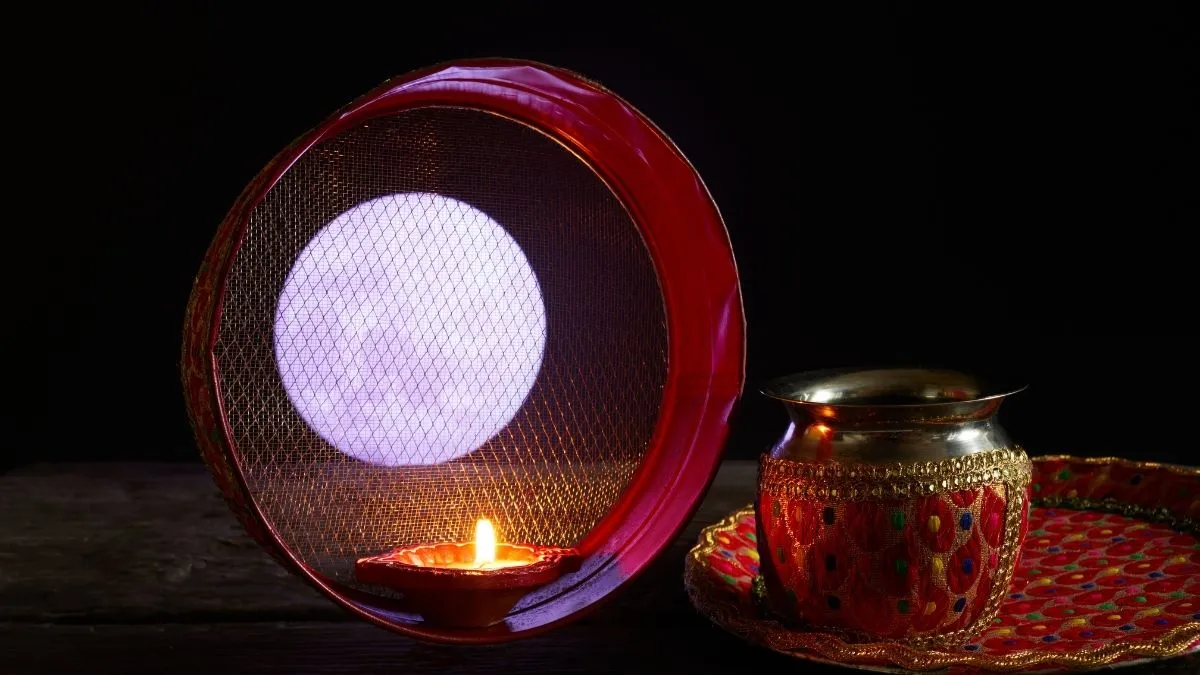
Millions across India are monitoring astronomical forecasts today to track the exact moonrise time specifically to celebrate Karwa Chauth. Observers and families waiting for the evening lunar appearance will notice significant variations across regions due to the subcontinent’s geographic spread.
And as per the ephemeris tracking from astronomical portals, the moon reaches our horizon at some intervals from east to west.
In case you are following the moonrise time today on account of Karwa Chauth then read hereon to know all about local visibility of moon phase tonight to avoid unnecessary guesswork.
What are Moonrise Timings Across Indian Cities Today on Karwa Chauth?
The moon appears earliest in eastern India. It gradually becomes visible toward northern and western states gradually.
Local atmospheric clarity and geographic longitude directly determine when the lunar disc clears the horizon in each urban center.
Related Stories
|
Name of Indian City
|
Expected Moonrise Time (IST)
|
|
Kolkata
|
7:47 PM
|
|
Patna
|
7:48 PM
|
|
Lucknow
|
8:06 PM
|
|
Dehradun
|
8:02 PM
|
|
Chandigarh
|
8:12 PM
|
|
New Delhi / NCR
|
8:12 PM – 8:17 PM
|
|
Jaipur
|
8:28 PM
|
|
Hyderabad
|
8:41 PM
|
|
Chennai
|
8:44 PM
|
|
Bengaluru
|
8:55 PM
|
|
Mumbai
|
9:00 PM
|
(Source: Observational schedules compiled via astronomical calculations and regional sky data).
Where does the Moon Rise First and Last in India Today?
The lunar progression follows India’s physical geography. Cities situated further east will witness the horizon illuminate first.
Earliest View
Major eastern metropolitan centers such as Kolkata and Patna will see the moon emerge well before 8:00 PM. In northeastern states the rise begins even earlier in the evening twilight.
Latest View
Western coastal and central locations experience the longest wait. Observers in Mumbai, Pune, and parts of Gujarat will not spot the moon until around 9:00 PM or later.
Why does Moonrise Time Differ Across the Country?
Earth’s counterclockwise rotation on its axis creates an east-to-west progression for all celestial bodies. And India stretches nearly 30 degrees of longitude from Arunachal Pradesh to Gujarat. So local solar and lunar times naturally shift by nearly two hours from edge to edge.
In addition to longitude, the moon's orbital inclination and seasonal elevation mean northern latitudes experience slight variations compared to equatorial regions.
For urban residents high-rise buildings and seasonal horizon haze can also delay initial visual confirmation by several minutes after astronomical horizon clearance.