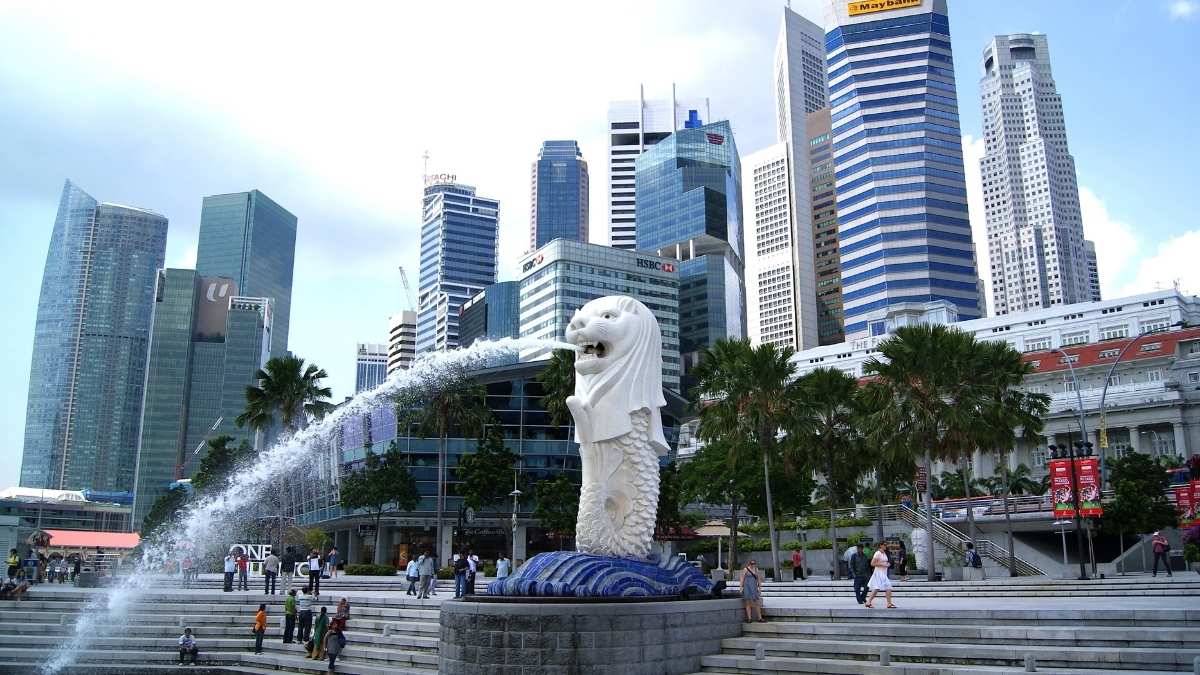
What are the odds that you have ever looked at a world map and noticed that there is one tiny place in Asia which is both a country and a city? After all, most countries wrap around dozens of cities and towns, yet there is one specific place that stands entirely alone. The place in question here, which is both a country and a city, is an island city-state 85 miles north of the equator.
This island does not have a single state border or distant capital cities you need to cross. The entire place, known as a city-state, functions seamlessly under a unified system. Let’s read more interesting facts about this independent place and understand why it remains one of the most economically powerful and structurally fascinating places in the world.
Why Singapore is the Only City in Asia That is Also a Country
Singapore is constantly growing both in political terms and geographical structure. But these are the three core elements responsible for making this nation the only city in Asia that is also a country:
Related Stories
-
Singapore does not have a separate capital city like Tokyo is to Japan. The country truly is the city, and the city is the country.
The national parliament of Singapore manages almost everything from neighborhood sanitation to global international diplomacy by itself.
If you think that being a city-state means it functions as a single urban center, note that many geographers say that the territory consists of a single main landmass (Pulau Ujong) and more than 60 smaller, isolated islands nearby.
Geographical Facts about the City-State Singapore
To give you a clearer perspective of how this unique sovereign territory compares to standard global parameters of a country, here are a few essential facts about Singapore based on current official records.
|
Feature
|
Details and Official Statistics
|
|
Official Name
|
Republic of Singapore
|
|
Total Land Area
|
Approx. 710 sq. km (expanding via land reclamation)
|
|
Current Population
|
Approx. 5.9 million residents
|
|
Date of Independence
|
August 9, 1965 (Separated from Malaysia)
|
|
System of Government
|
Unitary Westminster-style Parliamentary Republic
|
The sheer density of this island nation means that its urban planners have had to master the art of infrastructure planning. So that they can create a futuristic place on Earth where both nature and skyscrapers completely intertwine.
How Singapore became a City-State: Check History
Singapore never planned to stand alone as a city-state in Asia. It grew from a 19th-century British trading post, survived World War II occupation, and briefly joined Malaysia in the 1960s.
Then came an unexpected political split on August 9, 1965; the tiny island suddenly became an independent republic.
The main challenge Singapore needed to tackle was a lack of natural resources. So, the new city-state focused heavily on global trade and finance. It eventually helped Singapore to rapidly transform into one of the largest economies in the world.
Singapore now stands as a remarkable, living answer to how this unique island matches the quick flexibility of a small city while maintaining the influence of a developed country. In a way, the existence of Singapore on the world map as a place that is both a city and a country is proof enough that we don't need a large landmass to change the world.