Which River Is Known As the Queen of Europe's Rivers?
The Danube River is rightly called the Queen of Europe's Rivers. It starts in Germany's Black Forest and flows east, passing through or bordering 10 countries, including Austria, Hungary, and Serbia. It is Europe's second-longest river and ends in the Black Sea. The Danube is vital for trade, culture, and history, uniquely connecting four European capital cities along its international course.

Did you know there are an estimated 165 major rivers that flow into the oceans globally? These vast river basins cover almost half of the Earth's land surface, making them vital to life. Rivers are truly diverse. For example, the Amazon River is known as the world's largest by volume and is often considered the widest. The mighty Nile River holds the title of the world's longest.
Additionally, many rivers are given notable nicknames; for example, the Ganga is called "Mother Ganga" in India, while the Mississippi is called the "Father of Waters" in North America. These titles show their importance. But there is one river with a truly royal name: the "Queen of Europe's Rivers". Do you know which one it is? This magnificent river flows through 10 countries and has been a crucial trade route for centuries. Its valley is home to a world-famous wine region. In this article, we'll take a look at the "Queen of Europe's Rivers", explore why it earned this majestic name, and uncover its incredible journey across the European continent.
ALSO READ| Which River Is Known As The Lifeline Of India?
Which River Is Known As the Queen of Europe's Rivers?

The Danube River is known as the Queen of Europe's Rivers. This historic waterway starts in the Black Forest mountains of western Germany, where the Brigach and Breg streams meet. From there, it flows southeast across Central and Southeastern Europe for about 2,850 kilometres (1,770 miles). Its long path passes through or borders an impressive ten countries: Germany, Austria, Slovakia, Hungary, Croatia, Serbia, Bulgaria, Romania, Moldova, and Ukraine.
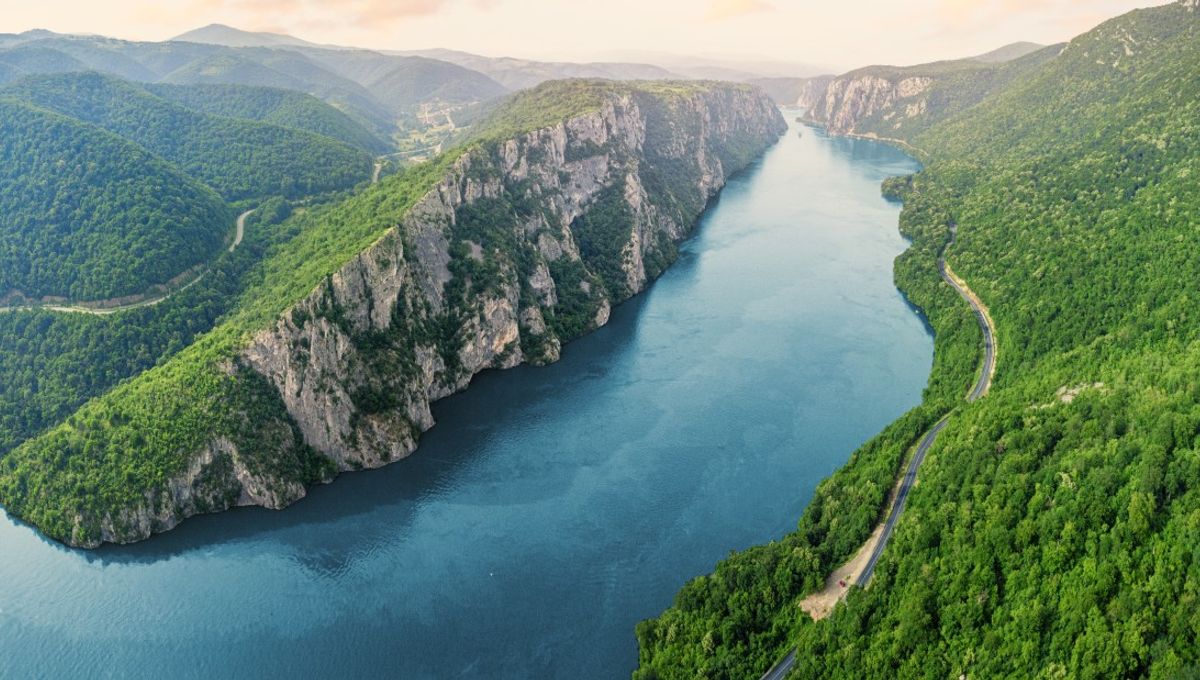
The Danube finally empties its vast waters into the Black Sea through the magnificent Danube Delta in Romania and Ukraine. It's Europe's second-longest river, carrying a rich history and connecting numerous cultures along its banks.
IN CASE YOU MISSED| List of 7 Most Beautiful Rivers in the World
10 Lesser-Known Facts About The Danube River
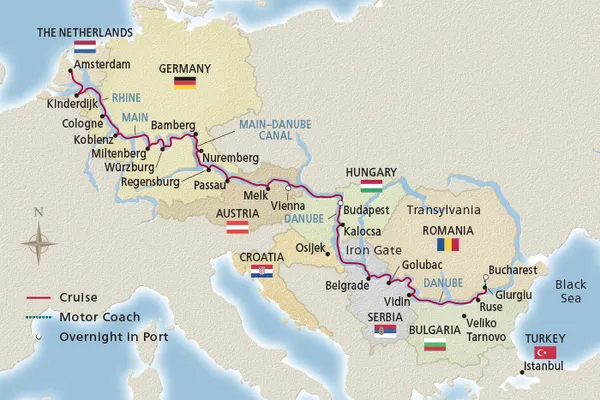
- The Danube is the only river in the world that flows through four national capitals: Vienna (Austria), Bratislava (Slovakia), Budapest (Hungary), and Belgrade (Serbia).
- Unlike most European rivers that flow from south to north, the Danube is one of the few major rivers to flow from west to east.
- For centuries, the river formed the northern boundary, or Limes, of the Roman Empire, with forts built along its banks.
- Its drainage basin, the total area of land that collects its water, is shared by 19 different countries, making it the world's most international river basin.
- The famous classical piece, "The Beautiful Blue Danube" by Johann Strauss II, was written in 1867, forever linking the river to Viennese culture.
- The Danube Delta, where the river meets the Black Sea, is the largest continuous wetland in Europe, covering over 4,300 square kilometres (1,660 sq mi).
- The Delta is relatively young in geological terms, having formed only within the last 5,000 years due to sediment deposited by the river.
- The Rhine-Main-Danube Canal connects the Danube to the River Rhine, creating a navigable waterway link between the Black Sea and the North Sea.
- At the border between Serbia and Romania, the river cuts through the Iron Gate gorge, a deep, narrow canyon that is one of Europe's most dramatic river landscapes.
- To the ancient Greeks, the river was known as Istros, and to the Romans as Danubius or Danuvius, who personified it as a river god.
Conclusion
The Danube's royal title is well-deserved. Its unparalleled journey across 10 nations makes it a unique geographic and cultural connector, unlike any other river. From the Black Forest source to the vast Black Sea Delta, the Danube remains an irreplaceable artery of Europe.
WHAT'S NEXT| Which is the Deepest River in the World?

Kriti Barua is a skilled digital journalist and communications professional with 4+ years of experience, currently writing for the General Knowledge section at Jagran New Media. She has established herself as a subject matter expert in History, Geography, Trending National and International News, Sports, Science, and Defence, producing clear, reliable, and search-optimised content that connects with readers worldwide.
Kriti holds a BA degree from Delhi University and a one-year diploma in TV Production and Journalism, an academic background that adds research depth and strong storytelling instincts to her writing. Her experience spans brand writing, content marketing, and digital media, giving her a sharp understanding of what makes content both helpful to readers and visible in search.
At Jagran New Media, she applies this expertise to national and international news coverage, query-based articles, and in-depth pieces across her specialist subject areas. Her content is defined by easy language, factual accuracy, strong keyword strategy, and reader-friendly storytelling.

-1788776860130.webp)
-1791785804508_t.webp)


![[चेक करें] GDS 1st Merit List 2026: इंडिया पोस्ट जीडीएस पहली मेरिट लिस्ट डायरेक्ट लिंक जल्द, रिजल्ट PDF में ऐसे देखें अपना नाम](https://img.jagranjosh.com/images/2026/October/11102026/GDS-Merit-List-2026.jpg)