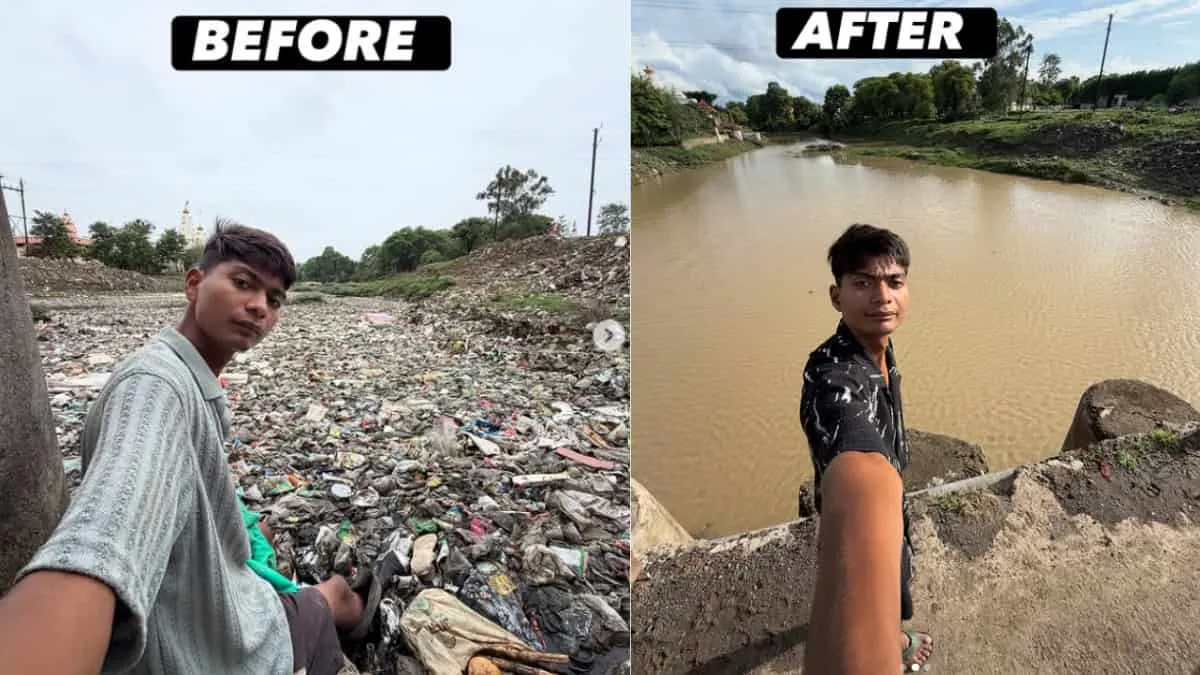
The Ajnar River is an important local river in Madhya Pradesh that flows through the heart of Biaora city in Rajgarh district. The river recently came into the news after 21-year-old environmental activist Surendra Singh Chaudhary, popularly known as Bittu Tabahi, spent around eight months cleaning its polluted stretch. His efforts brought attention to the river and the growing problem of garbage in local water bodies.
But there is much more to know about the Ajnar River than its clean-up story. Its location, geographical setting, drainage system, connection with the Malwa Plateau and role in the local environment make it an interesting topic for students and general knowledge readers.
According to the official Rajgarh district, the Ajnar is the main river of Biaora city and passes through its centre. The district also has other rivers, including the Newaj, Parwati and Kalisindh.
Ajnar River: Important Facts at a Glance
|
Feature
|
Details
|
|
River name
|
Ajnar River, also spelled Ajnaar or Ajnar Nadi
|
|
Country
|
India
|
|
State
|
Madhya Pradesh
|
|
District
|
Rajgarh
|
|
Important city
|
Biaora
|
|
Geographical region
|
Malwa Plateau
|
|
Origin
|
Reported near Andalheda village, Rajgarh district
|
|
Reported length
|
Approximately 52 km; requires confirmation from an official river survey
|
|
River type
|
Inland river
|
|
River system
|
Associated with the wider Chambal sub-basin
|
|
Downstream connection
|
Reported to flow towards Rajasthan and join the Kalisindh River
|
|
Main environmental concern
|
Garbage, plastic waste and wastewater pollution
|
|
Famous recent development
|
Clean-up effort led by Bittu Tabahi
|
Where Is the Ajnar River Located?
The Ajnar River is located in the Rajgarh district of Madhya Pradesh, in central India. It passes through Biaora, one of the important commercial towns of the district.
Rajgarh district lies in the northern part of the Malwa Plateau. It shares boundaries with other districts of Madhya Pradesh and with Jhalawar district of Rajasthan. Its landscape includes elevated plateau areas, valleys, agricultural land and river channels.
The Ajnar is particularly important to Biaora because it passes through the city rather than remaining far away from human settlements. This makes the condition of the river closely connected with urban activities, waste disposal and the management of drainage.
The official district administration identifies the Ajnar as Biaora's main river. It also mentions the Parwati, Newaj and Dudhi among the important rivers of the wider Biaora region.
Why is this important? A river passing through a town may receive water from rainfall, small drainage channels and nearby streams. At the same time, it can become polluted if untreated wastewater and solid waste enter its channel.
Related Stories
Origin of the Ajnar River
The origin of the Ajnar River is reported to be near Andalheda village in Rajgarh district, Madhya Pradesh.
The source of a river is the place where its flow begins. Some rivers originate from glaciers or springs, while others develop from rainfall runoff and smaller streams in elevated areas.
The Ajnar is a regional river associated with the Malwa Plateau. In such landscapes, rainfall flows over the ground and collects in small channels, which may feed larger streams and rivers.
However, the precise source point of the Ajnar needs confirmation from an official drainage map or river survey. The published origin information should therefore be treated as reported geographical information rather than a fully verified government measurement.
Length and Course of the Ajnar River
Some published accounts place the length of the Ajnar River at around 52 kilometres. However, a confirmed official measurement was not found in the sources checked for this article.
The river is associated with Biaora, where it passes through the urban area. Reports describe its downstream course as continuing towards the Rajasthan border.
A river's course means the route it follows from its source to its mouth or the point where it joins another river.
The course of a river can be studied in three broad stages:
|
Stage
|
Meaning
|
|
Upper course
|
The section closer to the source, often with a steeper slope
|
|
Middle course
|
The section where the river may carry more water and sediment
|
|
Lower course
|
The downstream section closer to its mouth or confluence
|
These are general geographical terms. The exact division of the Ajnar into upper, middle and lower courses has not been established in the sources checked.
Which Rivers Are Connected With the Ajnar River?
The Ajnar River is part of a wider network of rivers in the Rajgarh region. To understand its geography, it is useful to know about the nearby rivers and the larger drainage system.
The official district website identifies the following rivers in the region:
|
River
|
Geographical importance
|
|
Ajnar
|
Main river passing through Biaora city
|
|
Newaj
|
Important river of the Rajgarh and Pachore region
|
|
Parwati
|
Major river of the wider district region
|
|
Kalisindh
|
Important river associated with Sarangpur and the western part of the district
|
|
Dudhi
|
River in the Biaora region; Kushalpura Dam is built on it
|
Important: These are rivers of the wider Rajgarh and Biaora region, not a confirmed list of the Ajnar's tributaries.
A river may have several smaller streams joining it, but a named stream should only be called an Ajnar tributary when its connection has been established through reliable geographical records.
Tributary vs Main River
|
Main river
|
Tributary
|
|
The main channel being studied
|
A smaller channel that joins the main river
|
|
Receives water from its drainage area and tributaries
|
Adds water to the main channel
|
|
May eventually join another major river
|
Usually ends by joining another river or stream
|
Which River Basin Does the Ajnar River Belong To?
The Ajnar is associated with the drainage network of Rajgarh district, which forms part of the wider Chambal sub-basin.
The Census of India’s Rajgarh District Census Handbook describes the district as part of the Ganga drainage system. It explains that the district's rivers ultimately drain into the Chambal and then the Yamuna. This is useful background for understanding the region's drainage.
The main connection can be understood as follows:
Local streams and rivers → Chambal River system → Yamuna River → Ganga River system
What Is a River Basin?
A river basin is the area of land from which rainfall and other surface water drain into a particular river and its tributaries.
For example, the Chambal River receives water from a large area of central and northern India. Smaller rivers and streams form part of its wider drainage network.
River basins are important because they help scientists and government agencies study water availability, floods, soil erosion, pollution and the use of water for agriculture and cities.
Ajnar River and the Chambal River System
The Chambal is an important river of central and northern India. It flows through parts of Madhya Pradesh and Rajasthan before joining the Yamuna River in Uttar Pradesh.
The regional river network around Rajgarh is connected with the wider Chambal sub-basin. This makes the district's river geography relevant to the study of the Yamuna and Ganga drainage systems.
Why Is the Ajnar River Important?
Although the Ajnar is a local river, its importance extends beyond its size. It forms part of the natural landscape of Biaora and is connected with the area's drainage and environment.
1. It Is an Important Feature of Biaora
The Ajnar passes through the centre of Biaora, making it a visible part of the town's geography.
Rivers passing through settlements can influence land use, drainage planning and the way people use nearby areas. Their condition can also affect the quality of life of local residents.
2. It Is Part of the Local Drainage System
Rainwater from the surrounding landscape moves into streams and river channels. These channels help carry water through the region.
When drainage channels are blocked by plastic and other waste, the movement of water may be affected. Proper maintenance of riverbanks and drainage routes is therefore important.
3. It Supports the Local Environment
Healthy rivers can support aquatic organisms, plants and other wildlife. Riverbanks can also provide habitats for birds and small animals.
Pollution can damage these habitats and reduce the quality of the water. The impact depends on the type and amount of waste entering the river.
4. It Helps Explain Regional Geography
The Ajnar offers a useful local example for understanding the Malwa Plateau, river courses, drainage networks and the connection between smaller rivers and larger basins.
Students can use it to connect textbook geography with a real river in Madhya Pradesh.
Pollution in the Ajnar River: What Is the Main Problem?
The Ajnar River became widely discussed after Bittu Tabahi began removing waste from its polluted stretch in Biaora.
The clean-up highlighted the presence of plastic bags, bottles, discarded clothes, weeds and other rubbish. The river's condition also drew attention to a wider problem faced by urban water bodies: waste can return quickly when its sources are not controlled.
River pollution generally comes from two broad categories.
|
Type of pollution
|
Examples
|
|
Solid waste pollution
|
Plastic bags, bottles, clothes, food packaging and other discarded materials
|
|
Water pollution
|
Untreated sewage, wastewater and harmful substances entering the river
|
Solid waste is often easy to see, but water pollution may not always be visible. A river can look cleaner after garbage is removed and still require water-quality testing to determine whether it is safe for particular uses.
The exact level of pollution in the Ajnar should be established through local inspections and laboratory testing.
Why Did Bittu Tabahi Start Cleaning the Ajnar River?
The Ajnar River had become polluted because garbage and other waste were being dumped into and around it. The pollution of the environment had impacted the way the river looked, and the environment's cleanliness had been becoming a concern.
Bittu wanted to take up the improvement of the water body. He felt there was a need for action to be taken to get rid of the built-up waste.
He started his cleaning drive on the 26th of January 2026. He took plastic bags, bottles, clothes, weeds and other trash out of the river. He also posted the videos online to give people a glimpse of the state of the river and his efforts.
At first he wasn't helped by high-tech equipment. He used predominately physical strength and simple tools. He also reportedly paid out about ₹30,000 out of his own pocket to clean the work, the report added.
The changes in the river-banks sparked a lot of discussion and attention to the river pollutions, public cleanliness etc.
How Can the Ajnar River Be Protected?
Long-term protection of the Ajnar River requires action from local residents, businesses and government authorities.
|
Measure
|
Why it matters
|
|
Regular waste collection
|
Prevents rubbish from accumulating near the river
|
|
Proper sewage treatment
|
Reduces the entry of untreated wastewater
|
|
Riverbank monitoring
|
Helps identify and prevent illegal dumping
|
|
Public dustbins
|
Gives visitors a place to dispose of waste
|
|
Water-quality testing
|
Helps measure pollution and identify risks
|
|
Community participation
|
Encourages people to protect the river
|
|
Enforcement of pollution rules
|
Helps discourage illegal discharge and dumping
|
Local authorities can also identify pollution sources, maintain drainage infrastructure and publish water-quality information where available.
Cleaning the river is important, but preventing fresh waste from entering it is the most effective way to make the improvement last.