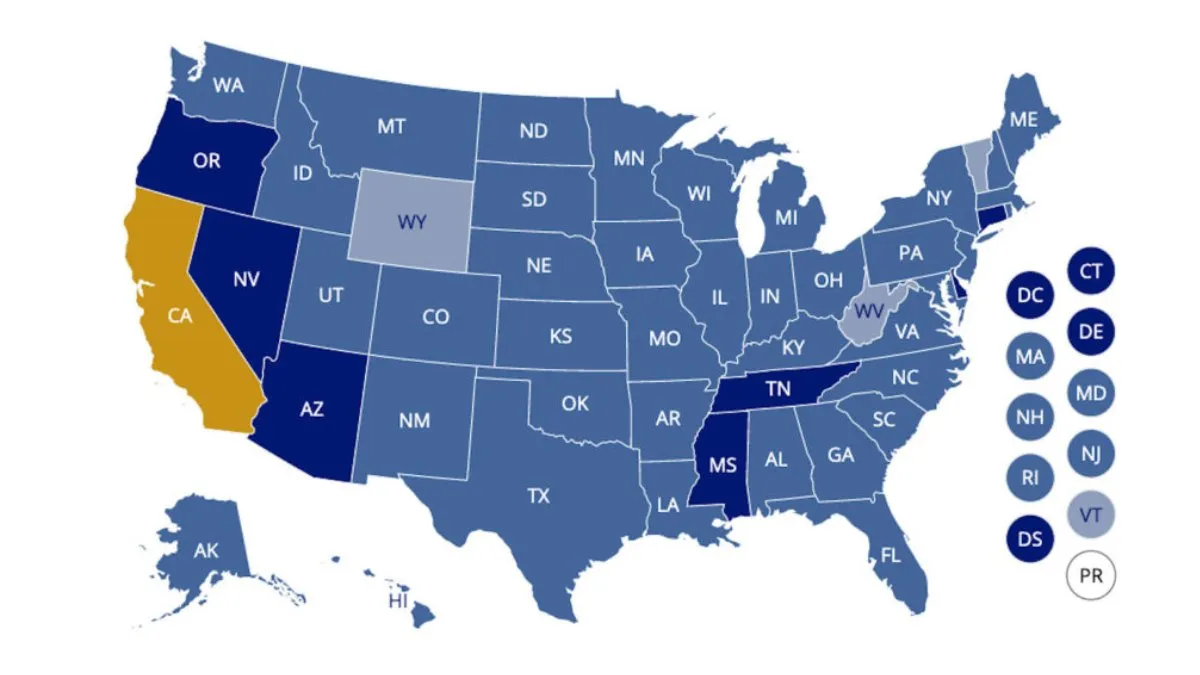
School examinations and college readiness assessments are not the only ways to gauge the level of educational quality in the United States. A nationwide assessment (known as the Nation's Report Card) is one of the tools that gives insight into the academic knowledge of students across the country in important academic areas. The Nation’s Report Card supplies an objective overview of where students rank academically nationwide and also provides information on specific states’ academic rankings as they relate to national academic standards.
In addition to national assessments, many states administer high-stakes assessments that impact students' grades and ability to apply to postsecondary institutions. By providing only information related to the overall quality of learning outcomes and achievement standards, the Nation's Report Card can provide valuable information about the ability to measure student success without using high stakes grading or admissions as part of its assessment process.
Check Out: List of Top 5 Ivy League Schools Ranked by ROI (2025)
What is the NAEP Test?
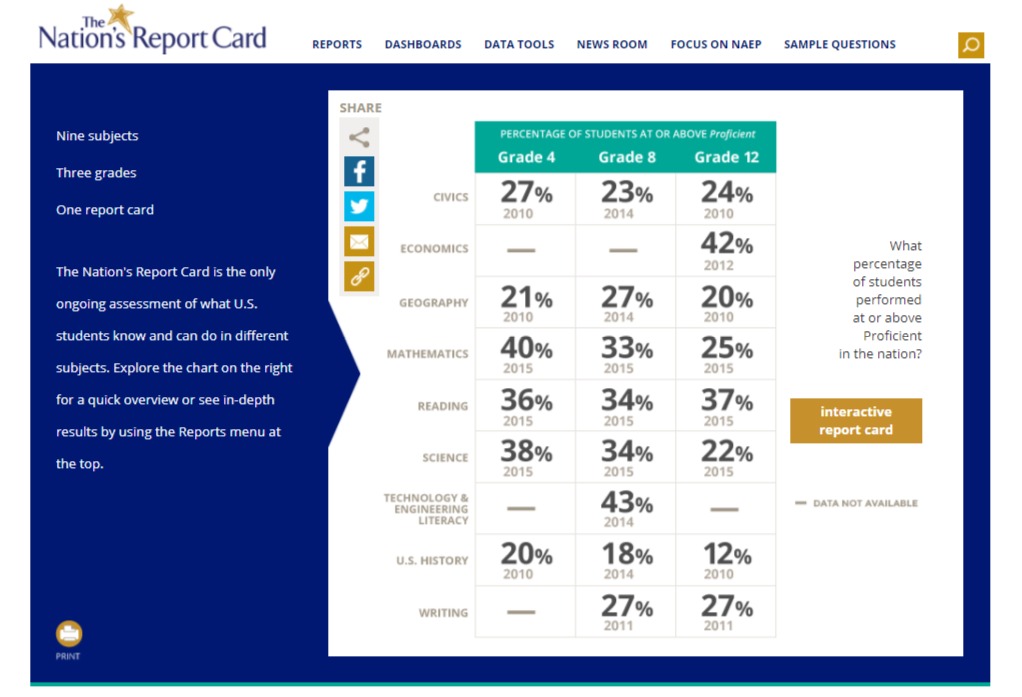
The National Assessment of Educational Progress (NAEP) provides a standardized test that gives an indication of the proficiency of American students in the subject areas mentioned above. Collectively, NAEP is administered by the National Center for Education Statistics (NCES) on behalf of the U.S. Department of Education. NAEP assesses students in four specific grades (4th, 8th, and sometimes 12), using representative samples from each of the grades being assessed.
Subjects assessed by the NAEP include reading, math, science, writing, U.S History, Geography/Civics. Unlike other assessments, NAEP is not designed to produce pass- fail results; therefore, it has no effect on individual student academic performance, and as a result, does not affect the rankings of schools.
NAEP allows for the gathering of reliable data that provide insight into the learning trends at both the national and state levels; these trends enable educators and policymakers to evaluate the general effectiveness of the American educational system.
What Does “Nation’s Report Card” Mean?
The NAEP's designation as "Nation's Report Card" is rooted in its use of common standards and frameworks across the country to assess education in the United States. The NAEP allows comparisons of results both nationally and by state, as well as monitoring changes in student performance over time.
As a national assessment of educational progress, NAEP does not artificially limit the evaluation of students to any given curriculum, but rather assesses the overall condition of education within the United States.
Conclusion
To summarize, NAEP is known as the Nation's Report Card because it is a comprehensive assessment of U.S. education system performance that provides long-term, reliable data regarding the progress and achievements of American students. As such, it is critical to our understanding of how to improve education across the United States.





Comments
All Comments (0)
Join the conversation