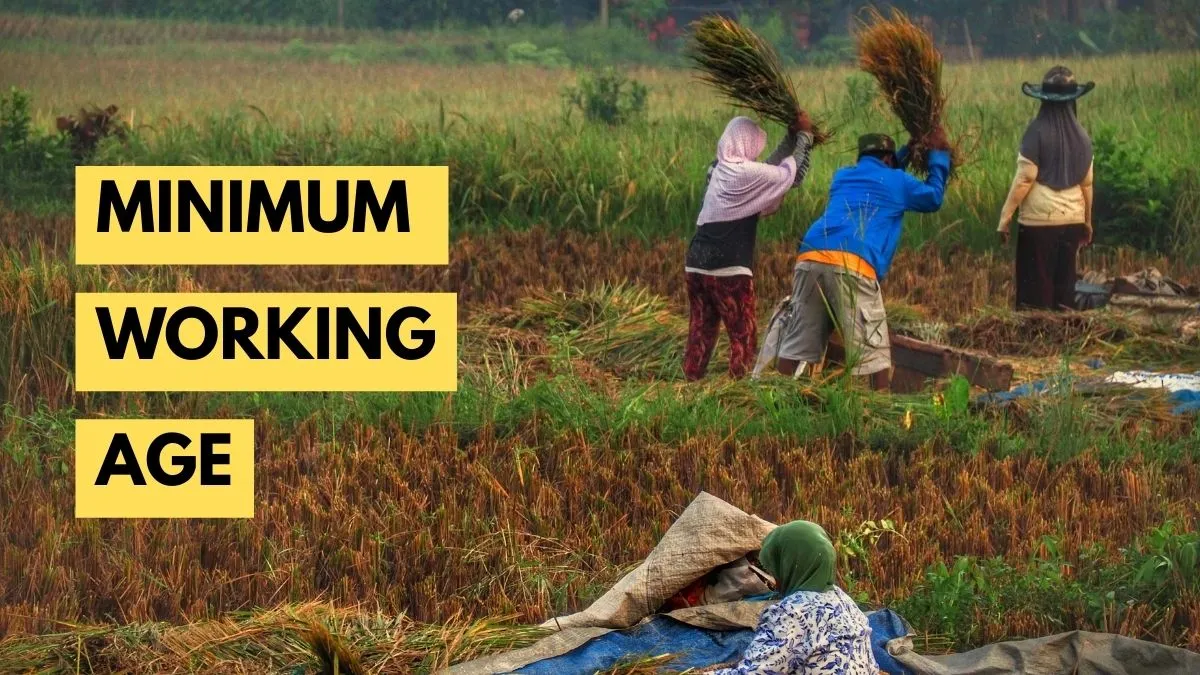
Minimum working age: In the United States, child labor laws are designed to protect minors while allowing them limited opportunities to work and gain experience. These laws are mainly governed by federal regulations under the Fair Labor Standards Act (FLSA), but individual states are permitted to set their own rules as long as they do not conflict with federal law. Due to this shared system, the minimum working age for minors can vary from one state to another, particularly when comparing agricultural and non-agricultural employment.
Generally, non-agricultural jobs follow stricter rules, with 14 years being the standard minimum age under federal law. Agricultural work, however, is regulated more flexibly, and several states allow minors to work at younger ages, particularly outside school hours or with parental consent.
Some states also completely exempt minors from agricultural work, while others require employment certificates or proof of age.
READ | Which U.S. Exam Is Known as the Nation’s Report Card?
Minimum Working Age by State
Here is the list of all U.S. states' overviews of the minimum working age requirements :
| State | Minimum Age (Agricultural Jobs) | Minimum Age (Non-Agricultural Jobs) |
| Alabama | Agriculture exempt (minors not permitted) | 14 |
| Alaska | 14 (outside school hours) | 14 |
| Arizona | 14 (outside school hours) | 14 |
| Arkansas | 14 (outside school hours) | 14 |
| California | 12 (outside school hours) | 14 |
| Colorado | 12 (outside school hours) | 14 |
| Connecticut | 14 (outside school hours) | 14 |
| Delaware | Agriculture exempt | 14 |
| Florida | 14 | 14 |
| Georgia | Agriculture exempt | 14 |
| Hawaii | 14 (10–15 for specific crops) | 14 |
| Idaho | 16 (school hours only) | 14 |
| Illinois | 10 (outside school hours) | 14 |
| Indiana | 12 (outside school hours) | 14 |
| Iowa | 14 (12 for migratory labor) | 14 |
| Kansas | Agriculture exempt | 14 |
| Kentucky | Agriculture exempt | 14 |
| Louisiana | Agriculture exempt | 14 |
| Maine | 14 (younger allowed for harvesting only) | 14 |
| Maryland | Agriculture exempt | 14 |
| Massachusetts | 14 (with certification) | 14 |
| Michigan | 13 (outside school hours) | 14 |
| Minnesota | 12 (outside school hours) | 14 |
| Mississippi | Agriculture exempt | 14 |
| Missouri | 14 (outside school hours) | 14 |
| Montana | Agriculture exempt | 14 |
| Nebraska | Agriculture exempt | 14 |
| Nevada | 14 (during school hours) | 14 |
| New Hampshire | 12 (outside school hours) | 14 |
| New Jersey | 12 (outside school hours) | 14 |
| New Mexico | 14 (hardship cases) | 14 |
| New York | 12 (harvesting only) | 14 |
| North Carolina | Agriculture exempt | 14 |
| North Dakota | 14 | 14 |
| Ohio | 14 (outside school hours) | 14 |
| Oklahoma | Agriculture exempt | 14 |
| Oregon | 9 (berries/beans with consent) | 14 |
| Pennsylvania | 14 (farm work restricted below 14) | 14 |
| Rhode Island | Agriculture exempt | 14 |
| South Carolina | 14 (12 with parental consent) | 14 |
| South Dakota | No set minimum age | 14 |
| Tennessee | Agriculture exempt | 14 |
| Texas | Agriculture exempt | 14 |
| Utah | No minimum age with parental consent | 14 |
| Vermont | 14 (labor certificate required) | 14 |
| Virginia | 14 | 14 |
| Washington | 12 (specific crops only) | 14 |
| West Virginia | Agriculture exempt | 14 |
| Wisconsin | 12 (outside school hours) | 14 |
| Wyoming | Agriculture exempt | 14 |
The minimum working age in the United States is not the same everywhere and depends heavily on state laws and the type of job involved.
Recommended Reading:
Which U.S. County has the Lowest Population? Check Reasons Here!




-1766145347216.jpg)

Comments
All Comments (0)
Join the conversation