GK Quiz on National Symbols: What Do the 24 Spokes in the Ashoka Chakra Represent?
As India prepares for Independence Day 2026, testing your basic awareness of country facts is a great way to brush up. Try this quick general knowledge quiz on India’s national symbols, from the blue wheel in the flag to the official emblem.
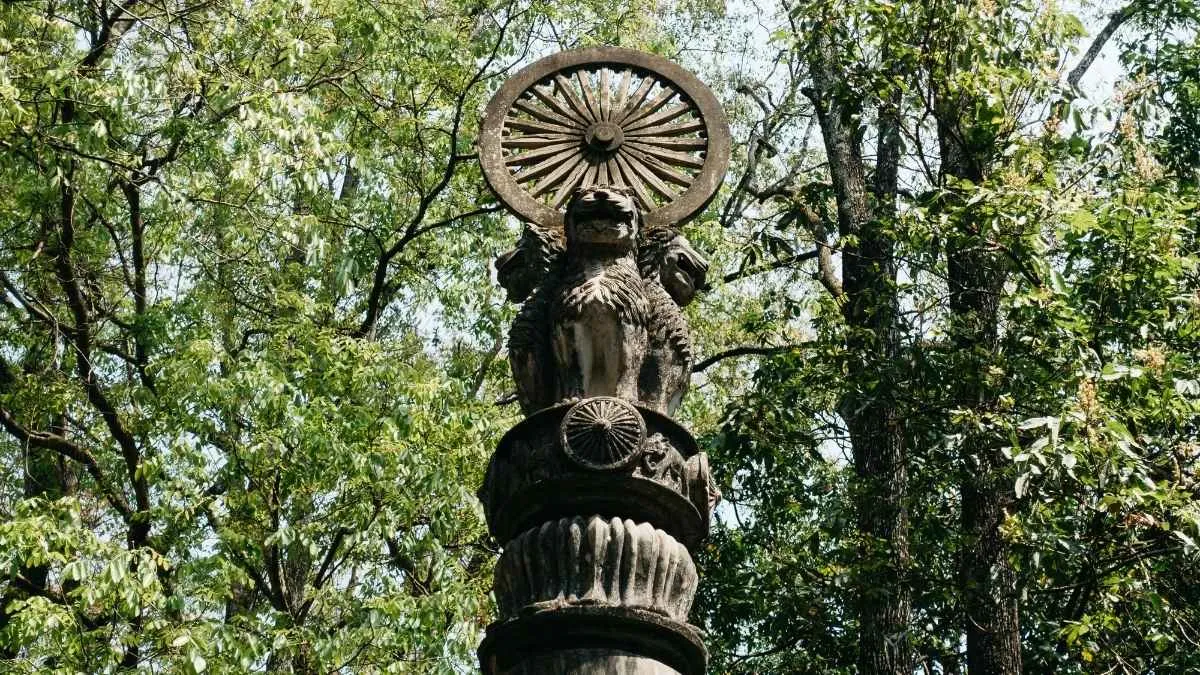
In August each year students search for information about national symbols of India that may be required for school functions and exams. There are official guidelines by the Ministry of Home Affairs regarding how to the hoist the national flag and about all the state emblem. But basic information may prove difficult for students to remember during exams.
This gk quiz on national symbol of india covers everyday questions about these official icons starting with what the 24 spokes in the Ashoka Chakra actually stand for to try ahead of Indepndence Day celebration on 15 August 2026.
10 GK Quiz on National Symbols of India with Answers and Explanations
Q1. What do the 24 spokes in the Ashoka Chakra on the Indian National Flag represent?
a) 24 states of ancient India
b) 24 hours of the day and 24 principles of life
c) 24 freedom fighters of 1857
d) 24 main rivers of India
Answer: b) 24 hours of the day and 24 principles of life
Explanation: The navy blue wheel stands for constant progress round the clock with each spoke representing human values like honesty, peace, and patience.
Q2. On which date did the Government of India officially adopt the National Emblem?
a) August 15, 1947
b) November 26, 1949
c) January 26, 1950
d) August 14, 1950
Answer: c) January 26, 1950
Explanation: India adopted the Lion Capital from Ashoka’s pillar at Sarnath on the same day the country became a republic.
Q3. Where does the motto 'Satyameva Jayate' printed below the National Emblem come from?
a) Rigveda
b) Mundaka Upanishad
c) Bhagavad Gita
d) Arthashastra
Answer: b) Mundaka Upanishad
Explanation: The phrase translates to ‘Truth alone triumphs’ and comes from an ancient text called the Mundaka Upanishad.
Q4. Which four animals appear on the circular base right under the four lions in the National Emblem?
a) Lion, Elephant, Bull, and Horse
b) Tiger, Lion, Elephant, and Peacock
c) Lion, Cow, Deer, and Horse
d) Elephant, Rhino, Horse, and Bull
Answer: a) Lion, Elephant, Bull, and Horse
Explanation: The base shows an elephant, a galloping horse, a bull, and a lion separated by small wheels.
Q5. Who designed the basic layout of the Indian National Flag adopted in July 1947?
a) Rabindranath Tagore
b) Pingali Venkayya
c) Gopal Krishna Gokhale
d) Sarojini Naidu
Answer: b) Pingali Venkayya
Explanation: Pingali Venkayya from Andhra Pradesh created the original design that became the base for our current flag.
Q6. What is the fixed ratio of length to height for the Indian National Flag?
a) 2:1
b) 4:3
c) 3:2
d) 5:3
Answer: c) 3:2
Explanation: According to the Flag Code of India the flag must always be rectangular with length measuring 1.5 times its height.
Q7. Which aquatic species was named the National Aquatic Animal of India in 2009?
a) Blue Whale
b) Gangetic River Dolphin
c) Dugong
d) Green Sea Turtle
Answer: b) Gangetic River Dolphin
Explanation: The freshwater dolphin of the Ganga river was chosen to help protect its shrinking population and clean river habitats.
Q8. Who wrote the National Song of India Vande Mataram?
a) Rabindranath Tagore
b) Bankim Chandra Chattopadhyay
c) Kazi Nazrul Islam
d) Sri Aurobindo
Answer: b) Bankim Chandra Chattopadhyay
Explanation: Bankim Chandra Chattopadhyay wrote the poem in Sanskritized Bengali as part of his 1882 novel Anandamath.
Q9. How long does a standard full playing of the National Anthem Jana Gana Mana take?
a) 45 seconds
b) 52 seconds
c) 60 seconds
d) 65 seconds
Answer: b) 52 seconds
Explanation: Government rules set the exact timing for playing or singing the complete version at 52 seconds.
Q10. Which tree is the official National Tree of India?
a) Neem Tree
b) Peepal Tree
c) Banyan Tree
d) Mango Tree
Answer: c) Banyan Tree
Explanation: The Indian Banyan (Ficus benghalensis) was picked because its spreading branches and roots symbolise long life and shelter.
Q11. Which fruit holds the status of National Fruit of India?
a) Apple
b) Mango
c) Banana
d) Guava
Answer: b) Mango
Explanation: The native mango (Mangifera indica) has been grown across India for thousands of years and represents warm summers.
Q12. Which animal is officially named as the National Heritage Animal of India?
a) Royal Bengal Tiger
b) Indian Elephant
c) Snow Leopard
d) Asiatic Lion
Answer: b) Indian Elephant
Explanation: The tiger remains the National Animal but the government added the Indian Elephant as the National Heritage Animal in 2010 to boost forest conservation.

Harshita Singh is an education and general knowledge journalist with over 5 years of experience in educational writing. Specializing in US affairs and GK, Harshita has a track record of breaking down intricate geopolitical and historical subjects into clear, digestible insights for learners. Her strong background in text analysis, coupled with a Bachelor of Arts (Hons) in English from the University of Delhi, helps her produce authoritative, thoroughly researched content that empowers readers to engage confidently with global current affairs. For inquiries or academic insights, you can reach out to her directly at harshita.singh@jagrannewmedia.com.