List of Perennial Rivers in India
Perennial Rivers: Check out the major perennial rivers of India, including the Ganga, Yamuna, and the Brahmaputra. Explore their sources, endpoints, and more.
Key Points
- Perennial rivers are vital for agriculture, drinking water, and historical civilizations.
- Ganga originates from Gangotri Glacier, flowing 2,525 km to the Bay of Bengal.
- Many perennial rivers face pollution, overuse, and climate change threats.
Perennial Rivers: India is a land of rivers, and these rivers have played a very important role in shaping the country’s geography, culture, economy, and civilization since ancient times.
Among the many types of rivers found in India, perennial rivers hold special importance.
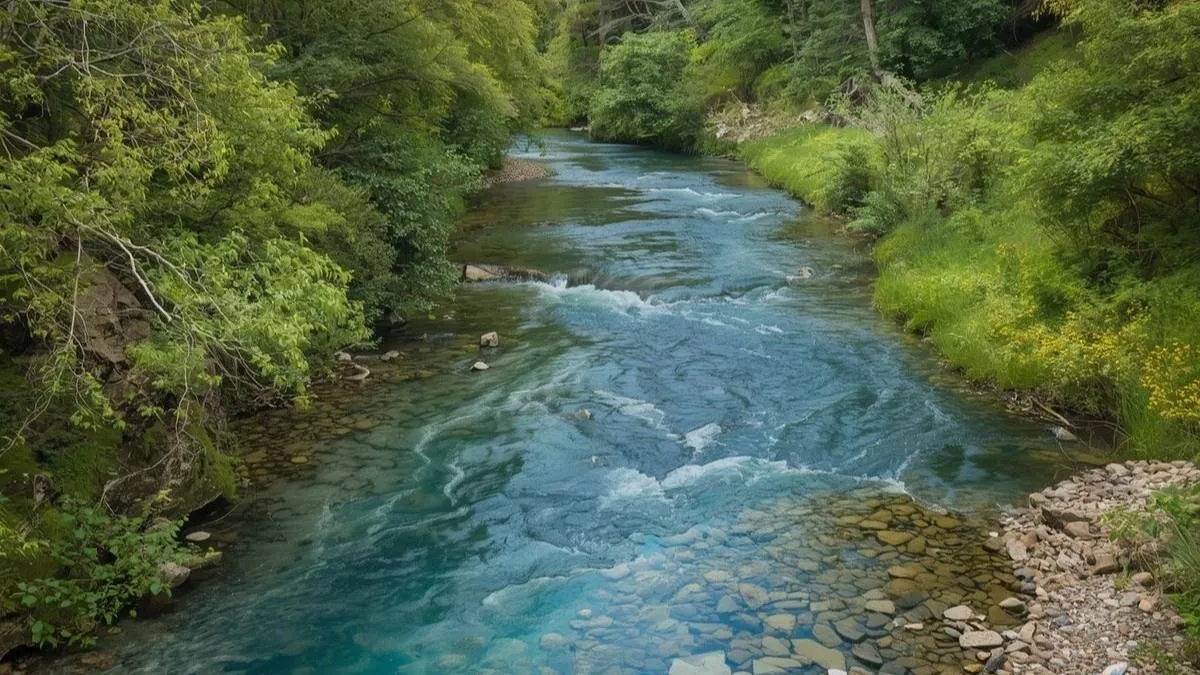
Perennial rivers are those that flow throughout the year, regardless of seasonal changes or variations in rainfall.
These rivers receive a continuous supply of water from Himalayan glaciers, natural springs, snowmelt, and underground sources, which helps them maintain a steady flow even during dry seasons.
Perennial rivers act as lifelines for millions of people. They support agriculture by providing reliable irrigation, supply drinking water to towns and cities, and contribute to industrial growth.
Many important civilisations in India developed along the banks of perennial rivers, highlighting their historical significance.
However, many perennial rivers in India right now are facing serious challenges such as pollution, overuse of water, climate change, and reduced natural flow.
READ | Which River Is Known As The 'Sky River Of The Himalayas'?
List of Perennial Rivers in India
But, still, let’s see the list of perennial rivers in India:
| River Name | Source | Endpoint |
| Ganga | Gangotri Glacier, Uttarakhand | Bay of Bengal, West Bengal |
| Yamuna | Yamunotri Glacier, Uttarakhand | Ganga, Allahabad, Uttar Pradesh |
| Brahmaputra | Tibet | Bay of Bengal, Bangladesh |
| Godavari | Nasik, Maharashtra | Bay of Bengal, Andhra Pradesh |
| Krishna | Mahabaleshwar, Maharashtra | Bay of Bengal, Andhra Pradesh |
| Narmada | Amarkantak, Madhya Pradesh | Gulf of Khambhat, Gujarat |
| Tapti | Multai, Madhya Pradesh | Gulf of Khambhat, Gujarat |
| Mahanadi | Raipur, Chhattisgarh | Bay of Bengal, Odisha |
| Kaveri | Talakaveri, Karnataka | Bay of Bengal, Tamil Nadu |
| Tungabhadra | Western Ghats, Karnataka | Krishna River, Andhra Pradesh |
-
Ganges River
The Ganges River, which is famously known as the Ganga, is one of the most sacred and important rivers in India. It flows through India and Bangladesh and is about 2,525 kilometres long.
The river originates from the Gangotri Glacier in the Himalayas and flows through the northern plains of India before entering Bangladesh and draining into the Bay of Bengal.
-
Yamuna River
The Yamuna is one of the most important & sacred perennial rivers of India. It rises from the Yamunotri glacier on the southern slopes of Uttarakhand.
Its approximate length is around 1376 kilometres, i.e., 855 miles. It merges with the Ganges at the Triveni Sangam in Prayagraj, Uttar Pradesh.
-
Brahmaputra River
The Brahmaputra River is one of the largest and most important rivers in Asia. It flows through China, India, and Bangladesh and has a total length of approximately 2,900 kilometres.
The river originates in the Himalayas in Tibet, where it is known as the Tsangpo. After entering India through Arunachal Pradesh, it flows across Assam before entering Bangladesh and finally merging with the Ganges system near the Bay of Bengal.
-
Godavari River
The Godavari is the largest river of Peninsular India. Although perennial, it is also known as a rain-fed river, as it does not have glaciers to feed it. It depends solely on the Indian monsoon.
It is approximately 1465 km in length.
-
Krishna River
The Krishna River is one of the longest and most important rivers in central and southern India. It begins in the Western Ghats near Mahabaleshwar and is 1400 kilometres in length, approximately.
Recommended Reading:
Which Glacier Is The Source Of The Brahmaputra River?
Enter your Blink text here...