India-Israel Relations
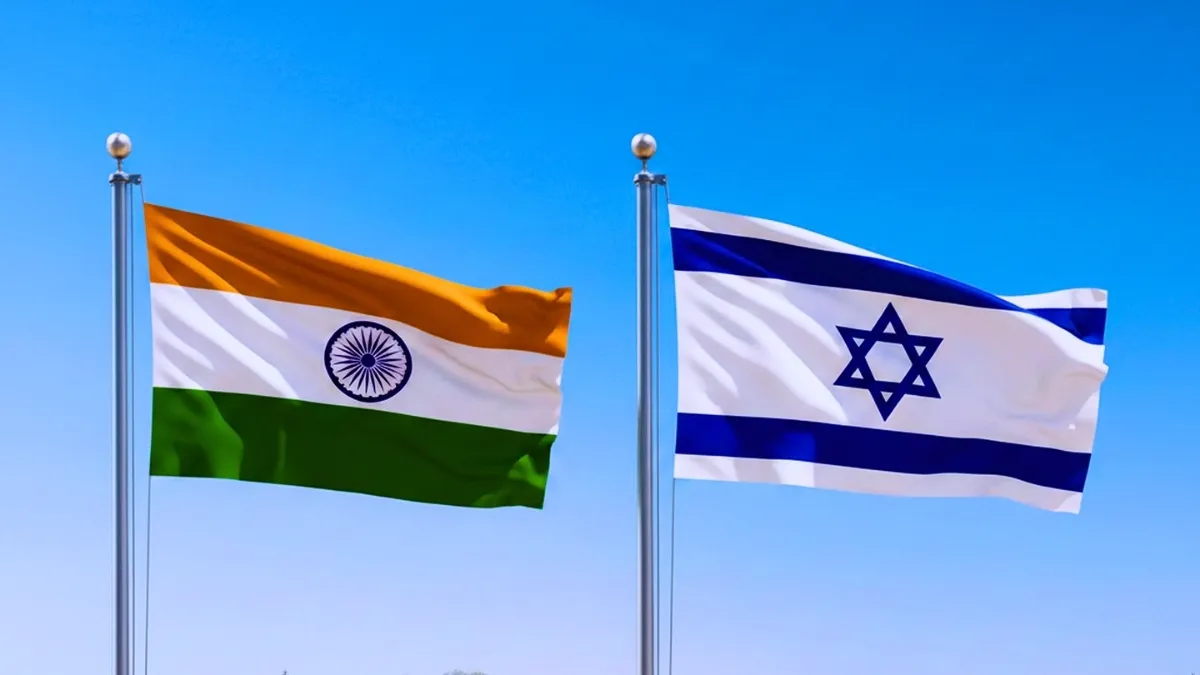
Explore the evolution of India-Israel relations from 1950 to 2026. Discover how defense, agriculture, and the new I2U2 alliance have shaped this "lab-to-field" strategic partnership.
Key Points
- FTA negotiations launched in February 2026 to boost trade beyond $3.62 billion.
- PM Modi's February 2026 visit elevates ties to a 'Special Strategic Partnership'.
- Cooperation prioritizes AI, cybersecurity, and defense technology.
India-Israel Relations: The story of India and Israel is a tale of two ancient civilizations becoming modern strategic allies, both countries are separated by geography but united by shared challenges like cross-border terrorism and water scarcity, both nations have built a multifaceted bond. As of February 2026, the relationship has reached a new peak with the launch of Free Trade Agreement (FTA) negotiations and deep cooperation within the I2U2 grouping.
Latest Update: PM Modi’s Historic Visit to Israel In 2026
In a significant move to deepen relations between the "Special Strategic Partnership," Prime Minister Narendra Modi is currently on a two-day State visit to Israel (February 25–26, 2026). This marks his second trip to the nation since his path-breaking 2017 visit, which first brought the bilateral relationship out of the shadows.
Key Highlights of the 2026 Visit:
- PM Modi has become the first Indian Prime Minister to address the Israeli Parliament, the Knesset. The session was marked by a symbolic gesture as the Knesset building was illuminated in the Indian tricolour.
- Discussions between PM Modi and PM Benjamin Netanyahu are focused on elevating the relationship to a "Special Strategic Partnership," similar to Israel's ties with the US and Germany.
- The visit prioritizes high-level cooperation in AI, cybersecurity, and defense technology. Talks include potential deals for Heron MK-2 drones and discussions on Israel's Iron Dome technology.
- The first round of negotiations for the India-Israel Free Trade Agreement (FTA) commenced in New Delhi, aiming to boost trade beyond the current $3.62 billion (FY25).
India-Israel Relations
The relationship between India and Israel has undergone a dramatic transformation over the last seven decades. What began as a cautious, distant acquaintance during the Cold War has evolved into a robust Strategic Partnership that touches everything from high-tech defense to the water used in Indian farms. As of 2026, the bond is stronger than ever, anchored by mutual interests in security, innovation, and regional stability.
Historical Background:
For many years, India’s foreign policy was defined by its commitment to the Non-Aligned Movement (NAM) and its close ties with the Soviet bloc and Arab nations.
-
Ideological Distance: India’s first Prime Minister, Jawaharlal Nehru, and Mahatma Gandhi initially opposed the creation of Israel on religious grounds, favoring a secular Palestinian state.
-
Non-Aligned Movement (NAM): India’s leadership in NAM and its close ties with the Soviet Union and Arab nations further distanced it from Israel, which was firmly allied with the West.
-
The Recognition (1950): India formally recognized Israel on September 17, 1950, but refused to establish full diplomatic ties, allowing only a small consulate in Mumbai to handle trade and travel.
-
The Secret Ally: Despite the public distance, Israel provided critical military support to India during the 1962 war with China and the 1965 and 1971 wars with Pakistan.
India-Israel Relations After 1992:
It wasn't until 1992 that India, under a changing global order, established full diplomatic relations, opening embassies in Tel Aviv and New Delhi.The collapse of the Soviet Union and the beginning of the Middle East peace process in the early 1990s allowed India to recalibrate its foreign policy.
-
On January 29, 1992, under Prime Minister P.V. Narasimha Rao established full diplomatic relations and opened its embassy in Tel Aviv.
-
The Kargil War (1999) a major catalyst for trust was the Kargil conflict 1999 Israel provided India with urgently needed precision-guided munitions and surveillance drones while other nations were hesitant. This solidified the "security-first" nature of the bond.
The Strategic Leap After 2014–Present:
Under the leadership of Prime Minister Narendra Modi and Prime Minister Benjamin Netanyahu, the relationship was brought "out of the closet." and High-Level Diplomacy such as
PM Modi became the first Indian Prime Minister to visit Israel in 2017, notably skipping the traditional stop in Ramallah (Palestine), a move known as "de-hyphenation."
-
During this visit, the ties were officially upgraded to a Strategic Partnership.
Defense and Security: Israel has become one of India’s top three arms suppliers. Cooperation has shifted from a "buyer-seller" model to joint production under the ‘Make in India’ initiative
-
Barak-8 Missile System: A joint venture between India's DRDO and Israel's IAI and Rafael have partnered with Indian firms (Adani, Tata, Bharat Forge) to build high-tech defense sub-systems.
-
Drones, collaborations like the Adani-Elbit plant in Hyderabad produce Hermes 900 drones.
-
Phalcon AWACS, Heron drones, and Barak anti-missile systems.
2. Agriculture and Water Management:
This relationship is often called a partnership. Israel's expertise in "making the desert bloom" has been vital for India’s food security.
-
Centers of Excellence: Over 30 Centers across India train farmers in drip irrigation and crop diversity.
-
Water Tech: A 2016 MoU focuses on water resource management, helping India tackle its growing water scarcity challenges.
-
Water Management: India utilizes Israeli expertise in drip irrigation and desalination to combat water scarcity (e.g., the Indo-Israel Bundelkhand Water Project).
India is Israel’s second-largest trading partner in Asia though the bilateral merchandise trade is dominated mainly by diamonds, petroleum products, and chemicals, recent years have witnessed an increase in trade in areas such as electronic machinery and high-tech products, communications systems, medical equipment, etc.
Major exports: It includes pearls and precious stones, automotive diesel, chemical and mineral products, machinery and electrical equipment, plastics, textiles, apparel, base metals and transport equipment, and agricultural products.
Major Import: It includes pearls and precious stones, chemical and mineral/fertilizer products, machinery and electrical equipment, petroleum oils, defence, machinery, and transport equipment.
India-Israel-UAE-USA (I2U2):
The I2U2 Group (The West Asian Quad) established in 2021, the I2U2 Group (India, Israel, UAE, USA) focuses on joint investments in water, energy, transportation, space, health, and food security. It represents a new era of regional integration in the Middle East.

Manisha Waldia is a distinguished content strategist with 5 years of experience crafting premium educational content for UPSC and State PCS, with a focus on deep conceptual analysis across Polity, Geography, History, and Environment. She currently brings this expertise to Jagran Josh, where she covers major national and international events, current affairs, and static general knowledge. Over her career, Manisha's specialized insights have led her to curate high-impact materials and serve as a UPSC Mains answer-evaluator for India’s top institutes—including Drishti IAS, Shubhra Ranjan IAS, Study IQ, GS Score, and PWonlyIAS. She has also worked alongside leading NGOs like Oxfam India and Avani Kumaon.
Contact: manisha.waldia@jagrannewmedia.com