ICSE Class 10 Physical Education Syllabus for Board Exam 2026-27: Download Free PDF Here
Download the ICSE Class 10th Physical Education Syllabus PDF here. Check the latest official CISCE Physical Education topics, exam pattern, internal assessment details and important chapter wise highlights.
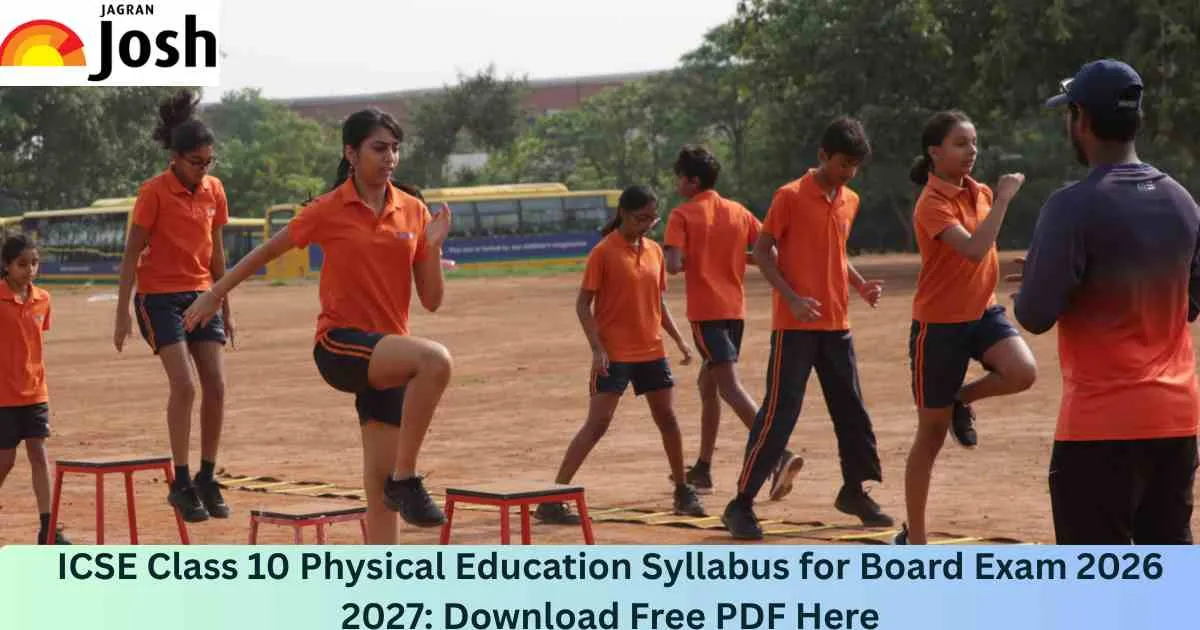
ICSE Class 10 Physical Education Syllabus 2026-27: The ICSE Class 10 Physical Education Syllabus 2026-27 is designed to help students develop physical fitness, sports skills, discipline and a healthy lifestyle. The syllabus covers concepts of Physical Education, Health Education, Anatomy and Physiology, Sports Training, Physical Fitness, First Aid and various games and sports. It also includes practical assessment through physical efficiency tests and specialised activities such as athletes, gymnastics, swimming, yoga and team games and sports. Going through the latest syllabus will help students prepare effectively for the board exam and gain a clear understanding of both the theoretical and practical skills. Read the article to check the latest ICSE Class 10 Physical Education Syllabus 2026-27 and download the free PDF to begin your preparation. Read the article to know more details.
ICSE Class 10th Physical Education: Overview
Candidates can check the table given below to know important details about the class 10th Physical Education exam including the exam duration, total marks and more.
| ICSE Class 10th Physical Education: Overview | |
| Particular | Details |
| Exam Conducting Body | Indian Certificate of Secondary Education |
| Class | 10 |
| Exam Level | School |
| Subject | Physical Education |
| Exam Mode | Offline (Pen and Paper Based) |
| Exam Frequency | Once a Year |
| Theory Marks | 100 |
| Internal Assessment Marks | 100 |
| Exam Duration | 2 Hours (120 Minutes) |
| Language of Exam | English |
| Official Website | cisce.org |
| Contact Details | Phone: 011 29564831 Email: council@cisce.org |
ICSE Class 10 Physical Education Syllabus 2026-27: Section A (Theory)
The theory syllabus for Section A focuses on the fundamentals of physical education, sports training, health fitness and first aid. Students are expected to understand key concepts, their practical application and the role of physical activity in maintaining overall well being.
| ICSE Class 10 Physical Education Syllabus 2026-27: Section A (Theory) | ||
| Unit | Unit Names | Key Topics |
| Unit 1 | Physical Education | Meaning, aims, objectives, importance of physical education, and its role in developing physical, mental, emotional, and social fitness. |
| Unit 2 | Training Methods | Principles of training, warming up, cooling down, conditioning exercises, and methods used to improve sports performance. |
| Unit 3 | Health Education | Meaning of health, personal hygiene, balanced diet, nutrition, communicable and lifestyle diseases, and healthy living habits. |
| Unit 4 | Human Anatomy and Physiology | Basic structure and functions of the skeletal, muscular, circulatory, and respiratory systems along with their importance during physical activity. |
| Unit 5 | Sports Injuries and First Aid | Common sports injuries, causes, prevention, immediate first aid, and basic rehabilitation measures. |
| Unit 6 | Physical Fitness | Components of physical fitness including strength, speed, endurance, flexibility, agility, balance, and coordination with methods to improve them. |
| Unit 7 | Games and Sports | Rules, terminology, dimensions of the playing area, equipment, officials, and basic skills related to the prescribed games and sports. |
| Unit 8 | Olympic Movement | History of the Olympic Games, Olympic symbols, motto, values, and India's participation in international sporting events. |
ICSE Class 10 Physical Education Syllabus 2026-27: Section B (Practical)
Section B focuses on practical skill and performance. Students are required to appear for Physical Efficiency Tests and choose one specialization activity from the prescribed list. The practical syllabus students develop fitness, game skill, coordination and sportsmanship skills.
| Practical Component | Activity | Details Covered |
| Part 1 | Physical Efficiency Tests | Students are assessed through fitness tests including 50 m Dash, Standing Long Jump, Distance Run (1000 m for boys / 600 m for girls), Push-ups, Shuttle Run, and 30 Sit-ups. |
| Part 2 | Athletics (Specialisation) | Students can choose events from track races (50 m, 100 m, 200 m, 400 m, 800 m, 1500 m) and field events such as Long Jump, High Jump, Shot Put, Hop Step and Jump, Pole Vault, Discus Throw, Javelin Throw, and Softball Throw. |
| Part 3 | Team Games (Specialisation) | Choice of games such as Cricket, Football, Hockey, Basketball, Volleyball, Throwball, Badminton, Table Tennis, Tennis, Kabaddi, Kho-Kho, Handball, Netball and other prescribed games. Students are assessed on fundamental skills, techniques, rules, and match performance. |
| Part 4 | Gymnastics | Floor exercises and apparatus work including Parallel Bars, Uneven Bars, Balance Beam, Vaulting Horse, and Horizontal Bar (for boys) depending on the prescribed syllabus. |
| Part 5 | Swimming | Practical assessment in selected swimming events including Freestyle, Breaststroke, Backstroke, Butterfly Stroke, and Diving based on the prescribed distances for boys and girls. |
| Part 6 | Dancing | Performance in any two forms such as Indian Classical Dance, Folk Dance, Western Dance, or a combination of dance movements and floor exercises. |
| Part 7 | Yoga | Performance of prescribed asanas and yogic practices, focusing on posture, balance, flexibility, breathing techniques, and body control. |
Direct Link to Download ICSE Class 10th Physical Education Syllabus 2026-27
Preparation Tips for ICSE Class 10 Physical Education Subject
- Revise important rules and sports terminology for your chosen games to score well in the theory section.
- Practice fitness tests regularly to improve speed, strength, flexibility and endurance for the practical exam
- Focus on mastering basic skills and techniques of your selected sport through consistent practice
- Study health, first aid and training concepts using short notes for quick revision before the exam
- Solve previous year papers and maintain regular practical practice to build confidence for both theory and internal assessment
ICSE Class 10 Physical Education Internal Assessment
The internal assessment carries 100 marks and is divided into two parts. Students are assessed by both the subject teacher and an external examiner to evaluate their practical skills, physical fitness and performance in different sports and activities.
| Assessment Component | Marks | Details |
| Assessment by Subject Teacher | 50 | Performance is assessed in any two games or activities chosen from the prescribed list. |
| Assessment by External Examiner | 50 | Includes Physical Efficiency Tests and a Specialisation Test. |
| Total | 100 | Practical assessment for Physical Education. |
Students are advised to follow the prescribed Physical Education syllabus to access a clear outline of the subject. It is helpful for both students and teachers to plan for board exams.With a clear map of the syllabus, students can plan their studies and manage their time effectively and teachers can also plan classes in a more organized manner.

Faham is an education specialist and has over three years of experience in the education and edtech industry, specializing in digital and educational content creation. He holds an MBA in Marketing and Human Resources from Swami Vivekanand University. Throughout his career, Faham has developed expertise in creating engaging and informative content across diverse educational domains.
In addition to his edtech experience, he worked for two years as a Public Speaking and Creative Writing Expert, helping learners enhance their communication and writing skills. He has also been associated with Testbook and Adda Education as a Content Writer, where he created high-quality content for K–12 education, Management Entrance Examinations, UPSC, Law, and State Defence examinations. His strong understanding of educational content and exam preparation enables him to simplify complex topics and deliver valuable learning resources to students.