Battle Of Plassey: Causes, Outcome, Significance & Impact
The Battle of Plassey (1757) marked a historic turning point in Indian history, enabling the British East India Company to seize political and economic control of Bengal, laying the foundation for British colonial rule in India through diplomacy, betrayal, and military strategy.

The Battle of Plassey was a decisive military confrontation which was fought on 23 June 1757 in north-eastern India.
It was a historical moment in the history of the Indians because it made the British East India Company achieve political and military control over Bengal, which was the beginning of the rule by the British in India.
But, what why this battle was fought and between whom, its background, outcomes, impact amd significance.
So, let' explore this article and know more in detail about the Battle of Plassey.
Why Was the Battle of Plassey Fought?
The Battle of Plassey was fought in order to achieve political as well as economic dominance over Bengal.
The tension developed between the British East India Company and the Nawab of Bengal regarding the privileges of the trade, military fortifications, and the influence of Britain in the local politics resulted in the conflict.
Also Read: Who Was the Last Mughal Emperor of India?
Between Whom Was the Battle of Plassey Fought?
The Battle of Plassey was fought between:
-
Siraj-ud-Daulah, the Nawab of Bengal, was supported by French officers
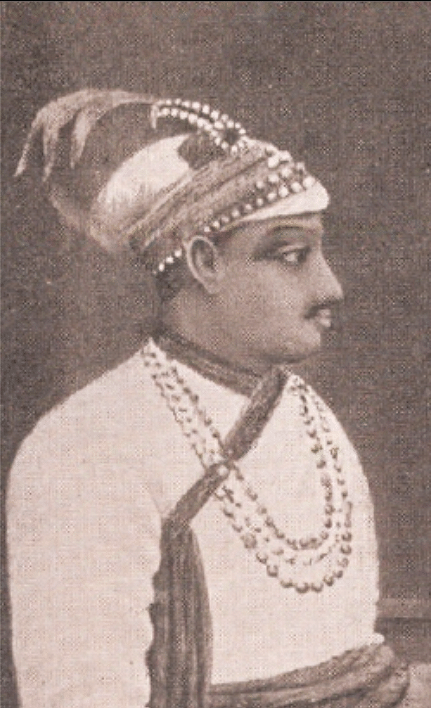
Source: World History
-
The British East India Company, which was headed by Robert Clive.
What was the Political turmoil before the Battle?
The Mughal Empire started to weaken by the middle of the 18 th century. The change in power between the Nawabs of Bengal and the British started in 1757 and lasted up to 1765, when the British overpowered the former.
In Bengal, there was an unprecedented development under the reign of Murshid Quli Khan (1700-1727), Shujauddin (1727-1739) and Alivardi Khan (1739-1756).
However, Alivardi Khan passed away in 1756 before any action could be taken.
He had been succeeded by his grandson, Siraj-ud-daula, the son of the youngest daughter of Alivardi.
Siraj-ud-Daulah inherited a lot of the grandfather's trouble. He was a rival to his cousin, who is the Nawab of Purnea, Shaukat Jang.
He had his adversaries in his unfriendly aunt, Ghasiti Begum, and a seditious leader of the military, Mir Jafar, who was the husband of the sister of Alivardi Khan.
What was the Background of the Battle of Plassey?
The officers of the British East India Company were leading abusers of their trading rights, and thereby hurt the finances of the Nawab.
Furthermore, the English made Calcutta fortified against the permission of the Nawab.
-
Asylum to Fugitives: The Company also tried to cheat him and also made the situation worse by asyluming a political fugitive, Krishna Das, son of Raj Ballabh, who fled away with huge wealth at the will of the Nawab.
-
French Factor: The Company, on its part, was suspicious that Siraj ud-Daulah would collude with the French in Bengal and decrease its trade privileges.
-
This distrust culminated in an out-and-out conflict as Siraj invaded the English Calcutta fort and captured it.
-
Immediate Cause-Black Hole Tragedy: The English lived in a very tight room, which was crowded with 146 people, where Siraj-ud-daulah kept the people, where 123 people died of suffocation.
What was the Course of Battle of Plassey?
During the Battle of Plassey, the politics of warfare and politics created favourable changes to the British side.
The alliance was formed secretly, and the leadership of Robert Clive were critical in ensuring that the East India Company had a clear-cut victory.
-
Arrival of Robert Clive: When a strong force led by Robert Clive entered Calcutta after Madras, it gave a substantial boost to the English hold in Bengal.
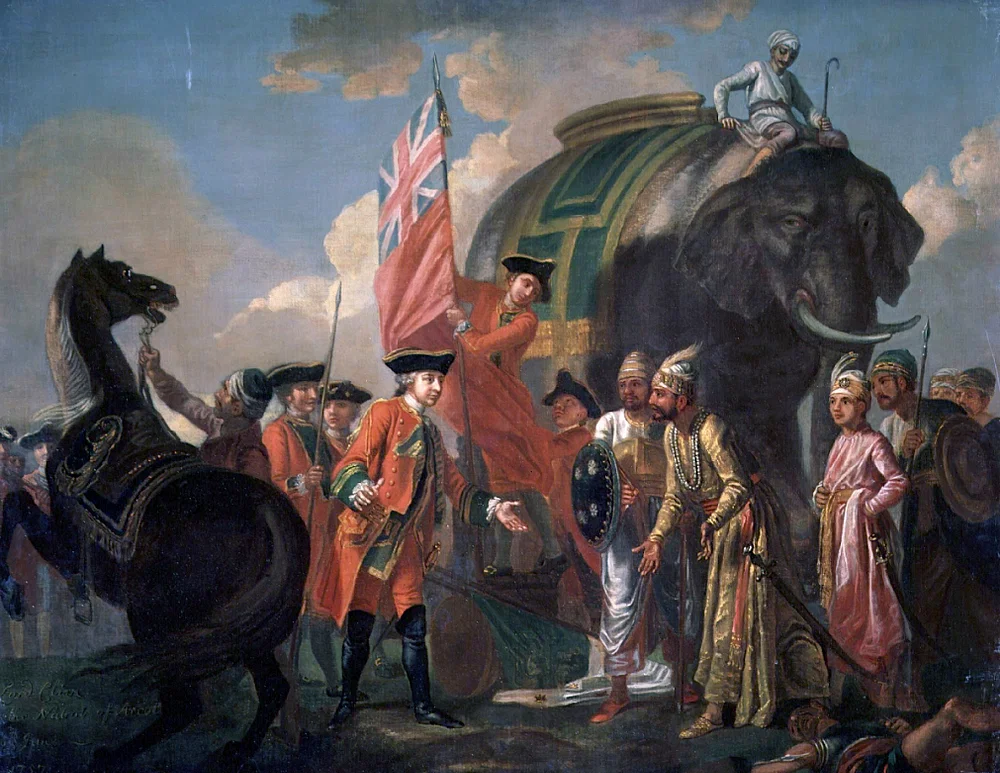
Source: World History
-
Secret partnerships: Clive formed a secret partnership with the rebels against the Nawab, such as Mir Jafar, Rai Durlabh, Jagat Seth (a powerful banker of Bengal) and Omichand.
-
Deal Mir Jafar would be granted the Nawab in accordance with the deal, but he would compensate the services of the English East India Company.
-
Such a clandestine alliance further asserted the English side, and therefore, the result of the battle of Plassey (June 23, 1757) was determined even before the battle took place.
-
Defeat of Siraj: Siraj ut-Daulah, with a 50,000-strong troop, was beaten by a small number of men of the Clive army with the help of his officials. Siraj was also taken captive and ordered to be executed by the order of the son of Mir Jafar, Miran.
-
Outcome: The Battle of Plassey permitted the English to enjoy the great resources of Bengal.
-
Trade Monopolisation: With the Plassey, the trade and commerce of Bengal were virtually monopolised by the English.
-
Stabilisation of the British Control: This battle left a strong base of British easy control over India, forming their presence in Bengal and opening a way to the expansion of their colonial power.
-
Political Upheaval and Shift: The battle brought a lot of political upheaval in the area, which resulted in a change of the balance of power and the undermining of the indigenous rulers.
Also Read: Who was the 1st Governor General of India?
Why Was Bengal Central to the Conflict?
Bengal became a Central to the Conflict becuase:
-
Bengal produced tax and trade revenue of huge amounts.
-
In the contest between the British and French (and Europe) the rivalry heightened.
-
The Nawab of Bengal opposed the military growth of foreigners.
-
The domination of Bengal was an economic dominion in India.
What was the Outcome of the Battle of Plassey?
The outcome of the Battle of Plassey was the witness to great political changes and power struggles in Bengal.
The new Nawab is Mir Jafar, who became more and more annoyed as the British intervened, and this had an ultimate outcome in weakening him.
-
Conquest of Mir Jafar: He had conspired with the Dutch at Chinsura, but he was thwarted when the English troops overcame them at Bedara in 1759. The betrayal on the part of Mir Jafar, who did not pay the monies due to the English East India Company, angered the English.
-
Reentry of the Controversy about Nawabship: Then, however, the son of Mir Jafar, Miran, died, and the nawabship of Bengal, which was left vacant, caused a renewed struggle between Mir Kasim, son-in-law of Mir Jafar, and the son of Miran.
-
Treaty with Mir Kasim: In 1760, Mir Kasim agreed with the Company, and upon this agreement, the new Governor of Calcutta was in agreement to help Mir Kasim with his claim.
-
Features of the Treaty of 1760: The following are the prominent features of the Treaty of 1760:
-
Cession of Territories: Mir Kasim was willing to hand over the districts of Burdwan, Midnapur and Chittagong to the Company.
-
Chunam Trade Share: The Company would own half of the share in the Chunam trade of Sylhet.
-
Settlement of Outstanding Dues: Mir Kasim was willing to settle the outstanding dues at the Company.
-
Donation towards War Efforts: Mir Kasim vowed to donate an amount of five lakh rupees towards financing the war efforts at southern India by the Company.
-
Allies and Enemies: It was arranged that the enemies incurred by Mir Kasim should be the enemies of the Company, and his friends the friends of the Company.
-
Settlement fine: The treaty provided that tenants of the land of the Nawab were not to be allowed to occupy the lands of the Company, or vice versa.
-
Resignation of Mir Jafar: Mir Jafar resigned under the pressure of the Company in favour of Mir Kasim, and Mir Jafar was assigned a pension of 1,500 per annum.
Also Read: List of Governor Generals of Bengal, Governor Generals of India and Viceroys
What was the Significance of the Battle of Plassey
The Battle of Plassey was a pivotal moment because it became the foundation of British rule in Bengal, and they started to dominate India as colonial rulers.
It is important not only because it led to the British victory but also to the political and economic changes in the region.
-
Political Puppetry: The British overpowered either through deceit or otherwise, deprived the Nawab of Bengal.
-
The Nawab was still technically the supreme power, but in reality, the Nawab now needed the goodwill of the Company and the Company now began to interfere in the selection of the Nawab officials.
-
Rivalries amongst themselves: The battle also revealed the internal rivalries in the administration of the Nawab, and the conspiracy of the rivals with the British ended up weakening the administration.
-
English Trading Monopoly: The English East India Company was able to offer its monopoly in the trade of Bengal at the cost of the French and the Dutch trading companies.
-
Political Control: The Battle of Buxar made the British have full political control of Bengal. Its beginning was the Battle of Plassey, and the final event was the Battle of Buxar.
-
With the Battle of Buxar, the destiny of the Bengal Nawabs was determined, and the British became the conquering rulers of Bengal.
Key Points at a Glance
| Aspect | Details |
| Year | 1757 |
| Location | Plassey (Palashi), Bengal |
| Main Cause | Political control and trade supremacy |
| Immediate Result | Defeat of Siraj-ud-Daulah |
| Long-term Impact | Start of British rule in India |
Conclusion
The Battle of Plassey was not only a battle against the military forces but a revolution in terms of strategy.
It began to establish British colonial rule in India through political control, economic interest and battle tactics and changed the administration, commerce, and political frameworks whose influence remains to the present day with independence in 1947.

Prabhat Mishra is a Subject Matter Expert and digital journalist with an extensive background in the competitive exam landscape and over 4 years of experience in education, national and international news, and current affairs. Over his tenure with top knowledge platforms like Mentorship India, IAS BABA, IAS SARTHI, and now Jagran Josh, he has a deep understanding of government exams like UPSC and State PCS, including UP and Bihar, as he has already qualified for the UPPCS 2022 Mains and Bihar 68th Mains. With his core expertise in history, polity, geography & current affairs, he specialises in creating well-researched, aspirant-centric content and simplifying complex topics for competitive examinations.