Where is the World's Oldest Water Found?
Deep beneath Canada’s surface lies water dating back up to 2.6 billion years, offering rare insight into Earth’s early conditions. Discovered in a mine in Ontario, it contains unique chemical signatures and microbial life, reshaping understanding of underground water systems and raising new possibilities about life in extreme environments beyond Earth.
Key Points
- 2.6-billion-year-old water discovered in Kidd Creek Mine, Ontario by U of Toronto scientists.
- Samples from 2009-2013 showed 1.5-billion-year-old water; 2016 drilling verified 2 billion.
- Analysis reveals salty water with ancient microbes, impacting Earth's water balance models.
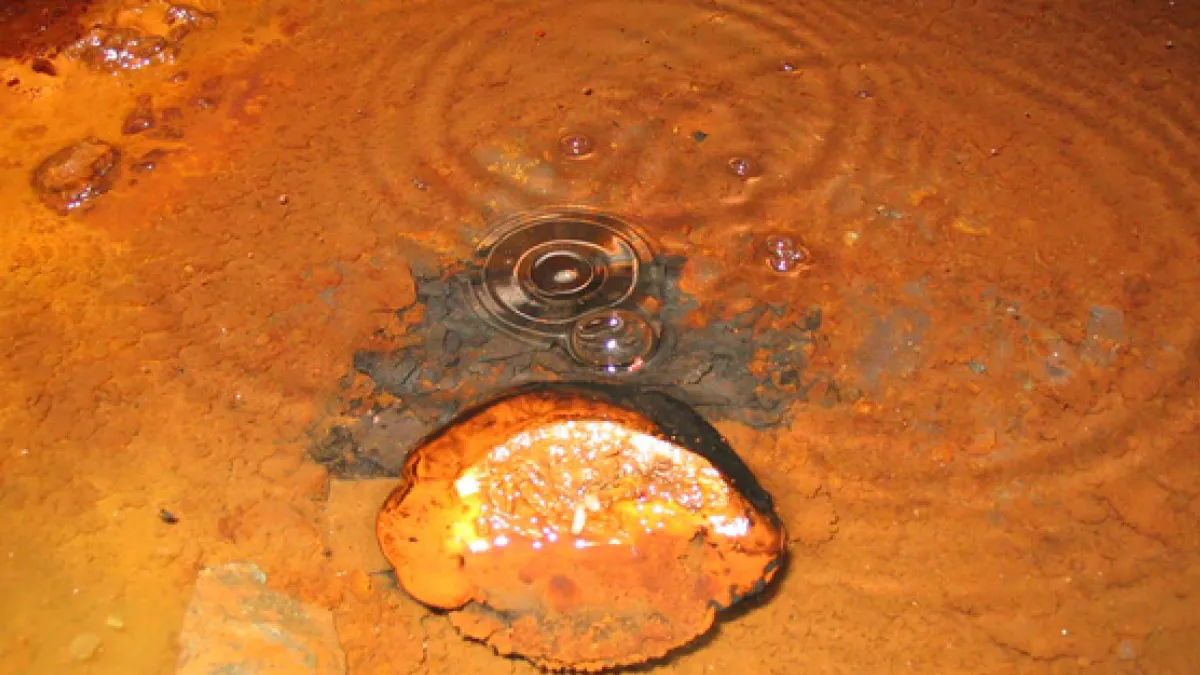
The oldest known water in the world is located at the basement of the Kidd Creek Mine in Timmins, Ontario, Canada. The scientists of the University of Toronto found it dated to be up to 2.6 billion years old, and it provides an insight into the early history of the Earth.
Located more than 3 kilometers beneath the surface of the ground in one of the oldest mines in Canada, this ancient ground water flows challenge our perception of how much water the earth has under the surface. It is estimated to have been sampled during the early 2010s, prior to the existence of most life on the surface (since the Archean Eon).
Its discovery underscores enormous hydrosphere underground oceans, comparable to the total amount of freshwater on the surface and completely redefining the planetary hydrology.
How was this Water Discovered?
The water was found by the team of geologist Barbara Sherwood Lollar, using exploratory boreholes in the Kidd Creek Mine, a copper-zinc-silver underground mine that had been operational since 1966. At 2.4-3 km, samples were produced naturally as fractured Precambrian rocks, and they were flowing under pressure.
First samples in 2009-2013 produced samples with 1.5-billion-year-old water; further drilling in 2016 verified older samples to 2 billion years
Scientists worked together with miners in taking flooded shafts to gather sterile samples without contamination.
Science Behind the Oldest Water on Earth
Determination of age is based on noble gas isotopes, helium-4, neon, argon, krypton as well as xenon, which are trapped in the water and rocks, and which accumulate in a predictable manner over billions of years. The times of isolation (between 150 and 260 million years) are determined by mass spectrometry to be between 1.5 and 2.6 billion years.
The chemistry of the water is very salty (eight times of seawater), contains hydrogen as a result of rock reactions and has a texture, which is viscous-like thin syrup.
Microbial DNA analysis is used to reveal the presence of viable bacteria, which is maintained through the chemical energy in an oxygen-free environment.
Significance of the Oldest Water
This water is a record of ancient crustal processes in the earth, such as water-rock reactions in the formation of super continents. It determines long-term seclusion in stationary shields that informs models of past climates.
It has hosted ancient microbes and broadens the deep biosphere concept, and this is in the case of life on Mars or icy moons such as those that may have this type of subsurface habitation.
The amount of such old groundwater in the world might be greater than the amount of surface fresh water, and this causes a need to reconsider Earth's overall water balance.

Kirti Sharma is a journalist in the education domain with three and a half years of experience creating high-quality content for the education technology (EdTech) and digital media industries. She has an expertise in covering education news. Kirti has experience in writing data backed informational pieces on General knowledge.
Kirti holds a Bachelor of Arts degree, which helped build her strong foundation in writing and research. Over the course of her career, she has brought her skills to a variety of well-known companies, including ThoughtPartners Global, Infinite Group, and MIM-Essay. Through these roles, she has learned how to take complex information and turn it into engaging, easy-to-understand content for readers online.