Which State Has the Highest Number of Ramsar Sites in India in 2026?
Which State Has the Highest Number of Ramsar Sites in India in 2026? Tamil Nadu holds the highest number of Ramsar sites in India in 2026 with 20 sites. India now hosts 99 Ramsar sites, ranking 3rd globally and 1st in Asia. Explore the full list of India's wetlands and conservation achievements.

In 2026, Tamil Nadu has 20 Ramsar sites, which is the highest number of Ramsar sites in India. India is a key country in the conservation of wetlands. India's wetlands, ranging from the mangrove forests of the Sundarbans to the flamingo habitats of Tamil Nadu, support thousands of plants and animals, support millions of livelihoods and are critical for the environment.
Many nations use the Ramsar Convention, an international wetlands protection network, to protect these precious wetlands. Wetlands that are recognised in this way are known as Ramsar sites - wetlands of international importance.
India has 99 Ramsar sites, covering over 13,60,000 hectares, in 2026. India is now the #1 country in Asia and the 3rd-highest in the world (after the United Kingdom, with 176 sites, and Mexico, with 144 sites) in terms of Ramsar sites.
Also Read: Newly Added Ramsar Sites in India 2026: Check Their Location & Facts
Which State Has the Highest Number of Ramsar Sites in India in 2026?
Tamil Nadu is the state with the highest number of Ramsar sites in India in 2026, with a total of 20 Ramsar sites.
It is followed by:
| Rank | State | Number of Ramsar Sites |
| 1 | Tamil Nadu | 20 |
| 2 | Uttar Pradesh | 12 |
| 3 | Punjab | 6 |
| 3 | Odisha | 6 |
| 3 | Bihar | 6 |
| 5 | Gujarat | 5 |
| 5 | Jammu & Kashmir | 5 |
| 5 | Madhya Pradesh | 5 |
| 5 | Rajasthan | 5 |
The 20 Ramsar sites in Tamil Nadu include a variety of wetland types - from coastal bird sanctuaries, to brackish lagoons, to man-made irrigation tanks and marine sites. The state's list is relatively new - many of the designations were made in 2022 and 2025, when India designated a slew of new Ramsar sites.
What is a Ramsar Site?
A Ramsar site is a wetland site designated under the Ramsar Convention on Wetlands - a treaty between nations adopted on 2 February 1971 in Ramsar, Iran. It came into effect in 1975.
The convention is concerned with the "wise use" of wetlands - that is, wetlands should be used in a way that is sustainable, so the environment and humans can benefit. India signed the Ramsar Convention on 1 February 1982. The convention is celebrated every year on 2 February as World Wetlands Day.
All 20 Ramsar Sites in Tamil Nadu
Tamil Nadu's 20 Ramsar sites showcase the diversity of the state's wetlands:
Source: wikimedia
-
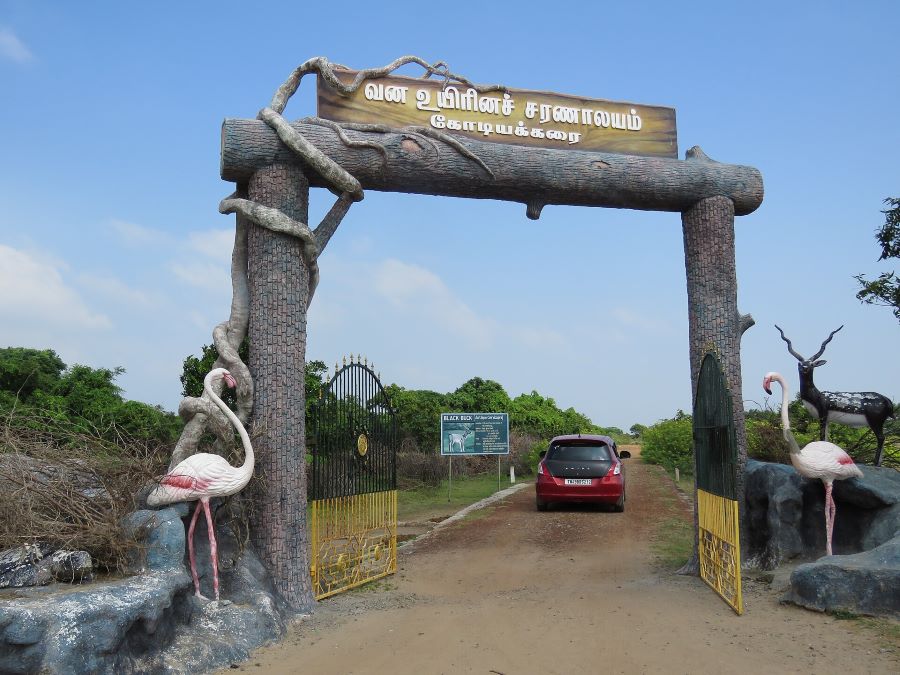
Point Calimere Wildlife and Bird Sanctuary - Tamil Nadu's first Ramsar site (2002); home of flamingos and migratory shorebirds
-
Pichavaram Mangrove - The second-largest mangrove forest in India
-
Pallikaranai Marsh Reserve Forest - One of the few urban wetlands of Chennai
-
Karikili Bird Sanctuary - Birds' haven in Kanchipuram
-
Vedanthangal Bird Sanctuary - India's first bird sanctuary
-
Vembannur Wetland Complex - Small but important wetland
-
Vellode Bird Sanctuary - Home of over 100 bird species
-
Udayamarthandapuram Bird Sanctuary - Freshwater wetland in Tiruvarur district
-
Koonthankulam Bird Sanctuary - home of painted storks
-
Kanjirankulam Bird Sanctuary - In Ramanathapuram district
-
Chitrangudi Bird Sanctuary - Freshwater tank in Ramanathapuram district
-
Gulf of Mannar Marine Biosphere Reserve - India's first marine biosphere reserve
-
Suchindram Theroor Wetland Complex - Wetland complex in Kanyakumari district
-
Vaduvur Bird Sanctuary - An inland freshwater lake in Thanjavur
-
Karaivetti Bird Sanctuary - Inland freshwater lake in Ariyalur district
-
Longwood Shola Reserve Forest - Wetland mosaic in Nilgiris
-
Nanjarayan Tank - Freshwater lake in Tiruppur district
-
Uyyakondan Thirumalai - Brackish water lake in Tiruchirappalli district
-
Sakkarakottai Bird Sanctuary - Ramanathapuram district (new in 2015)
-
Therthangal Bird Sanctuary - Ramanathapuram district (newly added in 2025)
Key Facts About Ramsar Sites in India (2026)
Here are the most important facts to know:
-
Total Ramsar sites in India (2026): 99 (as of April 2026)
-
Total area covered: Over 13,60,000 hectares
-
India's global rank: 3rd (after UK: 176 sites, Mexico: 144 sites)
-
India's rank in Asia: 1st
-
State with most Ramsar sites: Tamil Nadu (20)
-
State with 2nd most Ramsar sites: Uttar Pradesh (12 Ramsar Sites)
-
India's first Ramsar sites: Chilika Lake (Odisha) and Keoladeo National Park (Rajasthan) — both designated in 1981
-
India's largest Ramsar site: Sundarban Wetland, West Bengal (~4,23,000 hectares)
-
India's smallest Ramsar site: Renuka Lake, Himachal Pradesh (~20 hectares)
-
Most recent Ramsar sites (2026):
-
Sheikha Jheel Bird Sanctuary (Uttar Pradesh), Declared on 21.04.2026
-
Patna Bird Sanctuary (Uttar Pradesh), Declared on 30.01.2026
-
Chhari-Dhand (Gujarat), Declared on 30.01.2026
-
- States with no Ramsar sites: Telangana, Arunachal Pradesh, Meghalaya, and Nagaland
State-Wise Ramsar Sites in India (2026)
| State / UT | No. of Ramsar Sites |
| Tamil Nadu | 20 |
| Uttar Pradesh | 12 |
| Punjab | 6 |
| Odisha | 6 |
| Bihar | 6 |
| Gujarat | 5 |
| Jammu & Kashmir | 5 |
| Madhya Pradesh | 5 |
| Rajasthan | 5 |
| Karnataka | 4 |
| Himachal Pradesh | 3 |
| Kerala | 3 |
| Maharashtra | 3 |
| Haryana | 2 |
| Ladakh | 2 |
| West Bengal | 2 |
| Andhra Pradesh | 1 |
| Assam | 1 |
| Chhattisgarh | 1 |
| Goa | 1 |
| Jharkhand | 1 |
| Manipur | 1 |
| Mizoram | 1 |
| Sikkim | 1 |
| Tripura | 1 |
| Uttarakhand | 1 |
| Total | 99 |

Prabhat Mishra is a Subject Matter Expert and digital journalist with an extensive background in the competitive exam landscape and over 4 years of experience in education, national and international news, and current affairs. Over his tenure with top knowledge platforms like Mentorship India, IAS BABA, IAS SARTHI, and now Jagran Josh, he has a deep understanding of government exams like UPSC and State PCS, including UP and Bihar, as he has already qualified for the UPPCS 2022 Mains and Bihar 68th Mains. With his core expertise in history, polity, geography & current affairs, he specialises in creating well-researched, aspirant-centric content and simplifying complex topics for competitive examinations.