First Medical Evacuation from the International Space Station: Explained
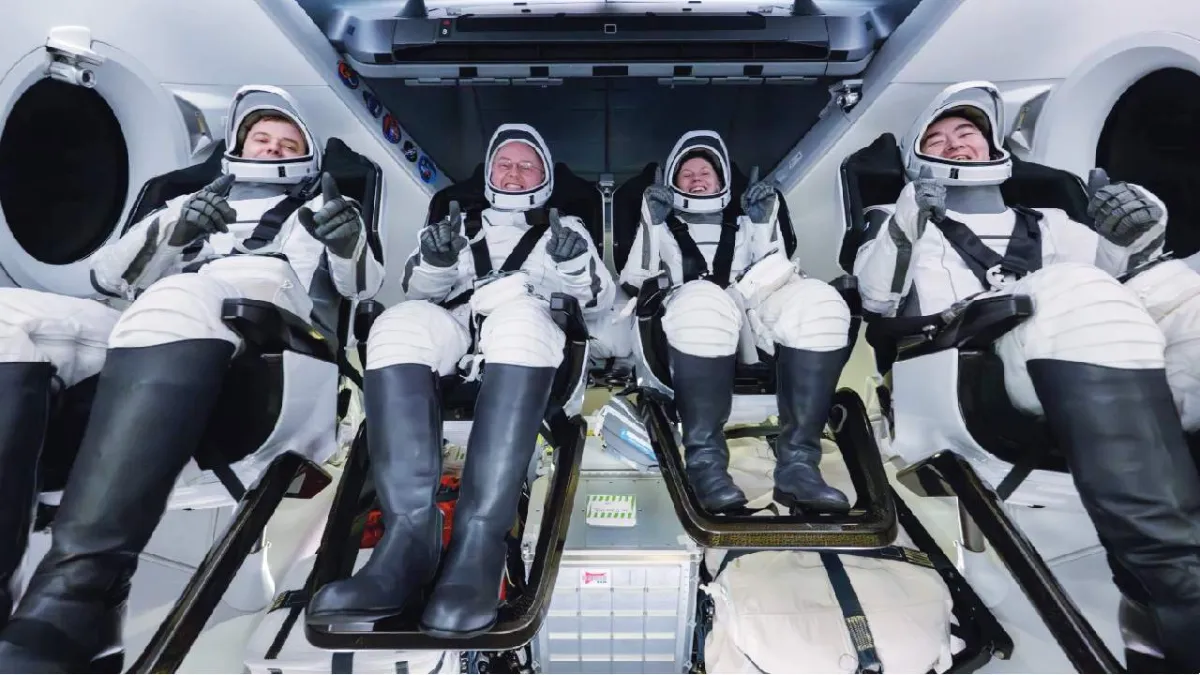
In a historic first for the ISS, the SpaceX Crew-11 mission was cut short on January 15, 2026, for a non-critical medical evacuation . Led by Commander Zena Cardman, the crew returned early to Florida to ensure advanced ground-based care, demonstrating NASA's evolving deep-space safety protocols.
Key Points
- NASA's SpaceX Crew-11 returned early on January 15, 2026, due to an astronaut's health.
- The medical issue, though stable, prompted ground-based diagnostics over onboard stability.
- Crew-12 will replace Crew-11 on Feb 15; science operations on ISS continue uninterrupted.
The first medical evacuation of the ISS was completed on January 15, 2026, by NASA, when SpaceX Crew-11 had to come back earlier because of a serious health condition, but not critical, of one astronaut.
The historic event highlights some of the difficulties of orbital healthcare even 25 years after 24 years of permanent habitation.
The International Space Station (ISS), which had been in service since 1998, had its first medical evacuation to date with four astronauts of the SpaceX Crew-11 mission landing too soon off Florida.
Crew-11, which arrived August 2, 2025, and stayed six months, was cut short on January 7, 2026, due to a medical issue, although it was stable on board; NASA focused on ground-based diagnostics over onboard stability.
Timeline of First Medical Evacuation
Crew-11 NASA astronaut Zena Cardman (commander), Mike Fincke, JAXA's Kimiya Yui and Oleg Platonov of Roscosmos also docked at the ISS on Expedition 74.
On January 7, NASA reported a medical issue following spacewalk preparations, which then caused a medical check-up by the chief medical officer, Dr. James Polk; no emergency was called but the return was moved forward to March.
Deorbit the first splashdown: January 15 at 2:51 a.m. ET, splashdown 11 a.m. ET, crew stable, loaded onto helicopters, and that was transferred to hospital before Houston.
Crew and Mission Details
-
The group was headed by Commander Zena Cardman and included veteran astronaut Mike Fincke, Kimiya Yui of JAXA and Oleg Platonov of Roscosmos ((names per reports; affected astronaut undisclosed per privacy).
-
Mission preparation: Artemis prep experiments, such as health experiments on missions to Mars; three crew (Chris Williams, Russians Sergey Kud-Sverchkov, Sergey Mikaev) stayed. NASA Administrator Jared Isaacman declared it a success and Crew-12 will be replaced on Feb 15.
Medical and Technological Considerations
According to Dr. Polk, ISS has superior equipment that is not quite ER to do complex diagnostics: "We are not equipped with full hardware to do a full work up. This problem was termed as being serious, but not emergent, which led to early turnaround to be able to do additional testing; previous evacuations were done before ISS (e.g. Salyut/Mir in 1980s). SpaceX Dragon allowed friction braking and parachutes to make rapid safe reentry.
The first in the 25-plus year history of ISS, unlike prior Soviet space stations; and is risky as missions become longer in lunar/Mars ambitions.
Scientists support having doctors onboard commercial/tourist flights; there is no interruption of operations, science goes on. Artemis is informed by lessons.
This evacuation confirms that the precautionary measures implemented by NASA are effective, and safety is guaranteed without stopping the functioning of the ISS. It is an indication of changing healthcare requirements in deep space.
Read more: Which Is the Highest Waterfall in India

Kirti Sharma is a journalist in the education domain with three and a half years of experience creating high-quality content for the education technology (EdTech) and digital media industries. She has an expertise in covering education news. Kirti has experience in writing data backed informational pieces on General knowledge.
Kirti holds a Bachelor of Arts degree, which helped build her strong foundation in writing and research. Over the course of her career, she has brought her skills to a variety of well-known companies, including ThoughtPartners Global, Infinite Group, and MIM-Essay. Through these roles, she has learned how to take complex information and turn it into engaging, easy-to-understand content for readers online.