How Are Gold Rates Calculated in India? Major Factors Influencing MCX Price
Gold rates in India are not fixed by one authority but shaped by global prices, currency exchange, and domestic market forces. MCX acts as the real-time benchmark, reflecting how international trends and local demand together determine gold prices.
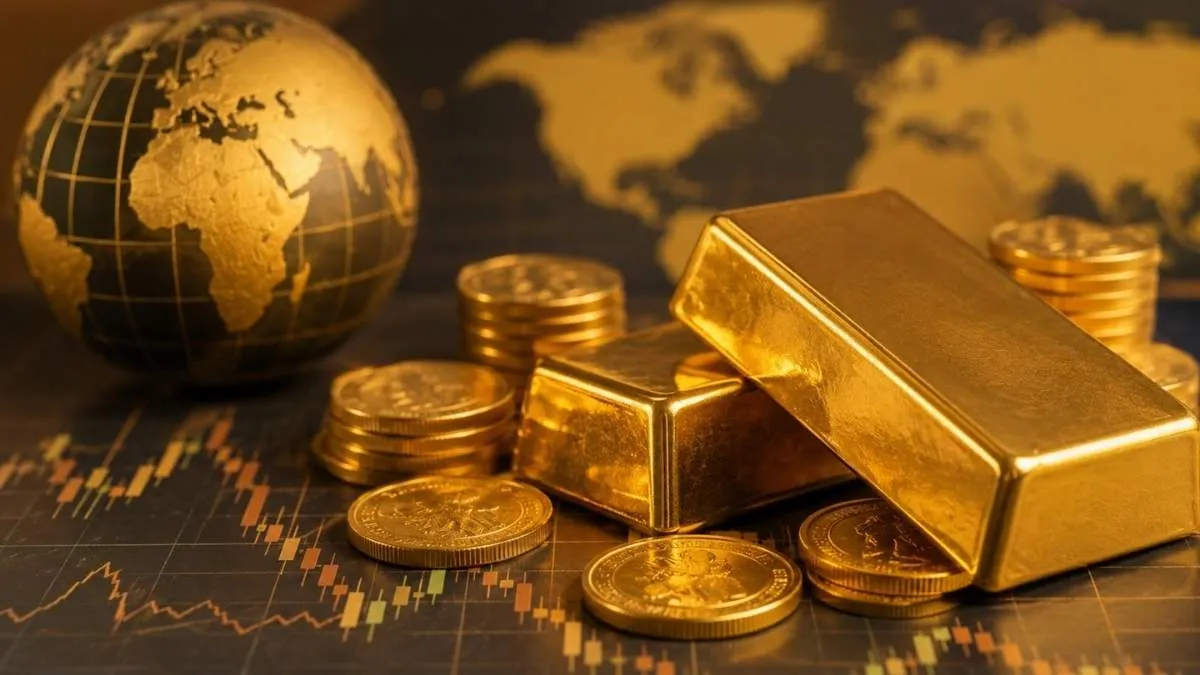
In the ancient period, India was named as 'Golden Bird'. This one phrase has given great value to the metal. Gold in our country has added strong traditional importance to itself. The desire for gold is not only in India but across the world. This makes gold one of the most valuable metals with high monetary value. A country can be judged by the amount of gold it holds in its government reserves. Gold also moves within the country affecting its economy. In difficult times, people buy and sell gold, and even governments do the same.
According to recent reports, the Indian government was seen selling gold to support the economy. This helped prevent the rupee from falling further. Many countries took this step, while US-Israel-Iran were bombing each other. All this happened. This shows how gold functions as an asset. Not just for people, but investors and countries as well.
Gold Rates in India
In India, the price of gold is not decided by a single authority. It goes through a complex process involving multiple layers. Starting from global markets to domestic trading and finally reaching the retail market. At the center of this system is the Multi Commodity Exchange of India (MCX). This acts as the real-time benchmark for gold prices in India
What sets the Gold Rates in India? The Mechanism Of Global Markets Influence
Gold rates in India depend on global markets, and the price is set in the international market in US dollars. Global prices form the base for Indian rates. Any change in global prices is reflected in domestic rates almost instantly, including MCX rates. Therefore, it is essential to keep a close eye on global rates.
Important Factors Driving Gold Rates
-
Global benchmark price: The London Bullion Market Association (LBMA) is one of the global bodies that determines the base price of gold.
-
US dollar pricing: Gold prices are determined in US dollars, and countries around the world follow this standard.
-
Global events: Inflation, wars, and global economic uncertainty drive demand for gold.
-
Investor sentiment: In risky times, investors invest more in gold, which drives prices up.
-
Implications for India: Any increase or decrease in global rates immediately translates into Indian rates, including MCX rates.
Key Domestic Factors That Shape Gold Rates in India
Gold rates in India are based on international markets as well as internal factors. Currency rates, taxes and benchmark institutions are the main factors. These components influence the price of gold and the table below describes them in a simple and clearer manner.
Factors Influencing Gold Prices in India
| Factor | Mechanism | Direct Impact on Local Prices |
| USD-INR Exchange Rate | Global gold prices are set in USD and converted to INR. | Weakening rupee makes gold more expensive; a strengthening rupee lowers prices. |
| Import Duties | The government levies custom duties on imported physical gold. | Higher duties increase domestic retail prices above the base international rate. |
| GST (3%) | A flat 3% tax applied at the point of retail sale. | Raises the final consumer price beyond the base domestic rate. |
| IBJA Benchmark | Daily reference rates set by the India Bullion and Jewellers Association. | Establishes the standard base price for physical gold transactions nationwide. |
| MCX Influence | Real-time commodity futures trading on the Multi Commodity Exchange. | Drives short-term price fluctuations based on live demand and market sentiment. |
What Are MCX Gold Rates?
MCX gold rates are the prices at which gold futures contracts are traded on the Multi Commodity Exchange of India (MCX). These rates are not consumer prices. They serve as wholesale benchmark rates for 24 karat gold traded in large volumes. MCX gold rates are forward-looking prices determined by the market that capture the expected value of gold at a future point in time.
These rates are determined continuously by buying and selling activities. This can change throughout trading hours. Gold rates are responsive to changes in international gold prices, USD/INR exchange rates, domestic interest rates, as well as changes in the demand for gold.
Factors Affecting MCX Gold Rates
International Gold Prices: This is the most obvious factor. Since India has to import some of its gold, any change in global position will reflect in the domestic market almost instantly. Any increase in inflation, uncertainty, instability in the world market, and other factors such as geopolitical tensions will send gold prices soaring in the global market and will, in turn, lift MCX gold rates almost immediately. This is why international gold trends are a key factor driving movement in domestic prices.
USD/INR: Gold is priced in US dollars, not in rupees, and so any movement in the exchange rate between the rupee and dollar will have a direct impact on MCX gold rates. If the rupee’s per-dollar price goes up, then the cost of importing gold will increase and MCX gold prices will go up, because importers will have to pay more in rupee terms. Similarly, if the rupee depreciates or ‘goes down’ in value, then the cost of importing gold will go up, though it may offset global price hikes to some extent.
Domestic Demand for Futures: Trading on the Multi Commodity Exchange of India (MCX) has a direct impact on gold prices. Excess buying of gold contracts leads to an increase in prices, and excess selling drives prices lower. Bullish or bearish sentiment in the market has a large implication. Gold contract demand and supply are influenced by the activities of hedgers, jewellers, speculators, investors, and institutions.
Interest Rates and Inflation: Gold is considered one of the best hedges against inflation. As inflation rises, investors flock to gold to preserve their wealth. So, demand for gold contracts rises, leading to an increase in gold prices. Also, lower interest rates reduce the returns on fixed-income instruments and make gold an attractive alternative investment, leading to a rise in MCX gold rates. On the other hand, when interest rates increase, investors look for alternatives away from gold, leading to a decrease in gold prices in the market.
Central Bank Policies and Reserves: Central banks also own gold reserves, form a part of their foreign currency holdings. They buy and sell gold depending on their decisions. This then influences global demand and the price of gold. If central banks purchase more gold, the price of gold increases. Monetary policy decisions of major economies also affect gold rates. For example, anticipation of interest rate hikes or cuts by central banks causes price volatility. These global monetary policy decisions eventually influence MCX gold rates.
Geopolitical Events: Investors run to gold during times of global political and economic uncertainty. War, trade conflicts, financial crises, and similar events drive demand for safe-haven assets. Since gold is considered one of the safest assets, demand for it increases significantly. This affects global gold prices and is quickly reflected in MCX gold rates. Geopolitical events can result in quick and sharp fluctuations in gold rates within a single day.
Unit Conversion and Contract Specifications: Gold is traded globally in troy ounces, but MCX quotes are stated in rupees per 10 grams. This means that to understand how MCX gold rates move, one must understand some basic calculations. The size and type of MCX gold contracts largely affect trading activity.
Many people think it is easy to decide on a price, but are unaware that the gold rates are not just numbers but they carry many factors that can collapse or make the GDP of some country. The moment there is a conflict, investors and bigger players rush in to buy or sell the metal, heavily impacting the price tags.

Aishwarya Samant is a journalist with over 4 years of experience navigating the fast-paced corporate media landscape. She specializes in decoding business news, world economy, personal finance, and stock market trends, often adding a subtle touch of political perspective to keep things interesting.
Having worked with reputed organizations like ZEE, TV9, News24, and NewsX, she is no stranger to the newsroom hustle and the demands of real-time storytelling. Her writing style is fast-paced, engaging, and crafted to connect seamlessly with diverse audiences across platforms. She approaches every story from the reader’s point of view, breaking down complex topics into clear, relatable narratives backed by solid facts and credible sources. While she’s confident in expressing strong viewpoints, she ensures balance with insights. Sharp, fact-driven content that informs, engages, and keeps readers coming back for more.


-1792155372430_t.webp)
-1792153419003_t.webp)