The Boiling River: Where is the Hottest River in the World?
Do you know a river exists that can cook animals instantly? It flows for miles through a lush rainforest, reaching nearly 100°C despite being hundreds of miles from any volcano. Let’s discover the science and legends behind this boiling wonder.

Key Points
- The Shanay-Timpishka, or Boiling River, reaches nearly 100°C (212°F) in Peru.
- The river's heat comes from geothermal activity, not volcanoes, deep underground.
- The river is 6.4 km long and is fed by hot springs like Yacu Mama.
In the middle of the Peruvian Amazon, there is a river that seems almost impossible. Its name is Shanay-Timpishka, but most people call it the Boiling River.
This unusual river stretches for about four miles and can get as hot as nearly 100°C. Unlike most hot rivers, it is not close to any active volcanoes.
The heat comes from the Earth’s own energy deep underground. This river is so hot that it can cook small animals in seconds.
But the question arises: What hidden force from deep within the Earth creates such heat energy? In this article, we’ll take a look at the science, legends, and mysteries behind the world’s hottest river.
ALSO READ| Which Is The Largest River In The World?
Quick Facts At a Glance
| Feature | Detail |
| Location | Mayantuyacu, Peru |
| Length | Approx. 6.4 km (4 miles) |
| Max Temperature | 99.1°C (210.4°F) |
| Local Name | "Boiled by the heat of the sun" |
| Heat Source | Non-volcanic; powered by the geothermal gradient and deep fault lines. |
Which is the Hottest River in the World?
The Shanay-timpishka, also known as Río Hirviente or The Boiling River, is the hottest river in the world and is located in the Peruvian Amazon. Its water can reach temperatures of 100°C (212°F).
This geothermal river in Mayantuyacu is not volcanic and runs for about 7 to 9 kilometres, or roughly 4 to 6 miles. The water is so hot that it can actually boil animals alive.
# The Journey of the Boiling River
The story of the Shanay-Timpishka starts with cold rainwater, not a hot river. Rain falls on the Amazonian highlands and sinks deep into the ground through porous rocks. As it travels almost 3,000 meters down, the water is warmed by the Earth's natural heat from the crust.
1. The Source and "The Birth"
The river begins as a small, cool stream. It turns into the "Boiling River" at a certain spot in the Mayantuyacu area of the Huánuco region. In this place, hot water rises to the surface through deep cracks in the ground.
The water comes out at several hot springs, with the most well-known being Yacu Mama (Mother of the Waters), a large rock shaped like a snake’s head where the hottest water flows out.
2. The Flow and Tributaries
As the river travels its 6.4-kilometre course, it meets several other thermal features:
- Cold Streams: Small, cool jungle streams flow into the Shanay-Timpishka. Surprisingly, these don't immediately cool the river; the sheer volume of hot water is too powerful.
- Thermal Springs: More hot springs along the banks flow into the main river, which keeps the temperature dangerously high, usually between 80°C and 95°C.
3. The Confluence (The End)
The Shanay-Timpishka’s journey finishes when it meets the Pachitea River. The Pachitea is a large tributary of the Ucayali River, which later joins the Amazon River.
When the hot water mixes with the cold, powerful flow of the Pachitea, their temperatures balance out. At this point, the heat fades away and the water joins the wider Amazon ecosystem.
MUST READ| List of 7 Most Beautiful Rivers in the World
10 Lesser-Known Facts About the Boiling River
- It is the largest geothermal river in the world not located near a volcano.
- The water can reach 99C (210F), which is just shy of the boiling point at sea level.
- Scientists have discovered new species of microbes living in the river that thrive in the extreme heat.
- The water is believed to travel as deep as 10,000 feet underground to be heated before rising back to the surface.
- The name Shanay-Timpishka translates to "boiled by the heat of the sun" in the local dialect.
- Chemical analysis shows that the water originally fell as rain before sinking deep into the Earth's crust to heat up.
- Small animals that fall in are cooked from the inside out because the water enters their lungs and bloodstream immediately.
- During the rainy season, the temperature difference creates massive clouds of steam that rise above the jungle canopy.
- The river is considered a sacred site by local Asháninka communities and is protected by a powerful shaman.
- It acts like a giant radiator, transferring massive amounts of heat from the Earth's interior to the atmosphere.
IN CASE YOU MISSED| Which is the Largest Cold Desert in the World?
Conclusion
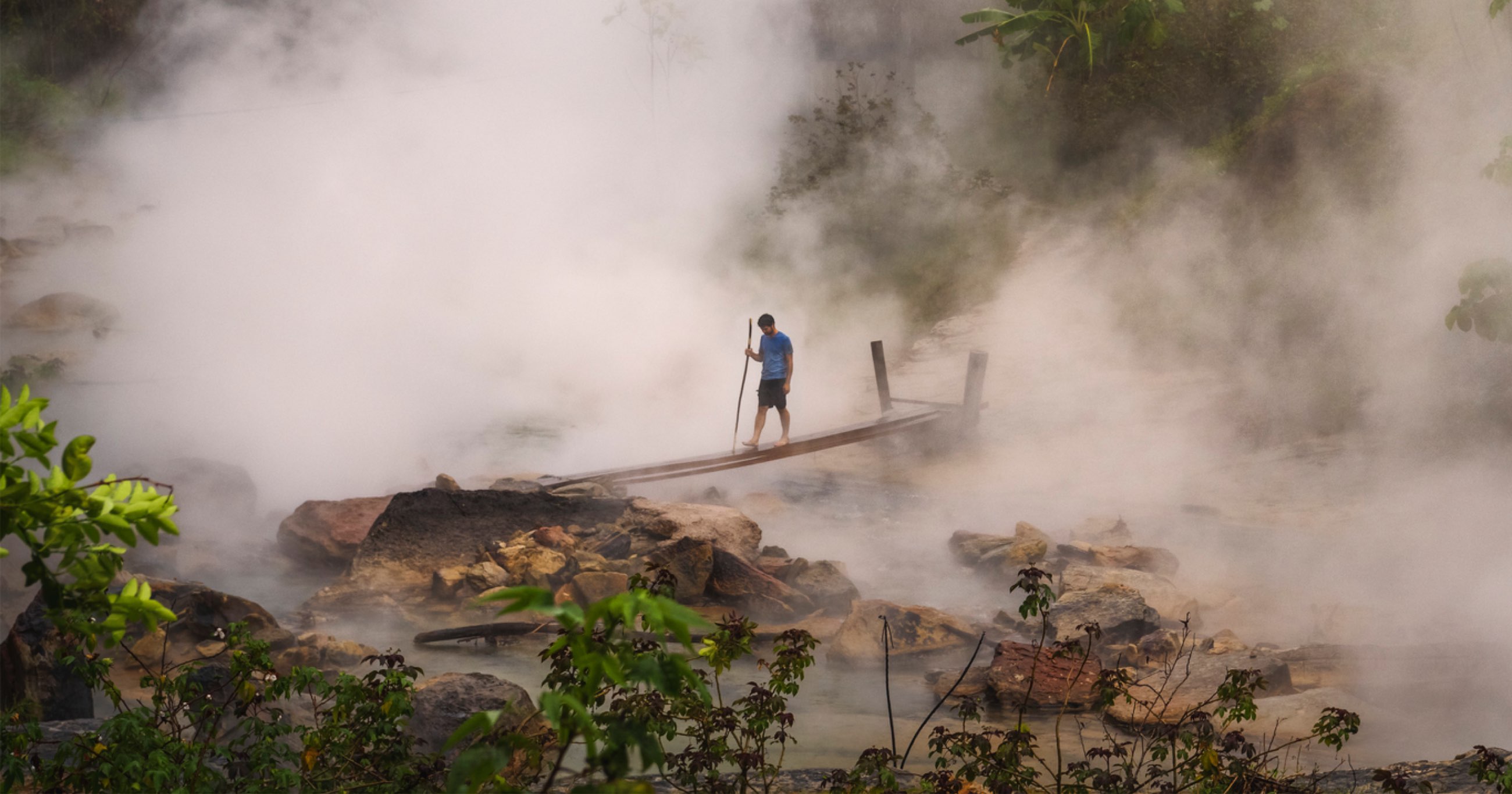
The Shanay-Timpishka shows us just how much we still have to learn about our planet. Known as the "Boiling River", it is a rare geological feature, with water temperatures ranging from 45°C to almost 100°C along more than six kilometres. This river is proof that the Earth's heat can create boiling water even when there is no volcano nearby.
WHAT'S NEXT| Which is the Largest Park in the World?

Kriti Barua is a skilled digital journalist and communications professional with 4+ years of experience, currently writing for the General Knowledge section at Jagran New Media. She has established herself as a subject matter expert in History, Geography, Trending National and International News, Sports, Science, and Defence, producing clear, reliable, and search-optimised content that connects with readers worldwide.
Kriti holds a BA degree from Delhi University and a one-year diploma in TV Production and Journalism, an academic background that adds research depth and strong storytelling instincts to her writing. Her experience spans brand writing, content marketing, and digital media, giving her a sharp understanding of what makes content both helpful to readers and visible in search.
At Jagran New Media, she applies this expertise to national and international news coverage, query-based articles, and in-depth pieces across her specialist subject areas. Her content is defined by easy language, factual accuracy, strong keyword strategy, and reader-friendly storytelling.