Who is Known as the Grand Old Man of India?
Dadabhai Naoroji, famously known as the "Grand Old Man of India," was a pioneering nationalist, scholar, and the first Indian elected to the British Parliament. He famously authored the Drain Theory, exposing colonial economic exploitation while advocating for Indian self-rule.

Dadabhai Naoroji was one of the most important early nationalist leaders. He is commonly known as the “Grand Old Man of India”, and he was a great public figure from 1845 to 1917.
He was a great scholar and social reformer, and he was the first Indian to be elected to the British Parliament in 1892.
He also played an important role in the Indian National Congress (INC) and served three times as the president of INC.
With his notable contributions to the Drain Theory, he highlighted how the British Economic policies were draining India’s wealth.
With his innumerable societies and organisations with which he was associated and his contributions to organs of public opinion, he voiced the grievances of the Indian people and proclaimed their aims, ideals and aspirations to the world at large.
So, let’s explore more in detail about Dadabhai Naoroji, who is also known as “Grand Old Man of India”.
Source: mkgandhi
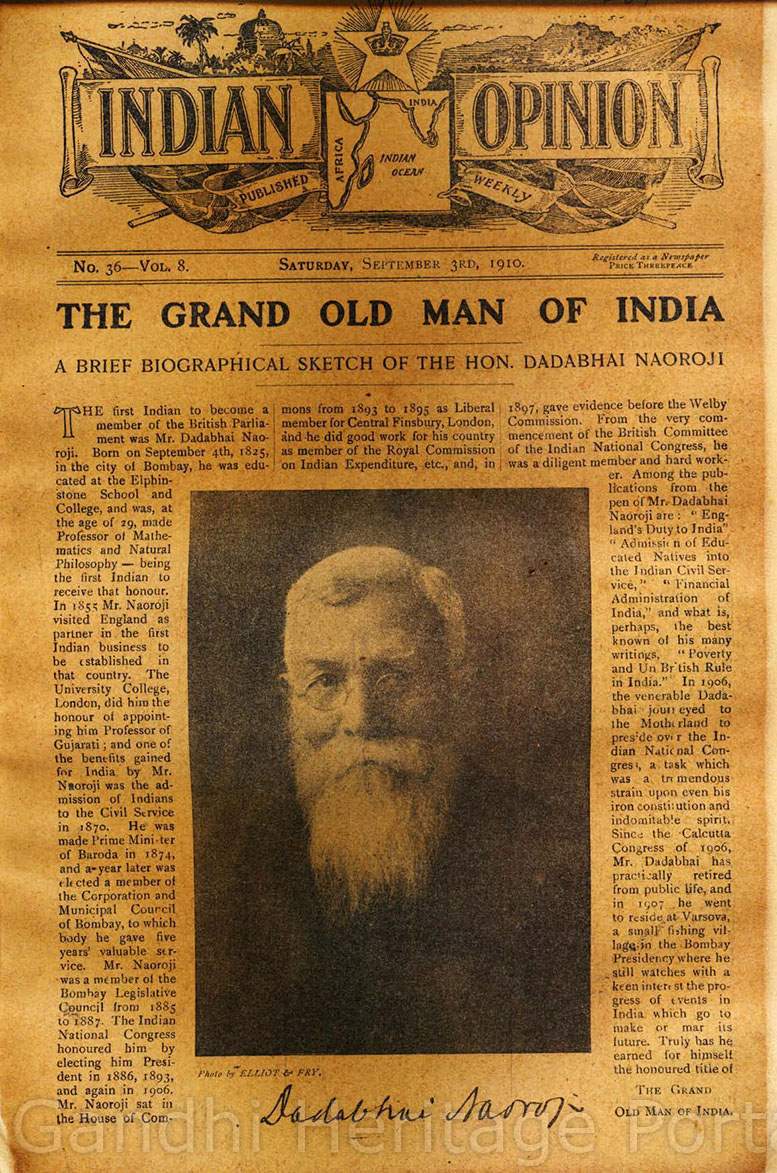
Why is Dadabhai Naoroji known as “Grand Old Man of India”?
Dadabhai Naoroji was given the title of “Grand Old Man of India” because of his relentless contribution to the cause of an Indian national movement as a founding father and the very first intellectual critic of British colonial rule.
More than sixty years of work marked his contribution, linking the early social reform to the formal need to have self-rule.
Here is why he remains one of the prominent figures in Indian history:
1. The "Drain of Wealth" Theory
Source: mkgandhi
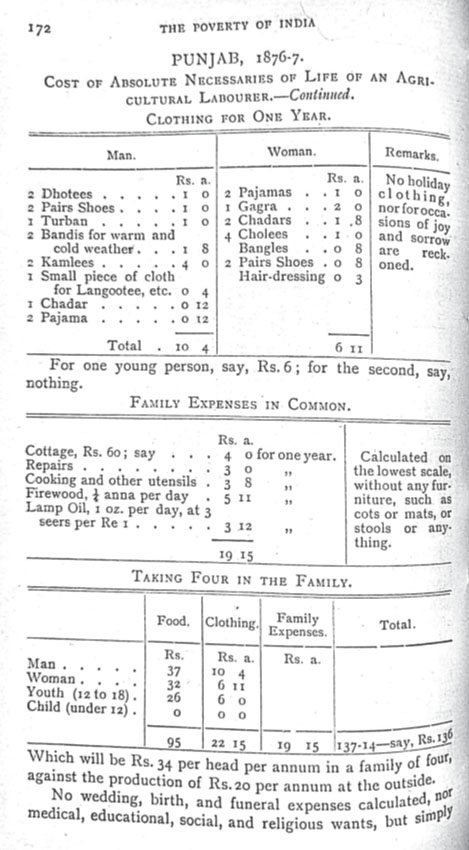
Dadabhai Naoroji was the first to give a statistical and economic critique of British rule. He expressed the Drain Theory in his masterpiece, Poverty and Un-British Rule in India.
He argued that Britain was draining India of its resources and wealth to England in a systematic manner, in the form of taxes, monopolies of trade and the salaries of British officials, leaving India in a constant state of poverty and famine. This shifted the narrative from "British rule is a blessing" to "British rule is an economic disaster."
2. One of the founders of the Indian National Congress (INC)
He was one of the founding members of the Indian National Congress (INC), which was formed in 1885 by A.O.Hume, and along with other prominent leaders like Womesh Chunder Bonnerjee, Surendranath Banerjee, Badruddin Tyabji, and with others members.
He also served as its President three times (1886, 1893, and 1906).
In the 1906 Session of the Indian National Congress, which was held in Calcutta (Kolkata), he was the first leader to publicly demand Swaraj (Self-government) from the Congress platform, which unified the moderate and extremist factions of the party at the time.
3. He was also a First Indian to Elected as the Member of the British Parliament
Source: azimpremjiuniversity
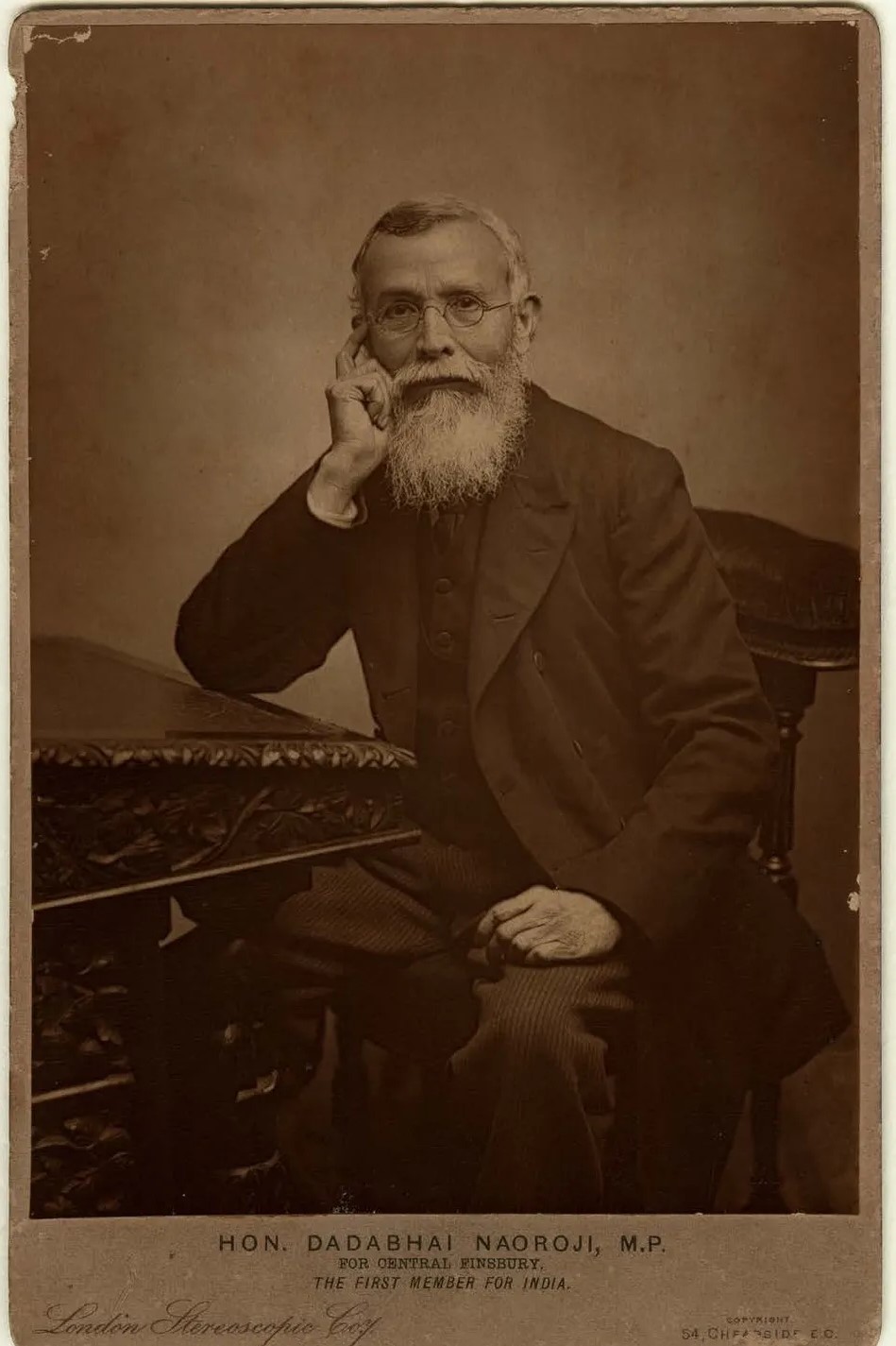
In 1892, Naoroji made history by being elected to the British House of Commons representing Central Finsbury.
-
He used his position in London to educate the British public and politicians about the grievances of Indians.
-
He helped organise the Royal Commission on Indian Expenditure (Welby Commission) to investigate the unfair financial burden placed on Indian taxpayers.
4. Mentor to Future Leaders
His nickname also reflects his status as a venerable elder and mentor. He was a primary influence on Gopal Krishna Gokhale and a young Mahatma Gandhi. Gandhi once remarked that Naoroji was "the father of the nation" in an intellectual sense, providing the foundation upon which later independence movements were built
Key Milestones at a Glance
| Year | Milestone |
| 1865 | Co-founded the London Indian Society to advocate for Indian interests in the UK. |
| 1867 | Founded the East India Association, one of the predecessor organisations to the Congress. |
| 1892 | Became the first Indian MP in the UK Parliament. |
| 1901 | Published Poverty and Un-British Rule in India. |
| 1906 | Formally declared Swaraj as the goal of the Indian National Congress. |
Conclusion
Dadabhai Naoroji is the Grand Old Man of India, as he converted the struggle of India to a structured political movement instead of social reform. Exposing the Drain of Wealth and insisting on Swaraj gave the economic and moral rationale to Independence, and he developed in his line the generation of future leaders.
Prabhat Mishra is a Subject Matter Expert and digital journalist with an extensive background in the competitive exam landscape and over 4 years of experience in education, national and international news, and current affairs. Over his tenure with top knowledge platforms like Mentorship India, IAS BABA, IAS SARTHI, and now Jagran Josh, he has a deep understanding of government exams like UPSC and State PCS, including UP and Bihar, as he has already qualified for the UPPCS 2022 Mains and Bihar 68th Mains. With his core expertise in history, polity, geography & current affairs, he specialises in creating well-researched, aspirant-centric content and simplifying complex topics for competitive examinations.