Abhijeet Dipke Says He Took an Education Loan: Can an Average Indian Student Really Afford a US Degree?
CJP founder Abhijeet Dipke addresses US education funding questions. Read the article to learn the cost of studying in the US and why Trump's NSF matters for STEM students.
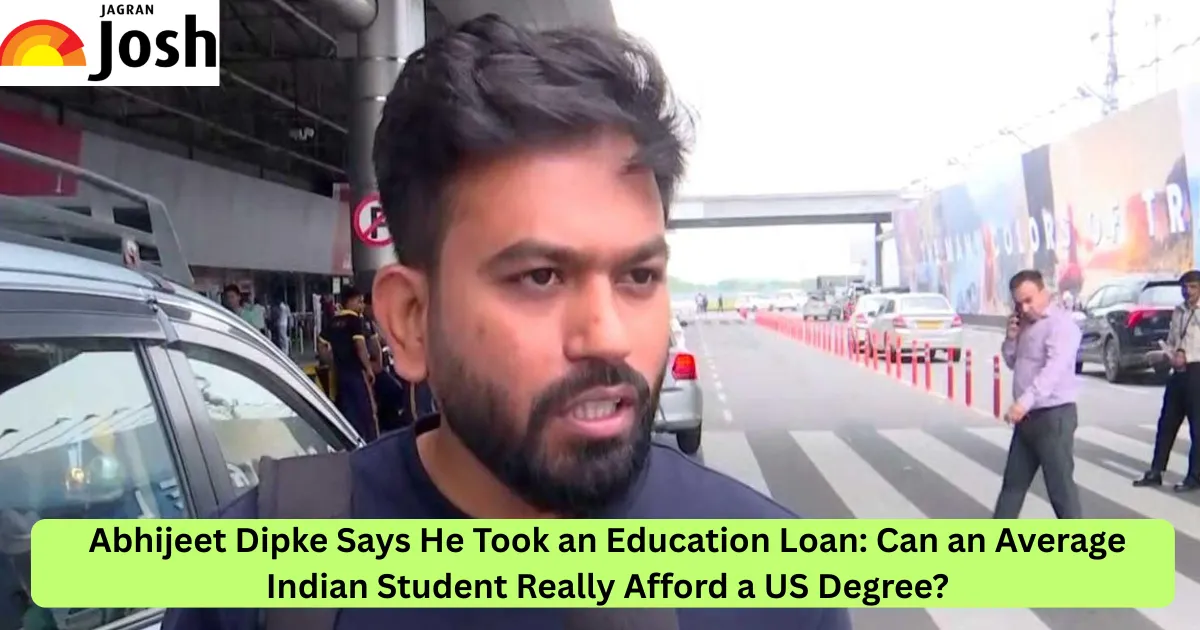
Cockroach Janta Party founder Abhijeet Dipke has said his education in the United States was paid through a Boston University scholarship and an education loan that he is still repaying. His statement came after RTI activist Amit Trivedi asked for a probe into his family finances and questioned how Dipke’s father Bhagwanrao Dipke who is a retired MIDC junior engineer could have funded US education on a salary of around Rs 60 to 65 thousand a month. Dipke denied any unexplained wealth. He also said CJP wants to depend on crowdfunding and will stay transparent about public money. On the anti NEET paper leak protest he said ordinary people helped with food and water. Read the article to know more details.
What Does it Cost to Study in the US and Can Average Indian Students Afford It?
Studying in the US can cost an average from Rs 31 lakh to Rs 77 Lakh a year depending on the college and city. Public University tuition can be around USD 26,000 to 46,500 a year. Private university tuition fees can go from USD 46,500 to 67,500 or more. Housing is another big cost. A shared dorm may cost around USD 1000 to 1800 a month. A shared apartment may cost around USD 700 to 1200. A private apartment can go much higher. For an average Indian family this is a heavy burden and one year can equal many years of savings. That is why students usually mix scholarships, family saving, part time work and education loans. Taking a loan can be worth it if the course leads to strong jobs and the total debt stays manageable. It is risky if fees are very high and the job ROI is weak.
Will Trump’s NSF Cuts Hurt STEM Education and Community Colleges?
US President Donald Trump proposed a budget that would cut National Science Foundation funding by more than half and slash STEM education funding by 75 percent. This matters because community colleges use NSF support to train skilled technical workers for manufacturing healthcare aerospace and other core sectors. These jobs often need more than school education but not always a four year degree. They also give many workers a real path into the middle class. Community colleges are also becoming important for AI training. Miami Dade College is one example where AI enrollment is rising fast. These programmes help young students and working adults who want practical industry ready skills. Cutting this support could weaken one of the most affordable routes to future jobs in America.

Faham is an education specialist and has over three years of experience in the education and edtech industry, specializing in digital and educational content creation. He holds an MBA in Marketing and Human Resources from Swami Vivekanand University. Throughout his career, Faham has developed expertise in creating engaging and informative content across diverse educational domains.
In addition to his edtech experience, he worked for two years as a Public Speaking and Creative Writing Expert, helping learners enhance their communication and writing skills. He has also been associated with Testbook and Adda Education as a Content Writer, where he created high-quality content for K–12 education, Management Entrance Examinations, UPSC, Law, and State Defence examinations. His strong understanding of educational content and exam preparation enables him to simplify complex topics and deliver valuable learning resources to students.