Which is the World's Largest Fast-Payment System?
India's Unified Payments Interface (UPI) is the world's largest fast-payment system by volume, processing over 600 million transactions daily. Built by NPCI, its open architecture allows users to link multiple banks to one app, driving nearly 85% of India's digital retail payments. UPI accounts for approximately 49-60% of all global real-time payments.
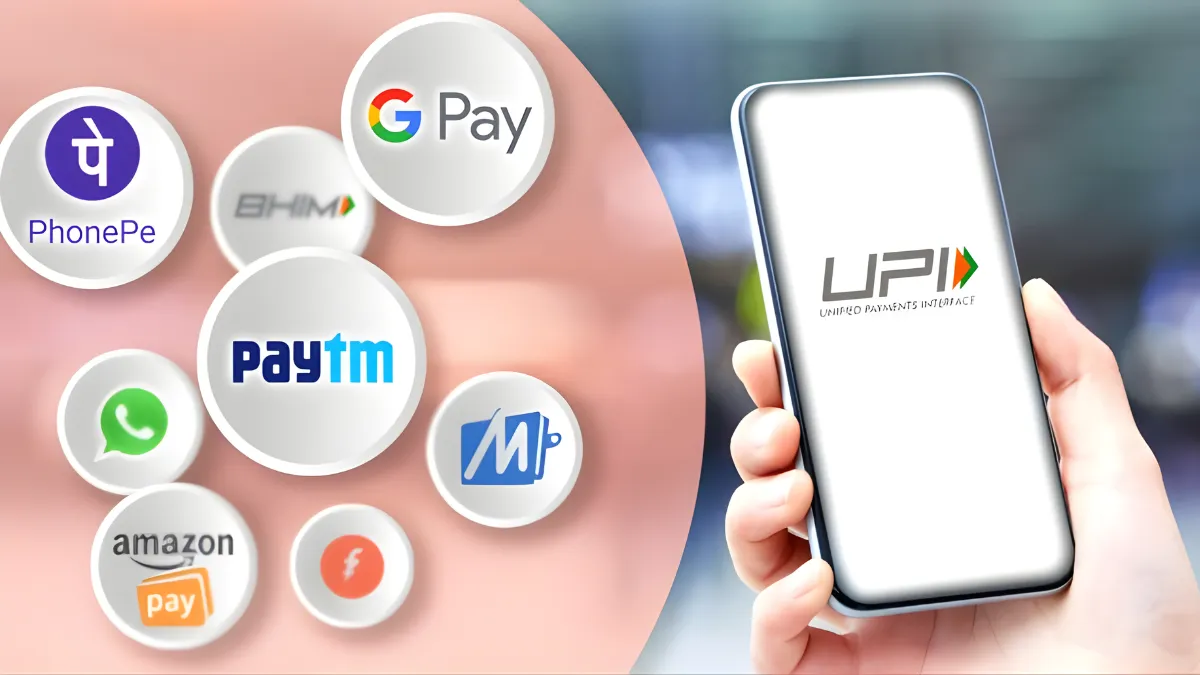
India’s Unified Payments Interface, or UPI, is the world’s largest fast‑payment system, handling the highest volume of instant transactions globally and accounting for nearly half of all such payments worldwide. Recognised by the IMF and global payments studies, UPI now processes over 600–650 million transactions a day and more than 18 billion transactions a month, surpassing even global card giant Visa in daily volume.
What is a Fast-Payment System?
Fast-payment systems also referred to as real-time or instant payment systems are designed to enable the movement of funds between bank accounts in seconds, 24/7, using generally mobile or online interfaces. They are designed for everyday use-person-to-person, person-to-merchant, and bill payments-offering immediate confirmation and low cost compared to cards or traditional bank transfers.
UPI is an interoperable fast‑payment infrastructure of India developed by the National Payment Corporation of India, built on top of existing rails such as the Immediate Payment Service (IMPS). Users can link multiple bank accounts to a single mobile app and pay using simple identifiers such as UPI IDs, QR codes, or phone numbers.
Why is UPI the world's largest fast-payment system?
UPI is now ranked as the largest real‑time retail payment system by transaction volume and market share. Key indicators include:
-
Global share: At about 49–60% of real‑time payment transactions around the world, according to data cited by the IMF and the report “Prime Time for Real‑Time” by ACI Worldwide.
-
Daily and monthly volume: By mid‑2025, the number of daily transactions processed by UPI reached over 640–650 million transactions per day and some 18–39 billion per month; up more than 30% year‑on‑year.
-
Value and dominance in India: UPI powers roughly 85% of India's digital retail payments, and in some months, its transaction value has been over 10 times that of all card payments combined.
These figures place UPI ahead of other major instant payment systems such as Brazil's Pix, the UK's Faster Payments, and the US FedNow in terms of sheer transaction count and share of global real‑time payment flows.
You may also like to read: List of Youngest Mayors in the U.S., Check Here!
UPI Versus Other Fast-Payment Systems
| System / Metric | UPI (India) | Pix (Brazil) / Others (indicative) |
| Type | Real‑time retail fast‑payment system | Real‑time retail systems |
| Daily transactions (2025) | 640–650 million+ | Much lower than UPI (few thousand per sec) |
| Monthly transactions | 18–39 billion | Substantially below UPI |
| Global real‑time share | ≈49–60% of all such payments | Remaining global share split across many systems |
| Recognition | IMF & global reports call it world’s largest FRS | Regional leaders but smaller globally |
How UPI Works and Scales
UPI works by bringing all three components together: interoperability, open access and low fees. Any licensed bank may join the network; and tens of popular apps, from PhonePe to Google Pay to Paytm, sit atop the very same rails, allowing users to send or receive money across banks and applications seamlessly. This open architecture has allowed over 500 million users and more than 60–65 million merchants to come onboard in less than a decade.
It enables features like QR-based merchant payments, recurring subscriptions - UPI AutoPay and even offline payments for basic phones, UPI123PAY, deepening inclusion. Integration of welfare schemes, among other initiatives of the government and regulatory support, has been further accelerating the process of adoption.
UPI pioneered an account‑to‑account, low‑cost fast‑payment model that is studied by many countries as a template for their systems. Currently live in only a handful of foreign markets, with partnerships in the UAE, Singapore and France, UPI already shapes debates on cross‑border real‑time payments and digital public infrastructure.
As more countries interlink their instant payment networks, with some experimenting with UPI‑like architectures, India's system will remain one of the reference points on scale, inclusiveness, and interoperability in fast‑payment design.
Check Out: What is the SIR Electoral Roll and Why is it Important?

Kirti Sharma is a journalist in the education domain with three and a half years of experience creating high-quality content for the education technology (EdTech) and digital media industries. She has an expertise in covering education news. Kirti has experience in writing data backed informational pieces on General knowledge.
Kirti holds a Bachelor of Arts degree, which helped build her strong foundation in writing and research. Over the course of her career, she has brought her skills to a variety of well-known companies, including ThoughtPartners Global, Infinite Group, and MIM-Essay. Through these roles, she has learned how to take complex information and turn it into engaging, easy-to-understand content for readers online.


![NIOS Hall Ticket 2026 [OUT] LIVE: Download Class 10th, 12th October Theory Admit Card at sdmis.nios.ac.in, Direct link here](https://img.jagranjosh.com/images/2026/October/16102026/NIOS-Hall-Ticket-2026.jpg)
![[OUT] UPSSSC PET Admit Card 2026 LIVE: यूपी पीईटी एडमिट कार्ड जारी, upsssc.gov.in पर Direct Link](https://img.jagranjosh.com/images/2026/October/15102026/UPSSSC-PET-Admit-Card-2026.jpg)