Which River Has the Most Gharials in the World?
Do you know which river supports 80% of the world’s gharials? This pristine waterway is home to over 2,100 of these rare, thin-snouted reptiles. It remains one of India’s cleanest rivers. Let’s discover this incredible sanctuary and its ancient guardians.

River with Most Gharials in the World: Gharials are unusual reptiles from the crocodilian family, best known for their long, thin snouts. This snout helps them catch fish with ease. Unlike other crocodilians, gharials spend nearly all their time in the water, only coming onto sandbanks to bask in the sun or lay eggs. Adult males have a large bump at the end of their nose that looks like an earthen pot, called a "ghara" in Hindi. Gharials play an important role in keeping our rivers healthy. Do you know which river is home to the most gharials in the world? In this article, we'll explore the river in India where you can find the most gharials.
Which River Has the Most Gharials in the World?

- The Chambal River is home to more gharials than anywhere else in the world.
This clean, year-round river starts in the Vindhya Range at Janapav near Mhow in Madhya Pradesh. - It flows north-northeast through Madhya Pradesh, enters Rajasthan, and then turns southeast to meet the Yamuna River at Pachnada in Uttar Pradesh.
- In 2026, the Chambal River system is home to 2,100 to 2,500 adult gharials, representing more than 80% of the world's wild population.
- These reptiles play an important role in Indian rivers as "biological indicators" of a healthy ecosystem.
- They eat sick fish and help control fish diversity, preventing any one species from taking over and keeping the river's ecosystem balanced.
- Because of them, the river stays clean and productive, which also helps support the health of the larger Gangetic delta.
5 Lesser-Known Facts About Gharials

- Unlike other crocodiles, gharials cannot "high walk" on land; their leg muscles are too weak to lift their bodies, so they slide on their bellies.
- They are the only crocodilians where males and females look different. Males develop a bulbous growth called a "ghara" (pot) on their snout to produce loud buzzing sounds and bubbles.
- Gharials have more teeth than any other crocodilian species, with approximately 110 sharp, interlocking teeth specialised for a piscivorous (fish-eating) diet.
- The Chambal is one of India's few "living" rivers, remaining largely unpolluted due to ancient curses and local legends that discouraged people from bathing in or using its water for centuries.
- The gender of gharial hatchlings is determined by the temperature of the sand in their nests; warmer sand usually produces more females, while cooler sand produces males.
What is the Ecological Importance of Gharials For Marine Life?
Gharials are often called the "guardians of the river". While they live in freshwater, their impact stretches far beyond the riverbanks. By maintaining the health of inland waterways, they ensure that the nutrients and water flowing into our oceans remain balanced, directly supporting the complex web of global marine life.
The Ecological Impact of Gharials
- Regulating Fish Populations: Gharials primarily eat fish. By hunting specific species, they prevent any single fish group from overpopulating. This diversity ensures a stable flow of nutrients toward the sea.
- Cleaning the Environment: They act as natural scavengers. By consuming dead organic matter and sick fish, they prevent the spread of diseases that could otherwise travel downstream and infect coastal estuaries.
- Top Predator Stability: As apex predators, their presence keeps the entire food chain in check. A stable river food web prevents ecological collapses that would disrupt the transition zones where rivers meet the ocean.
- Indicators of Water Quality: Gharials are highly sensitive to pollution. Their thriving population in 2026 indicates that they have access to clean, oxygen-rich water. Clean river output is essential for the survival of marine reefs and coastal seagrasses.
- Nutrient Cycling: Through their waste and movement, gharials help circulate essential minerals. These nutrients eventually reach the marine environment, feeding the plankton that forms the base of the ocean's food chain.
How Many Gharials Are Left In The World?
The global gharial population has increased thanks to focused conservation work. Recent surveys in 22 rivers found over 3,000 gharials in the Ganga river basin alone. Although there are still only about 650 to 800 mature breeding adults, the total population, including juveniles and sub-adults, has grown a lot since the mid-1970s, when only about 200 were recorded.
Which is the Largest Gharial In The World?
The largest gharial ever officially measured was about 6.25 meters (20.5 feet) long. In the past, some people claimed males could grow up to 7 meters, but these huge gharials are now very rare. Today, most large adult males are between 5 and 6 meters long and weigh about 160 to 250 kilograms. The largest gharials are usually found in the Chambal River, where deep water and limited human activity help them reach their full size.
Where Are Gharials Found in India?
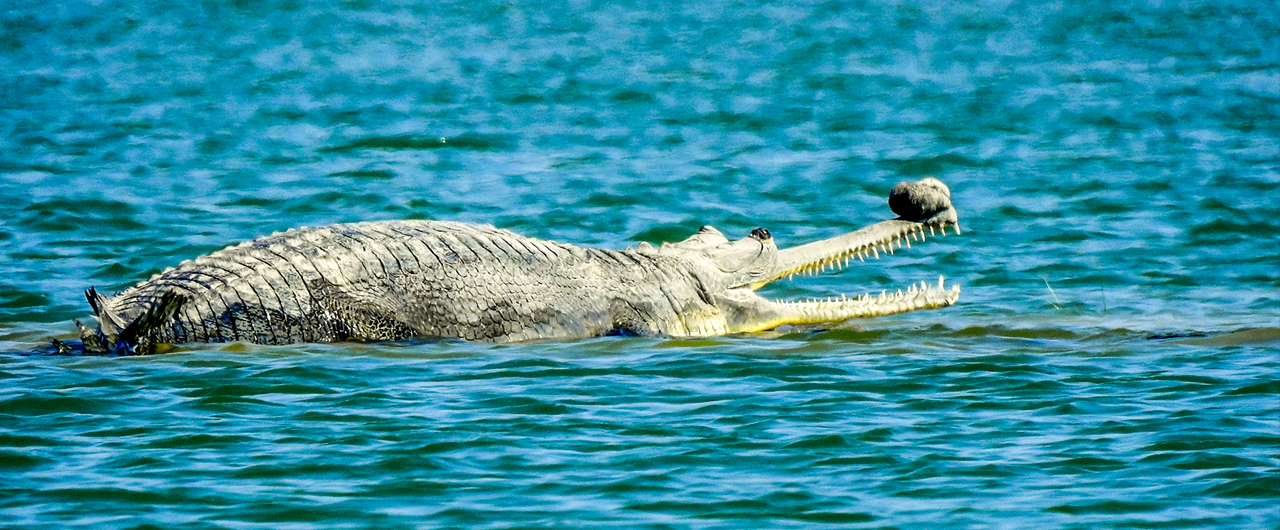
Gharials mostly live in the northern rivers of India. The National Chambal Sanctuary, which covers parts of Madhya Pradesh, Rajasthan, and Uttar Pradesh, is their main habitat and is home to more than 80% of the world's gharials. They are also found in the Girwa River (Katarniaghat), the Gandak River (Bihar), and the Ramganga River in Corbett National Park. Smaller groups that have been reintroduced live in the Beas River (Punjab) and some areas of the Son and Mahanadi rivers.
Why Are Gharials Endangered?
Gharials are considered "Critically Endangered" because they have lost much of their habitat. Dams and irrigation canals change how rivers flow, making it hard for them to survive. Illegal sand mining is also a major problem, as it destroys the sandbanks where gharials lay their eggs. Many gharials die after getting caught in nylon fishing nets, which can tangle around their long snouts and lead to starvation. Pollution and the loss of fish, their only food, make things even worse for them.

Kriti Barua is a skilled digital journalist and communications professional with 4+ years of experience, currently writing for the General Knowledge section at Jagran New Media. She has established herself as a subject matter expert in History, Geography, Trending National and International News, Sports, Science, and Defence, producing clear, reliable, and search-optimised content that connects with readers worldwide.
Kriti holds a BA degree from Delhi University and a one-year diploma in TV Production and Journalism, an academic background that adds research depth and strong storytelling instincts to her writing. Her experience spans brand writing, content marketing, and digital media, giving her a sharp understanding of what makes content both helpful to readers and visible in search.
At Jagran New Media, she applies this expertise to national and international news coverage, query-based articles, and in-depth pieces across her specialist subject areas. Her content is defined by easy language, factual accuracy, strong keyword strategy, and reader-friendly storytelling.