Which River Valley Is The Most Fertile In India?
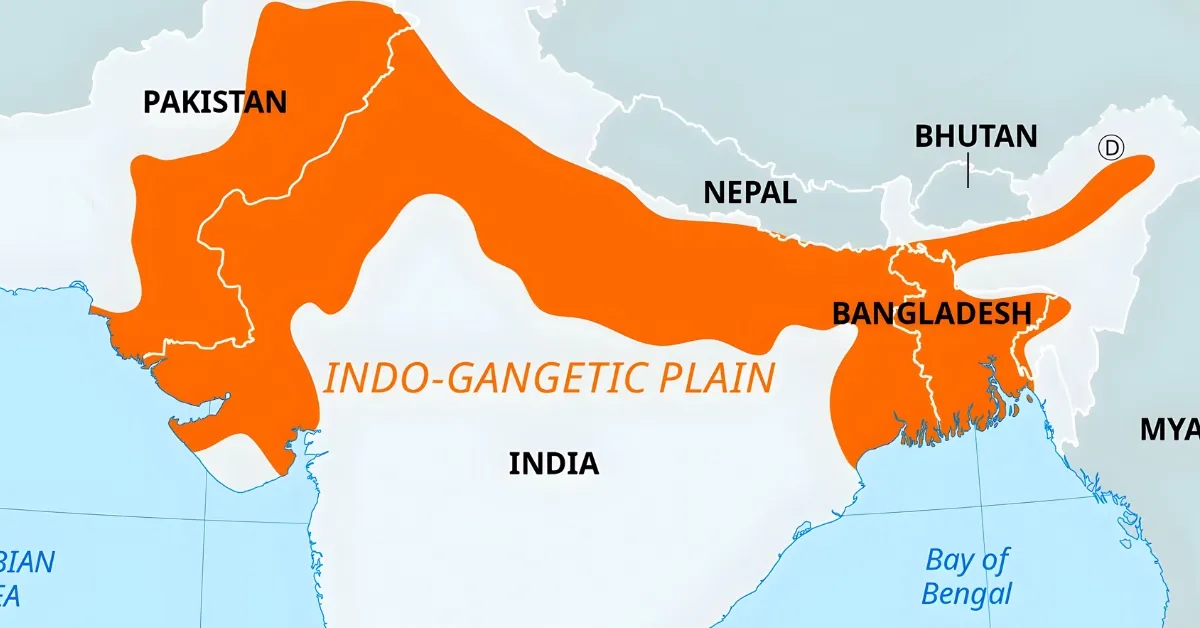
Most Fertile River Valley of India: The Indo-Gangetic Plain is the most fertile river valley in India. Formed by the massive alluvial deposits of the Ganga, Indus, and Brahmaputra rivers, this region is often called the "Granary of India". Its rich, deep soil and year-round water supply from the Himalayas support diverse, highly productive agriculture across North India.
Rivers are vital to life in India. They provide the water needed for drinking, daily use, and especially for farming. They have shaped our history, with ancient civilisations growing right on their banks. India is home to a vast network of rivers, with more than 400 in total, ranging from small to large. Among them, the Ganga is the longest river flowing entirely within India. The Brahmaputra is generally considered the largest by volume, and the Indus river system is known to flow through the deepest gorges. But can you guess which single river valley is the most fertile? It has created a plain known for its endless wheat fields. This mighty river has the largest drainage basin in India. It is also considered the holiest river in Hindu culture. In this article, we'll take a look at the history, geography, and incredible productivity of this specific river valley and its magnificent river.
ALSO READ| Which Is The Longest Peninsular River In India?
Which River Valley Is The Most Fertile In India?

The Indo-Gangetic Plain is the most fertile river valley in India. This enormous, flat plain is formed by the depositional work of three major river systems: the Indus, the Ganga, and the Brahmaputra. It was created over millions of years as these rivers, flowing from the Himalayan Mountains, dropped vast amounts of nutrient-rich alluvial soil into a massive depression between the Himalayas in the north and the Peninsular Plateau in the south.
The plain extends from the Sutlej River in the west to the Ganga Delta in the east, encompassing the central Indian states of Punjab, Haryana, Uttar Pradesh, Bihar, and West Bengal. This continuous supply of fine silt and constant water availability make it one of the most productive agricultural regions globally, often called the "Granary of India".
IN CASE YOU MISSED| List of 7 Oldest Rivers in the World
10 Lesser-Known Facts About the Indo-Gangetic Plain

- The Indo-Gangetic Plain holds the title for the world's most extensive, uninterrupted stretch of alluvium (river-deposited soil).
- The soil is almost entirely alluvium, which is a highly porous mixture of silt, sand, and clay, ideal for holding both water and air for plant roots.
- The plain was originally a deep trough or depression formed when the Indian Plate collided with the Eurasian Plate, which also created the Himalayas.
- The plain's fertility is constantly renewed because the Himalayas are young mountains that erode rapidly, continuously providing fresh, rich sediment.
- It is not uniform; it consists of four distinct belts: the porous Bhabar, the marshy Terai, the older fertile Bhangar, and the newer, most fertile Khadar.
- The combination of flat land, water, and fertile soil has made it one of the most densely populated regions on Earth, supporting about 40% of India's population.
- The plain is physically divided into the Indus and Ganga drainage basins by a subtle geological feature known as the Delhi Ridge.
- The plain is incredibly flat, with an extremely low average gradient (slope) of only 15–20 centimetres per kilometre, resulting in slow-moving rivers.
- Highly fertile areas in the plain are called Doabs (Persian for "two waters"), referring to the land lying between two converging rivers.
- Many of India's major empires and historic cities, including the ancient capitals of the Maurya and Gupta dynasties, were centred in this plain due to its ability to feed large populations.
- Due to its fixed topography (flanked by mountains), the plain often acts as a single, large airshed during winter, trapping pollutants across borders and creating smog.
- At its eastern end, it forms the Sundarbans Delta, the world's largest delta, renowned for its unique tidal forests and Royal Bengal Tigers.
- The intense monsoon rains cause chemical weathering of Himalayan rocks, releasing essential minerals like calcium and potassium that act as natural fertilisers.
- The coarse Bhabar and Terai belts at the foothills efficiently absorb rainwater and river water, helping to recharge the massive groundwater aquifers below the plain.
YOU MIGHT LIKE| Which River Is Known as The Lifeline Of Madhya Pradesh?
Why is the Indo-Gangetic Plain Considered the Most Fertile in India?

The Indo-Gangetic Plain is considered the most fertile region in India, primarily due to extensive alluvial soil deposits from the Indus, Ganges, and Brahmaputra river systems, as well as favourable geographical and climatic factors.
Key reasons for its exceptional fertility include:
- Formation by River Systems: The vast plain was formed over millions of years by the deposition of massive amounts of sediment (alluvium) carried down from the Himalayas by these major perennial rivers and their tributaries. This continuous process created one of the world's largest uninterrupted alluvial plains.
- Nutrient-Rich Alluvial Soil: The deposited alluvium is rich in essential nutrients for plant growth, such as potash, phosphoric acid, and lime. The Khadar (newer alluvium) belt, in particular, which is flooded annually, gets a fresh layer of highly fertile soil each year, while the older alluvium, Bhangar, also supports significant agriculture.
- Abundant Water Availability: The region is crisscrossed by numerous rivers and has a high groundwater table, ensuring a consistent water supply necessary for intensive irrigation and agriculture.
- Flat Topography: The plain's flat, gentle terrain facilitates easy, widespread irrigation through canals and wells, as well as large-scale farming and infrastructure development (roads, railways, settlements).
- Favourable Climate: The region has a suitable climate with adequate rainfall during the monsoon season, supporting year-round crop growth and high agricultural productivity.
These combined factors have made the Indo-Gangetic Plain India's agricultural heartland, often referred to as the "Granary of India", and have supported a large portion of the country's population.
WHAT'S NEXT| Which 2 Indian Rivers Fall Into The Arabian Sea?

Kriti Barua is a skilled digital journalist and communications professional with 4+ years of experience, currently writing for the General Knowledge section at Jagran New Media. She has established herself as a subject matter expert in History, Geography, Trending National and International News, Sports, Science, and Defence, producing clear, reliable, and search-optimised content that connects with readers worldwide.
Kriti holds a BA degree from Delhi University and a one-year diploma in TV Production and Journalism, an academic background that adds research depth and strong storytelling instincts to her writing. Her experience spans brand writing, content marketing, and digital media, giving her a sharp understanding of what makes content both helpful to readers and visible in search.
At Jagran New Media, she applies this expertise to national and international news coverage, query-based articles, and in-depth pieces across her specialist subject areas. Her content is defined by easy language, factual accuracy, strong keyword strategy, and reader-friendly storytelling.