Word of the Day: Muse
Word of the Day: 'Muse' is the featured word of the day. Comprehending the definition of 'Muse' is crucial for acquiring advanced English vocabulary commonly encountered in international news and competitive examinations.

Muse Definition, Meaning and Usage: Imagine an artist sitting in front of a blank canvas, waiting for a great idea to strike. Suddenly, they see a beautiful bird fly past the window, and they finally know exactly what to paint. That bird, or anything that gives someone a sudden burst of creative energy, is called a muse. A muse is a person, place, or object that inspires someone to create art, music, or stories. It can also mean to think deeply and quietly about something. In this article, we’ll take a look at the meaning, history, and usage of this inspiring word.
What is Muse? Meaning and Definition
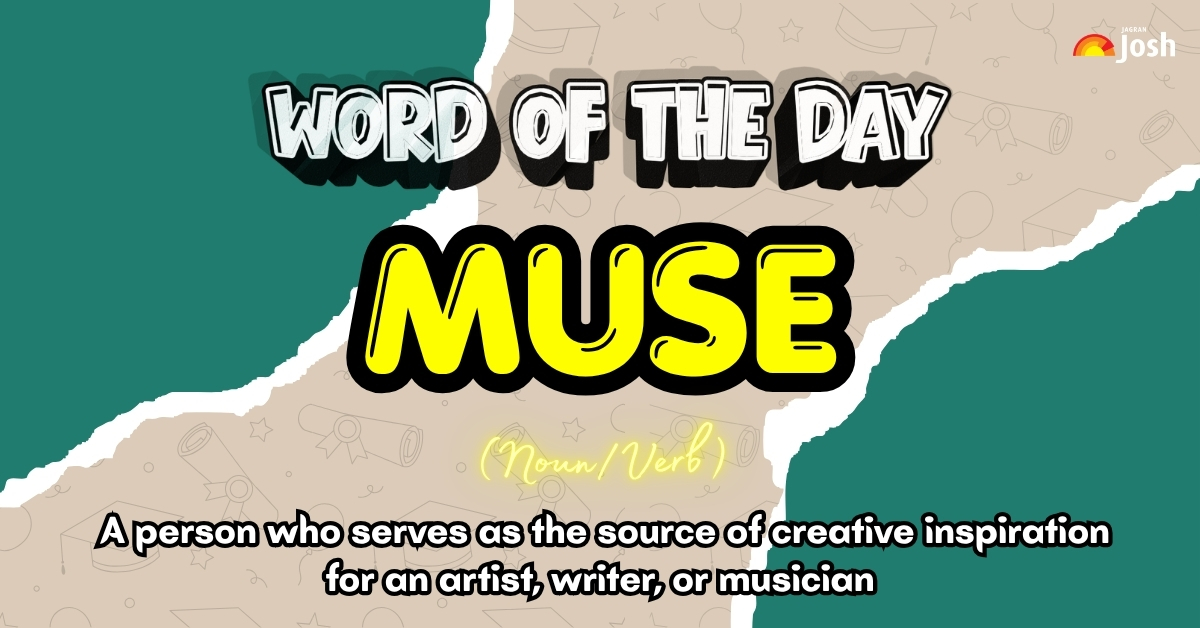
The word 'muse' has two main uses in English. As a noun, a muse is someone or something that inspires you. It is the spark that helps a writer create a poem or a scientist find a solution. People often call someone their muse if that person encourages their creativity.
As a verb, 'to muse' means to think deeply and slowly about something, often in a dreamy way. For example, if you sit by a window and imagine what the future might be like, you are musing.
Feature Details
| Feature | Details |
| Type | Noun and Verb |
| Pronunciation | MYOOZ |
| Root | Greek mousa (a goddess of art/science) |
Muse Origin and Etymology
The word "muse" has its roots in Ancient Greece. In Greek mythology, the Muses were nine goddesses, daughters of Zeus, each responsible for a different creative field, such as poetry, history, music, or dance. Artists in ancient times would ask the Muses for inspiration to help them create beautiful works. The word "muse" comes from the Greek "mousa," then moved into Latin and, finally, into English in the 1300s. The word "museum" comes from the same root. Originally, a museum was a "shrine to the Muses", a place where people could find inspiration from art and knowledge. The verb meaning, to think deeply, appeared later, probably from the idea of waiting quietly for inspiration.
How To Use Muse in a Sentence
Using "muse" in your writing helps you describe the connection between a person and their inspiration.
- Examples: The beautiful garden served as a muse for the famous poet.
- I like to sit on the porch and muse about the stars at night.
- She looked at her cat, which was the muse for her funny comic strip.
- "I wonder if I should move to the city," he mused quietly to himself.
- Every great songwriter has a muse that helps them find the right notes.
- The old library is a perfect place to go and muse over history.
- He became a muse for the fashion designer’s new clothing line.
- We spent the afternoon musing on how to build a better robot.
- Nature has always been a powerful muse for photographers.
- The teacher asked the students to muse on the meaning of the story.
Muse Synonyms and Antonyms
These words help you distinguish between being deeply inspired and being completely distracted or bored.
Synonyms (Similar Words):
- Inspiration: A person or thing that gives you creative ideas.
- Ponder: To think about something carefully and for a long time.
- Contemplate: To look thoughtfully for a long time at something.
- Stimulus: Something that causes a reaction or change.
Antonyms (Opposite Words):
- Ignore: To refuse to take notice of or acknowledge.
- Disregard: To pay no attention to; to ignore.
- Discouragement: Something that takes away your desire to try.
- Mindlessness: Acting or thinking without any focus or deep thought.
Did You Know?
The word "music" actually comes from the word "Muse". In Ancient Greece, any art protected by the Muses was called 'mousike'. Over time, people started using that word just for the art of sound. So, when you listen to your favourite song, you're really enjoying the "Art of the Muses".

Kriti Barua is a skilled digital journalist and communications professional with 4+ years of experience, currently writing for the General Knowledge section at Jagran New Media. She has established herself as a subject matter expert in History, Geography, Trending National and International News, Sports, Science, and Defence, producing clear, reliable, and search-optimised content that connects with readers worldwide.
Kriti holds a BA degree from Delhi University and a one-year diploma in TV Production and Journalism, an academic background that adds research depth and strong storytelling instincts to her writing. Her experience spans brand writing, content marketing, and digital media, giving her a sharp understanding of what makes content both helpful to readers and visible in search.
At Jagran New Media, she applies this expertise to national and international news coverage, query-based articles, and in-depth pieces across her specialist subject areas. Her content is defined by easy language, factual accuracy, strong keyword strategy, and reader-friendly storytelling.