Kerala Student Politics: University VC Says Violence Must Be Curbed, Not Politics
Kerala University VC Mohanan Kunnummal rules out a ban on student politics, stresses curbing campus violence and explains the status of the proposed code of conduct.
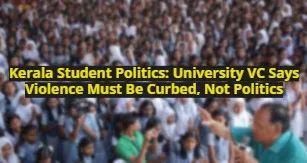
Kerala University Vice-Chancellor Mohanan Kunnummal has ruled out any move to ban student politics on campuses, stressing that universities must protect freedom of expression while ensuring that political activities do not lead to violence or disrupt academic work.
Speaking to reporters in Thiruvananthapuram on October 24, Kunnummal said student politics should not be viewed only as an obstacle to education. He emphasised that campuses must remain spaces where students can discuss contemporary issues, express differing opinions and participate in democratic debates without resorting to physical confrontation.
The clarification comes amid discussions over a proposed code of conduct for student political activities at Kerala University. The issue has drawn attention from student organisations and political groups, with concerns over how restrictions on campus activities could affect students democratic rights.
Also Read l CA Foundation September 2026 Result LIVE
Kerala University Student Politics: What Did the VC Say?
Kunnummal said the university's primary objective was to prevent violence in educational institutions and ensure that academic activities continued without disruption. He maintained that freedom of expression must be respected and that disagreements between students or organisations should not result in physical confrontations.
According to the Vice-Chancellor, political activities can have a constructive role in student life by encouraging discussion, awareness and engagement with contemporary issues. He also stressed that the freedom to express an opinion does not give anyone the right to prevent others from expressing their views.
The university is examining the issue in accordance with directions from the Kerala High Court and discussions at the government level. Kunnummal said the matter would be considered by the university's statutory bodies before any decision is taken.
Kerala University Draft Code of Conduct: What Is the Controversy?
The debate follows reports about a draft code of conduct concerning student political activities at Kerala University. The document reportedly came up for consideration before a university syndicate sub-committee and raised questions about regulating political activities on campuses and affiliated colleges.
The discussions are linked to earlier directions from the Kerala High Court asking universities to examine guidelines for campus activities. Mahatma Gandhi University had previously prepared a document on regulating such activities, which has become part of the broader discussion.
Kerala University VC Says Decision Will Follow Institutional Process
Kunnummal clarified that the decision on any proposed code would not rest with the Vice-Chancellor alone. The matter will be discussed by the university's statutory bodies, including the Senate, Syndicate and Academic Council, through the appropriate institutional process.
He also noted that defining student politics and determining the relationship between student organisations and political parties are among the issues that require deliberation.
The university's position, as outlined by the Vice-Chancellor, is to address campus violence without eliminating opportunities for students to participate in political discussions and democratic activities.
Also Check:

Apeksha Agarwal is an Education Journalist with over 3.5 years of experience. She covers a wide range of topics, including school board examinations, entrance tests, admissions, results, scholarships, and higher education updates. Over the years, she has closely tracked major examinations such as JEE Main, NEET UG, CUET, and various state-level entrance exams, helping students stay informed throughout their academic journey. Apeksha has a Master's degree in Journalism and Mass Communication and a certificate in Digital Journalism. She is passionate about transforming complex educational developments into clear, accessible, and useful information. Her reporting focuses on providing students, parents, and educators with accurate updates and practical insights on examinations, results, and policy changes. She believes that quality education journalism can make a meaningful difference by helping students make informed decisions about their future.