Maharashtra HSC Biology Question Paper 2026 with Answer Key: Download PDF
Maharashtra HSC Biology Question Paper 2026 with answer key is available here . Check answers curated by subject experts. Estimate your score before the Maharashtra HSC results.
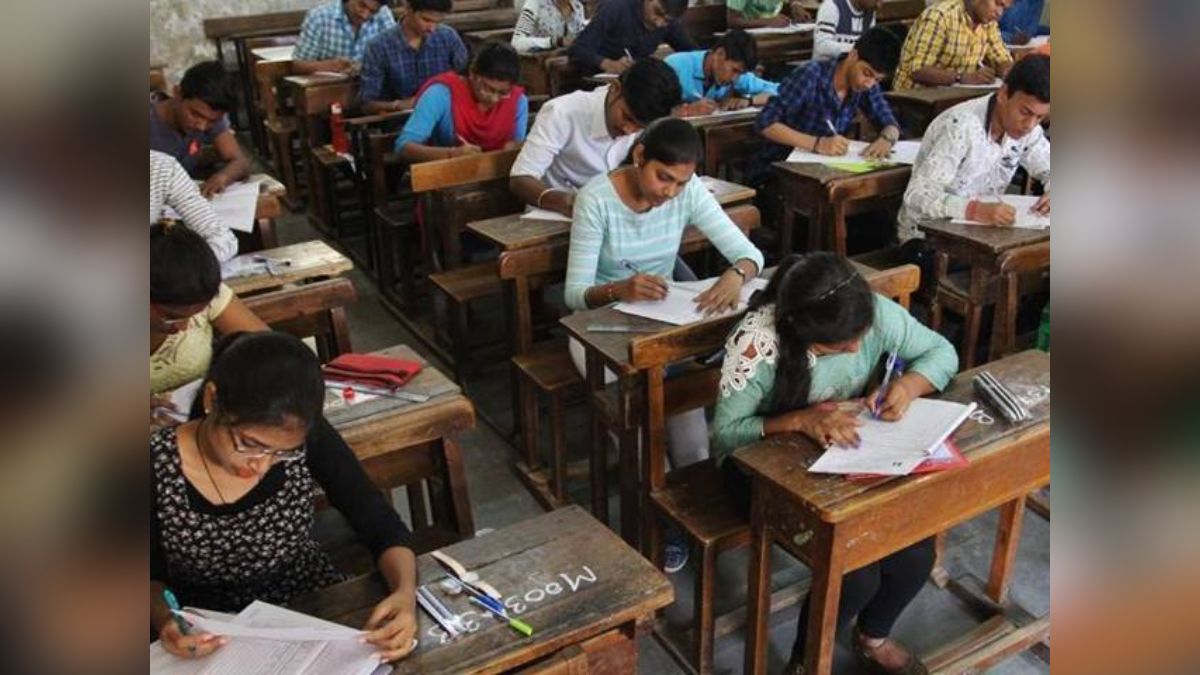
MSBSHSE Exam 2026: Maharashtra The Maharashtra State Board of Secondary and Higher Secondary Education (MSBSHSE) conducted the HSC Class 12 Biology exam today, February 25, 2026. As one of the most critical core subjects for the Science stream, lakhs of students appeared for the examination held from 11:00 AM to 2:00 PM across various centers in the state.
Following the conclusion of the exam, students are now looking for a reliable Maharashtra HSC Biology Answer Key 2026 to evaluate their performance and estimate their scores. In this article, we provide the Maharashtra HSC Biology Question Paper PDF along with expert-verified answer key and detailed exam analysis.
Key Highlights: Maharashtra HSC Biology Exam 2026
| Feature | Details |
| Exam Board | Maharashtra State Board (MSBSHSE) |
| Subject | Biology (56) |
| Exam Date | February 25, 2026 |
| Exam Time | 11:00 AM to 2:00 PM (3 Hours) |
| Total Marks | 70 Marks |
| Paper Difficulty | Moderate (Based on initial student feedback) |
Maharashtra HSC Biology Question Paper Pattern 2026
The question paper was structured into four distinct sections, designed to test theoretical knowledge, analytical skills, and diagrammatic accuracy.
-
Section A: 10 MCQs (1 mark each) and 8 Very Short Answer questions (1 mark each).
-
Section B: 12 Short Answer questions; students must attempt any 8 (2 marks each).
-
Section C: 12 Short Answer questions; students must attempt any 8 (3 marks each).
-
Section D: 5 Long Answer questions; students must attempt any 3 (4 marks each).
Maharashtra HSC Biology Exam Analysis 2026
According to the first reactions from students and subject experts:
-
Section A was relatively straightforward, though a few MCQs required a deep understanding of the textbook.
-
Sections B and C covered a wide range of topics, including genetics, respiration, and biotechnology.
-
Section D focused on descriptive diagrams and long-form explanations, such as the structure of the human sperm and the cardiac cycle.
Overall, the paper was well-balanced and strictly followed the prescribed Maharashtra State Board syllabus.
Download Maharashtra HSC Biology Question Paper 2026
Students can download the official question paper to review the questions asked in Maharashtra HSC Biology Exam 2026.
[Download Maharashtra HSC Biology Question Paper 2026 PDF Here]
Maharashtra HSC Biology Answer Key 2026
Section A
Our experts have solved the Section A questions to help you verify your responses immediately.
Q.1 Select and write the correct answer:
-
A cell divides mitotically into two. Daughter cells divide and redivide repeatedly. Such growth is called:
-
Answer: (b) geometric growth
-
-
The transgenic plant Tomato contains transgene for the production of flavonoids:
-
Answer: (c) Chalcone isomerase
-
-
The cranial capacity of Neanderthal man was:
-
Answer: (d) 1400 C.C.
-
-
Identify the organism which meet their energy requirements by degrading detritus:
-
Answer: (d) Saprotrophs
-
-
Identify the algae among the following:
-
Answer: (a) Spirulina spp.
-
-
In plants, soluble food is always translocated in the form of:
-
Answer: (c) sucrose
-
-
Identify invasive plant species from the following:
-
Answer: (d) Parthenium
-
-
The mature plasma cell produces antibodies at the rate of:
-
Answer: (a) 2000 molecules per second
-
-
Which is the largest WBC?
-
Answer: (b) Monocyte
-
-
The number of deaths when environmental pressures come into play is known as:
-
Answer: (c) realized mortality
-
Q.2 Very Short Answer Questions:
-
Give the function of Leydig's cells.
-
Answer: Leydig cells (interstitial cells) produce and secrete testicular hormones called androgens, primarily testosterone.
-
-
Define endangered species.
-
Answer: Species that are at a high risk of extinction in the near future throughout all or a significant portion of their range.
-
-
Name the gene which is inherited directly from father to son.
-
Answer: Y-linked (Holandric) genes.
-
-
Define the term chlorosis.
-
Answer: The loss or yellowing of chlorophyll in plant leaves due to mineral deficiency or disease.
-
The 2026 Maharashtra HSC Biology paper provided a fair opportunity for prepared students to score high. While the MCQs were scoring, the descriptive sections required precise diagrams and technical terminology. We hope this answer key helps you gain clarity on your performance.


-1789127407555_t.webp)