Astra Mk2 Missile: Redefining India’s Aerial Combat Capability
Astra Mk2 missiles are the cutting-edge capabilities of the Astra Mk2. Read more about India's advanced beyond-visual-range (BVR) air-to-air missile designed for long-range precision and strategic air superiority.
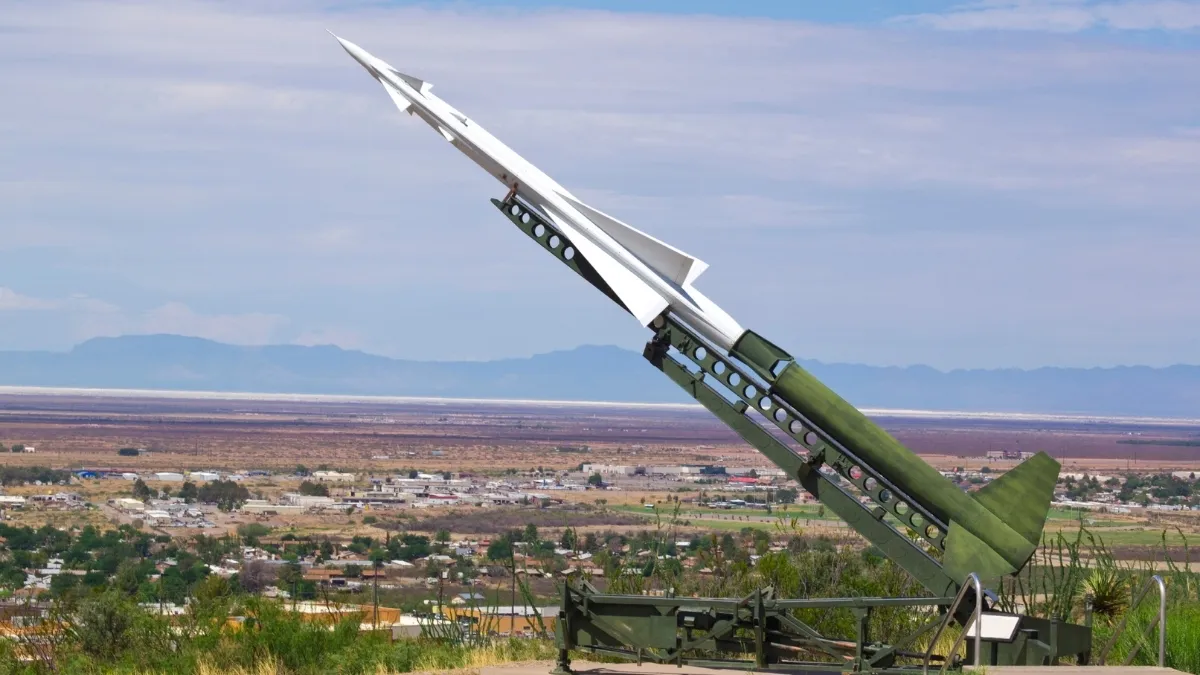
Indian Defence Research and Development Organisation (DRDO) has achieved a major milestone with the Astra Mk2. This next-generation Beyond-Visual-Range Air-to-Air Missile (BVRAAM) represents a massive technological leap over its predecessor. the missile is now transitioning into integrated user trials, set to arm India's frontline fighter fleet, including the Su-30MKI and Tejas Mk-1A.
Astra Mk2 Missile Key Features
Astra Mk2 is a next-generation indigenously developed Beyond-Visual-Range Air-to-Air Missile (BVRAAM) featuring a dual-pulse rocket motor and an indigenous AESA seeker, it offers a range of 200–240 km, significantly enhancing the Indian Air Force's ability to engage adversaries from safe distances Its advanced technical specifications include:
-
Extended Operational Range: Capable of engaging targets at distances between 200 and 240 kilometres under high-altitude conditions.
-
Dual-Pulse Solid Rocket Motor: its propulsion system allows the missile to conserve energy during coasting phase and provides a second boost of speed during the terminal approach to ensure high manoeuvrability.
-
Indigenous AESA Seeker: Equipped with an active electronically scanned array (AESA) seeker featuring robust Electronic Counter-Countermeasures (ECCM).
-
Two-Way Datalink: This feature enables real-time mid-course guidance updates, allowing the missile to receive targeting corrections from the launch aircraft or other networked assets.
-
Stealth-Ready Design: DRDO is currently developing a folding-fin variant, specifically designed to fit within the internal weapons bays of next-generation stealth aircraft like the Advanced Medium Combat Aircraft (AMCA) and the Ghatak UCAV.
Significance
The induction of the Astra Mk2 is a strategic game-changer for the Indian Air Force (IAF) for several reasons:
-
Strategic Deterrence: it has capabilities to meet the PL-15, the Astra Mk2 acts as a credible deterrent to ensure the India air superiority in a complex.
-
Network-Centric Warfare: it can function seamlessly within a collaborative digital battlefield allowing one aircraft to launch the weapon while another platform guides .
-
Self-Reliance (Atmanirbhar Bharat): it highlights India's shift away from foreign imports, demonstrating the nation’s ability to design, develop, and produce world-class, cost-effective aerial munitions domestically.
-
Multi-Platform Versatility: Its integration across diverse platforms from the Su-30MKI and Tejas Mk-1A to potential future fits like the Mirage 2000provides the IAF with unprecedented flexibility in fleet management and tactical deployment.
DRDO's Astra Mk2 missile, a next-gen BVRAAM, is entering user trials for India's frontline fighters like Su-30MKI and Tejas Mk-1A. It boasts a 200-240 km range, dual-pulse motor, and indigenous AESA seeker. This strategic game-changer enhances India's air superiority, promotes self-reliance, and offers multi-platform versatility, including future stealth aircraft integration.

Manisha Waldia is a distinguished content strategist with 5 years of experience crafting premium educational content for UPSC and State PCS, with a focus on deep conceptual analysis across Polity, Geography, History, and Environment. She currently brings this expertise to Jagran Josh, where she covers major national and international events, current affairs, and static general knowledge. Over her career, Manisha's specialized insights have led her to curate high-impact materials and serve as a UPSC Mains answer-evaluator for India’s top institutes—including Drishti IAS, Shubhra Ranjan IAS, Study IQ, GS Score, and PWonlyIAS. She has also worked alongside leading NGOs like Oxfam India and Avani Kumaon.
Contact: manisha.waldia@jagrannewmedia.com