Largest Producer of Pulses in the World 2026 – Check India's Production, Top Pulse-Producing States and Important Facts
Which country is the largest producer of pulses in the world in 2026? Check India's latest pulse production, top 10 producing states, government schemes and interesting facts.
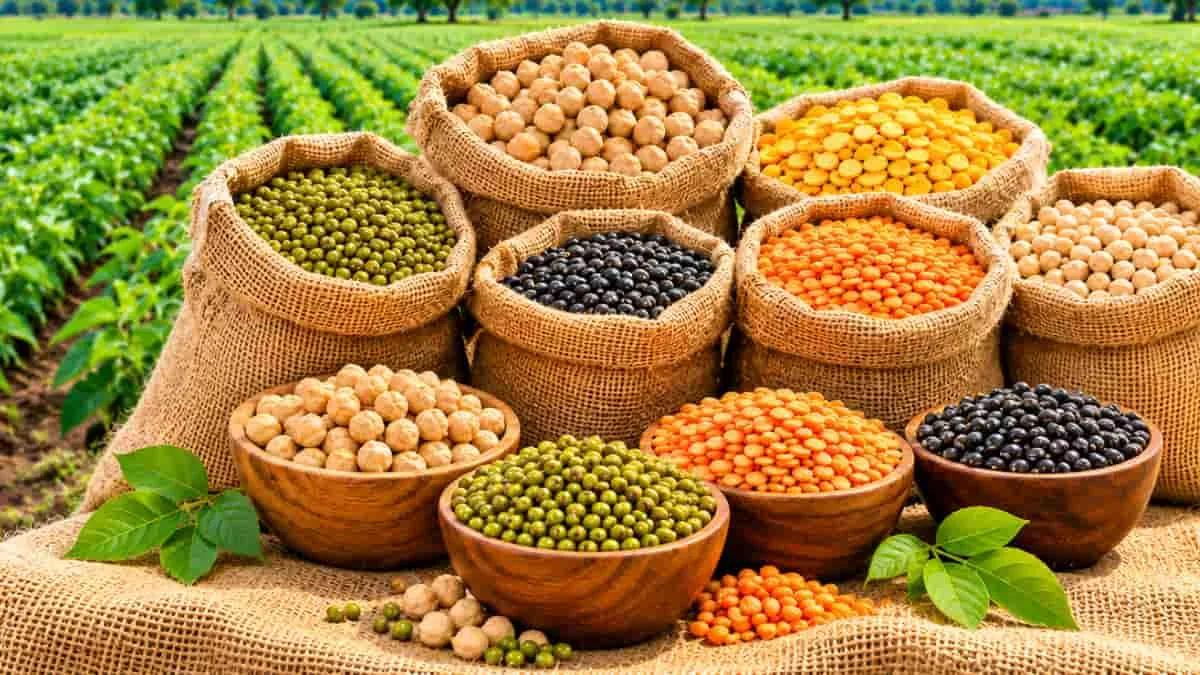
Largest Producer of Pulses in the World 2026: India is the largest producer of pulses in the world, according to the Agricultural and Processed Food Products Export Development Authority (APEDA), Government of India. The country is also one of the world's largest consumers of pulses, which are an important source of plant-based protein.
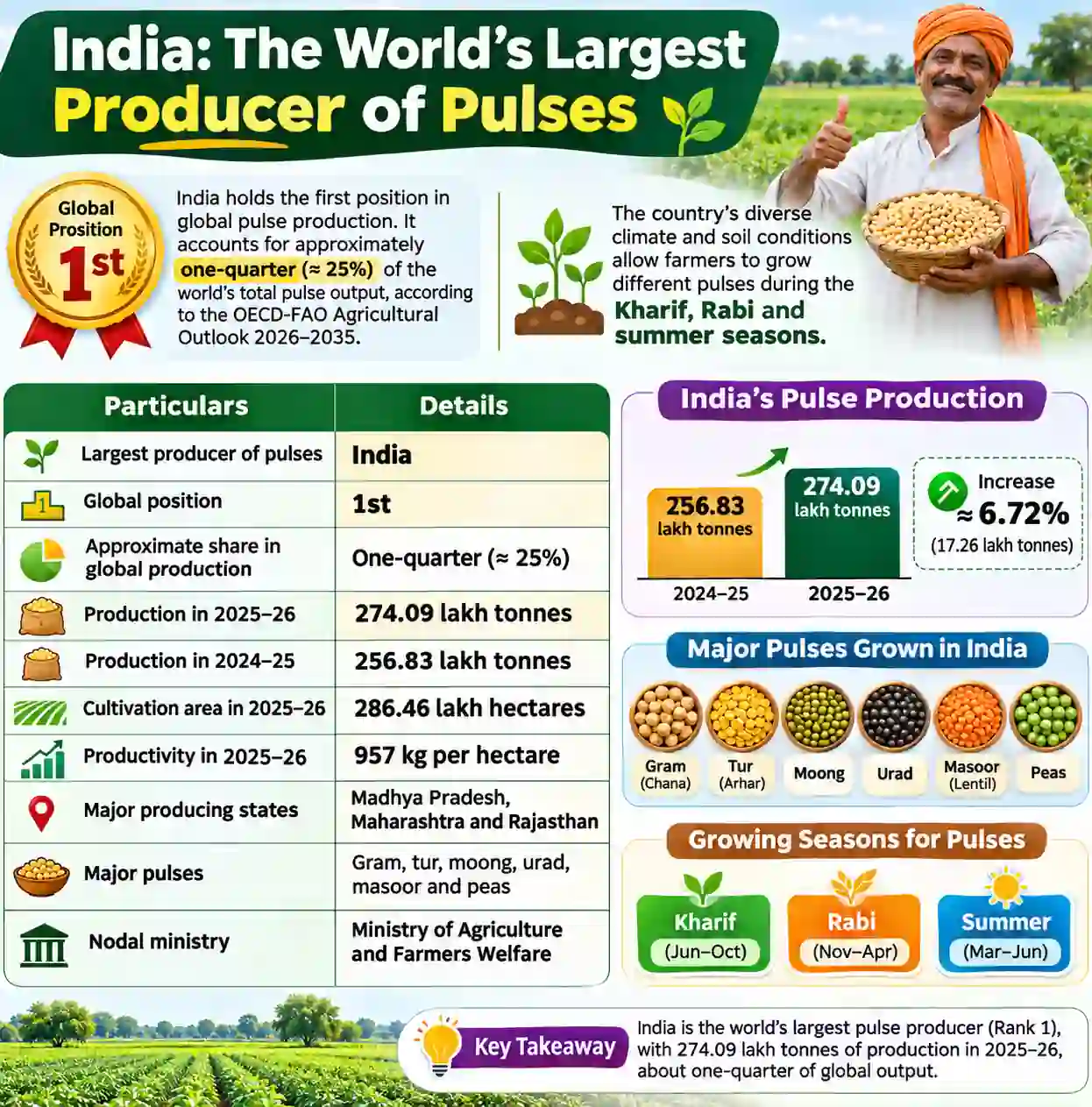
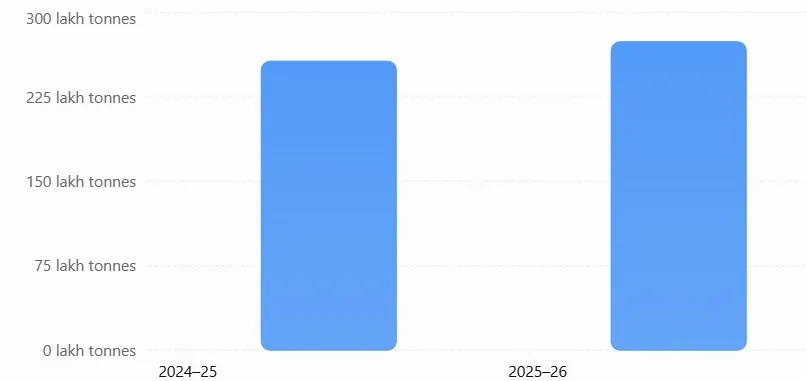
According to the Government of India's Third Advance Estimates for 2025–26, India's total pulse production reached 274.09 lakh tonnes (27.409 million tonnes), compared with 256.83 lakh tonnes in 2024–25.
The increase in production reflects improvements in cultivation area, agricultural practices and government support for pulse farmers.
Pulses are important for India's food security, nutrition and agricultural economy. They include gram, tur (arhar), moong, urad, masoor and peas.
Here is a detailed look at the world's largest pulse-producing country, India's latest production figures, leading producing states, major pulse varieties and government initiatives, using official government information rather than media reports.
As per 2025–26 Final Production Estimates, India ranks first globally in rice, pulses, jute, millets and spices—reflecting farmers’ strength and agricultural research progress. @ChouhanShivraj @mpbhagirathbjp @RNK_Thakur @mygovindia @PIB_India @AgriGoI https://t.co/iDZdcrtoFq
— Indian Council of Agricultural Research. (@icarindia) November 28, 2026
Which Country Is the Largest Producer of Pulses in the World?
Rank 1 – India
India holds the first position in global pulse production. It accounts for approximately one-quarter of the world's total pulse output, according to the OECD-FAO Agricultural Outlook 2026–2035.
The country's diverse climate and soil conditions allow farmers to grow different pulses during the Kharif, Rabi and summer seasons.
| Particulars | Details |
| Largest producer of pulses | India |
| Global position | 1st |
| Approximate share in global production | One-quarter |
| Production in 2025–26 | 274.09 lakh tonnes |
| Production in 2024–25 | 256.83 lakh tonnes |
| Cultivation area in 2025–26 | 286.46 lakh hectares |
| Productivity in 2025–26 | 957 kg per hectare |
| Major producing states | Madhya Pradesh, Maharashtra and Rajasthan |
| Major pulses | Gram, tur, moong, urad, masoor and peas |
| Nodal ministry | Ministry of Agriculture and Farmers Welfare |
| Did You Know? |
India's Pulse Production: Latest Government Data 2026
According to the Third Advance Estimates released by the Department of Agriculture and Farmers Welfare, India's pulse production has increased in 2025–26.
The country recorded 274.09 lakh tonnes of pulse production, an increase of 17.26 lakh tonnes compared with 2024–25.
India's Pulse Production: 2024–25 vs 2025–26
|
| ||
| Total production | 256.83 lakh tonnes | 274.09 lakh tonnes |
| Area under cultivation | 277.20 lakh hectares | 286.46 lakh hectares |
| Average productivity | 926 kg/ha | 957 kg/ha |
| Production in million tonnes | 25.683 MT | 27.409 MT |
India's pulse production
Production in lakh tonnes, based on Government of India estimates.
Key findings:
-
Pulse production increased by approximately 6.72% in 2025–26 over 2024–25.
-
The area under pulse cultivation increased by 9.26 lakh hectares.
-
Average productivity improved from 926 kg per hectare to 957 kg per hectare.
-
India continued to strengthen its position as the world's leading pulse producer.
Source: Department of Agriculture and Farmers Welfare, Third Advance Estimates for 2025–26, Government of India.
Top 10 Pulse-Producing States in India
Madhya Pradesh, Maharashtra and Rajasthan are the three leading pulse-producing states in India.
According to the Government of India's Agricultural Statistics at a Glance 2024–25, Madhya Pradesh ranked first, followed by Maharashtra and Rajasthan in total pulse production.
The following table presents the latest available state-wise production figures from this official statistical publication.
State-wise Pulse Production in India
Production figures are in million tonnes. These are state-wise figures for 2024–25, not 2025–26 estimates.
| Rank | State | Production | Share of India's production |
| 1 | Madhya Pradesh | 5.24 | 20.39% |
| 2 | Maharashtra | 5.04 | 19.61% |
| 3 | Rajasthan | 3.93 | 15.29% |
| 4 | Uttar Pradesh | 2.63 | 10.24% |
| 5 | Gujarat | 2.02 | 7.87% |
| 6 | Karnataka | 1.89 | 7.35% |
| 7 | Andhra Pradesh | 1.00 | 3.88% |
| 8 | Jharkhand | 0.96 | 3.75% |
| 9 | Odisha | 0.52 | 2.01% |
| 10 | West Bengal | 0.42 | 1.64% |
| All India | 25.68 | 100% |
Which State Is the Largest Producer of Pulses in India?
Madhya Pradesh is the largest pulse-producing state in India. It recorded 5.24 million tonnes of production in 2024–25, accounting for 20.39% of the country's total production.
| Particulars | Details |
| Largest pulse-producing state | Madhya Pradesh |
| Production | 5.24 million tonnes |
| Share in national production | 20.39% |
| Second-largest producer | Maharashtra |
| Third-largest producer | Rajasthan |
| Top three states' combined production | 14.21 million tonnes |
| Combined share | 55.29% |
The top three states together contributed more than half of India's total pulse production in 2024–25.
Major Types of Pulses Grown in India
India grows several varieties of pulses across different agricultural seasons. These crops are important sources of protein, fibre, vitamins and minerals.
| No. | Pulse | Common Indian Name | Main Growing Season |
| 1 | Chickpea | Chana / Gram | Rabi |
| 2 | Pigeon Pea | Tur / Arhar | Kharif |
| 3 | Green Gram | Moong | Kharif and Summer |
| 4 | Black Gram | Urad | Kharif |
| 5 | Lentil | Masoor | Rabi |
| 6 | Field Pea | Matar | Rabi |
| 7 | Moth Bean | Matki | Kharif |
| 8 | Cowpea | Lobia | Kharif |
| 9 | Horse Gram | Kulthi | Kharif |
| 10 | Kidney Bean | Rajma | Mainly Kharif, depending on region |
Major Pulses and Their Characteristics
| Pulse | Important Characteristics |
| Chickpea (Gram) | Rich in protein and dietary fibre; widely used in dal and flour. |
| Tur (Arhar) | One of the most commonly consumed pulses in Indian households. |
| Moong | Easily digestible and used in dal, sprouts and other dishes. |
| Urad | Commonly used to prepare idli, dosa and dal makhani. |
| Masoor | A major lentil crop used in everyday Indian meals. |
| Peas | Used in vegetables, soups and other food preparations. |
| Moth Bean | A drought-tolerant pulse grown mainly in dry regions. |
| Cowpea | Used as a food crop and animal feed. |
| Horse Gram | Known for its ability to grow under relatively dry conditions. |
| Rajma | A protein-rich bean commonly used in North Indian cuisine. |
Natural Importance of Pulses: How Do They Improve Soil Fertility?
One interesting natural feature of pulse crops is their ability to support biological nitrogen fixation.
Many leguminous pulse plants have root nodules containing beneficial bacteria called Rhizobium. These bacteria convert atmospheric nitrogen into forms that plants can use.
| Natural Feature | Explanation |
| Root nodules | Small structures found on the roots of many leguminous plants. |
| Beneficial bacteria | Rhizobium bacteria live in the root nodules. |
| Nitrogen fixation | Bacteria help convert atmospheric nitrogen into usable nitrogen compounds. |
| Soil fertility | Nitrogen fixation can improve soil fertility. |
| Crop rotation | Pulses can be included in crop rotations to support soil health. |
| Fertiliser requirement | Biological nitrogen fixation can reduce the need for some nitrogen fertiliser inputs. |
Did You Know? Pulses are not just important food crops. They can also help improve agricultural sustainability by supporting soil fertility and crop diversification.
Note: The nitrogen-fixing ability varies by pulse species, soil conditions and farming practices.
Government Initiatives to Increase Pulse Production in India
The Government of India has introduced several initiatives to increase domestic pulse production, improve farmers' income and reduce dependence on imports.
Important Government Schemes and Initiatives
| Scheme / Initiative | Launch / Period | Main Objective |
| National Food Security Mission (NFSM) | 2007–08 | Increase the production of foodgrains, including pulses, through improved farming practices. |
| Mission for Aatmanirbharta in Pulses | 11 October 2025 | Increase domestic pulse production and achieve greater self-reliance. |
| Pradhan Mantri Annadata Aay Sanrakshan Abhiyan (PM-AASHA) | 2018 | Support farmers through price assurance and procurement mechanisms. |
| Minimum Support Price (MSP) | Annual revisions | Provide remunerative prices for notified pulse crops. |
| Seed distribution programmes | Ongoing | Promote improved and certified pulse seeds. |
Mission for Aatmanirbharta in Pulses: Important Facts
The Mission for Aatmanirbharta in Pulses is an important government initiative to strengthen India's domestic pulse production.
| Particulars | Details |
| Mission launched | 11 October 2025 |
| Implementing ministry | Ministry of Agriculture and Farmers Welfare |
| Target year | 2030–31 |
| Existing production baseline mentioned by government | 242 lakh tonnes |
| Production target | 350 lakh tonnes |
| Main focus crops | Tur, Urad and Masoor |
| Main objective | Increase domestic production and reduce import dependence |
| Key interventions | Quality seeds, demonstrations, technology and assured procurement |
The government aims to increase pulse production to 350 lakh tonnes by 2030–31. It is also supporting farmers through seed distribution, demonstrations of improved technologies and procurement arrangements.
India's Pulse Imports and Exports: 2025–26
Although India is the world's largest pulse producer, domestic consumption remains high. Therefore, the country also imports pulses to meet demand.
According to government-reported figures for 2025–26, pulse imports declined while exports increased.
| Indicator | 2024–25 | 2025–26 |
| Pulse imports | 72.56 lakh tonnes | 59.64 lakh tonnes |
| Export value | USD 855 million | USD 969.53 million |
| Export volume | — | 10.01 lakh tonnes |
| Major export destinations | — | China, UAE, Bangladesh, USA and Sri Lanka |
Interesting Facts About Pulse Production in India
| Question | Answer |
| Which country is the largest producer of pulses? | India |
| What is India's pulse production in 2025–26? | 274.09 lakh tonnes |
| Which state produces the most pulses in India? | Madhya Pradesh |
| Which state ranks second? | Maharashtra |
| Which state ranks third? | Rajasthan |
| What is the main protein benefit of pulses? | They provide plant-based protein. |
| Which bacteria help in nitrogen fixation? | Rhizobium |
| What is the target of the Mission for Aatmanirbharta in Pulses? | 350 lakh tonnes by 2030–31 |
| Which ministry looks after pulse production policies? | Ministry of Agriculture and Farmers Welfare |
| What are the major pulse crops? | Gram, tur, moong, urad and masoor |

Prabhat Mishra is a Subject Matter Expert and digital journalist with an extensive background in the competitive exam landscape and over 4 years of experience in education, national and international news, and current affairs. Over his tenure with top knowledge platforms like Mentorship India, IAS BABA, IAS SARTHI, and now Jagran Josh, he has a deep understanding of government exams like UPSC and State PCS, including UP and Bihar, as he has already qualified for the UPPCS 2022 Mains and Bihar 68th Mains. With his core expertise in history, polity, geography & current affairs, he specialises in creating well-researched, aspirant-centric content and simplifying complex topics for competitive examinations.