How to Start Investing in the Stock Market as a Student: A Beginner's Guide
A simple guide for students to understand stock market basics, start investing with small amounts, avoid common mistakes, and build smart financial habits for long-term growth.

As you are stepping into your bright future this is a complete guide that will make you financially smart. You might not be aware of the basics right now. Initially the market will seem a horror show. All the terms stocks, shares, Nifty, Sensex, dividends, mutual funds etc will sound like heavy financial text. Knowing them will make you smart enough to make the right investment decision later.
To understand the concept I am going to make it simple. Investing is not about making quick money or winning the lottery over night. It is putting your money in an asset with a hope that it has the potential to grow in value over time.
So before investing you should understand how it works, what are the risks, how patience is a better approach than going for quick returns etc.
Can students invest in the Stock Market?
The first thing that would come to your mind would be, are students even allowed. Students who are adults can open their own investment accounts after completing the required KYC process. Minors can also invest through accounts operated with a parent or legal guardian, subject to applicable rules. The first step is not buying a stock. The first step is learning.
What do you need to start investing in the Stock Market?
A beginner generally needs a bank account, PAN, a Demat account and a trading account. The Demat account holds securities in electronic form, while the trading account is used to buy and sell them.
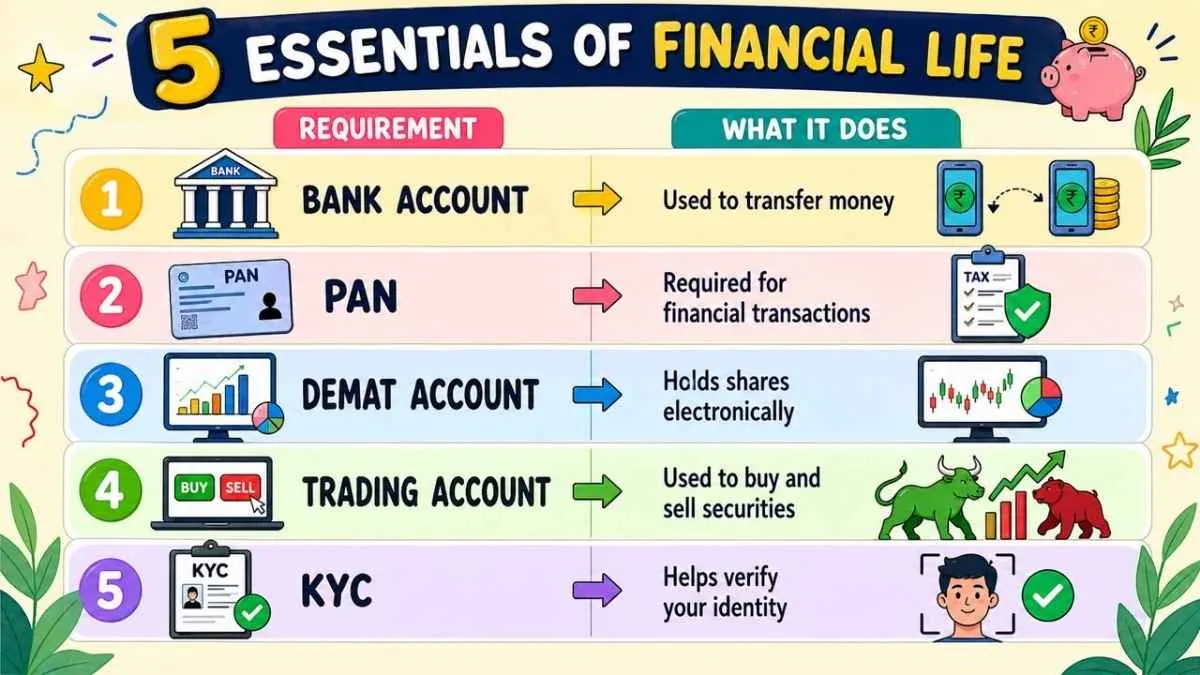
Students should also choose a regulated and reliable broker after comparing the services and charges.
How much money should a student invest in the Stock Market?
There is no fixed amount that every student should invest. A student should never invest money needed for tuition, food, rent or other important expenses.
If you are just starting, focus on learning rather than making large returns. Starting with a small amount can help you understand how prices move and how investing works.
5 question to ask yourself before investing in stock market
You can learn about different investment options before making a decision. These include individual stocks, mutual funds and exchange-traded funds (ETFs).
- Before choosing an investment, understand:
- What are you investing in?
- How can the investment make or lose money?
- What is the level of risk involved?
- What are the costs or charges?
How long do you plan to stay invested?
Any beginner should avoid buying something simply because a friend, social-media influencer or online group recommended it. This could involve risk to your money in longer run.
Avoid these common mistakes:
- Investing borrowed money
- Putting all your money into one stock
- Following random stock tips online
- Buying a stock only because its price is rising
- Panic-selling when the market falls
- Expecting guaranteed returns
According to experts the best first investment for a student may be to learn first, invest later. Learn basic stock-market terms, understand how companies make money and follow financial news regularly.
Remember, investing is a long-term activity, not a shortcut to becoming rich. This approach can help students develop healthy financial habits early in life.
Disclaimer: This Jagran Josh article is for educational purposes only and not financial advice. Investments involve risks; students should research independently and consult qualified professionals before investing.

Aishwarya Samant is a journalist with over 4 years of experience navigating the fast-paced corporate media landscape. She specializes in decoding business news, world economy, personal finance, and stock market trends, often adding a subtle touch of political perspective to keep things interesting.
Having worked with reputed organizations like ZEE, TV9, News24, and NewsX, she is no stranger to the newsroom hustle and the demands of real-time storytelling. Her writing style is fast-paced, engaging, and crafted to connect seamlessly with diverse audiences across platforms. She approaches every story from the reader’s point of view, breaking down complex topics into clear, relatable narratives backed by solid facts and credible sources. While she’s confident in expressing strong viewpoints, she ensures balance with insights. Sharp, fact-driven content that informs, engages, and keeps readers coming back for more.