Why Does the Moon Look Bigger Sometimes?
Why does the Moon look bigger sometimes? Know the science behind the Moon looking bigger sometimes, including the Moon illusion and distance changes.
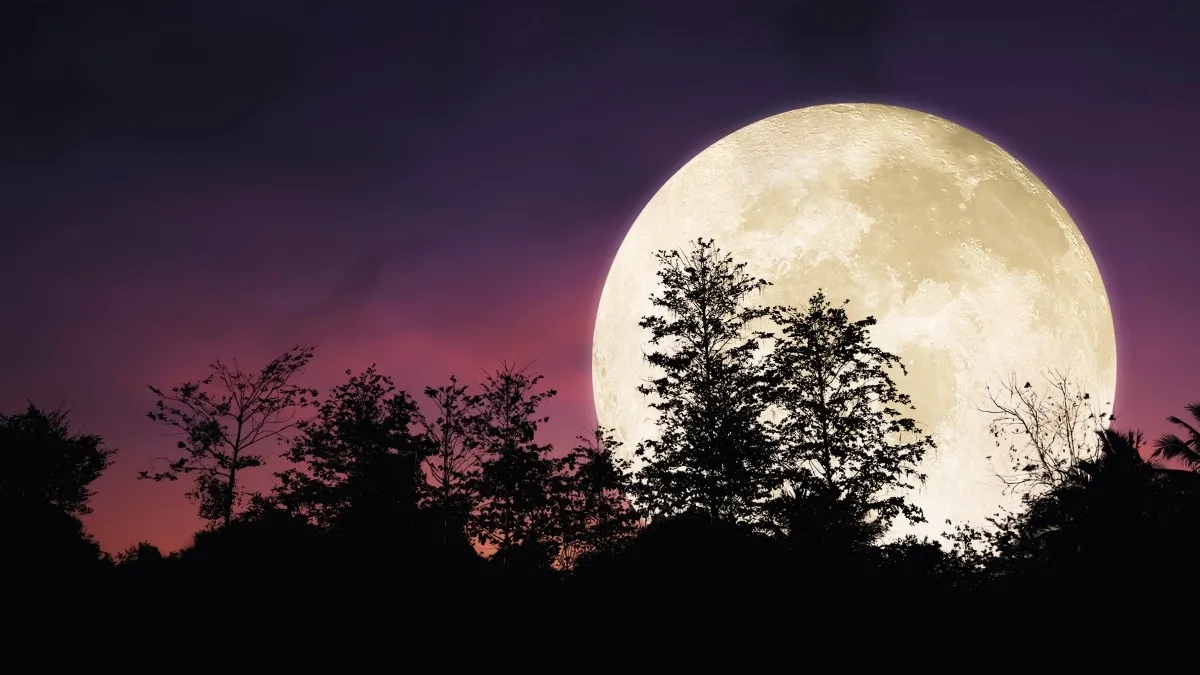
Why does the Moon look bigger sometimes? The appearance of the Moon being bigger on some days results from the way we perceive things and the location of the moon in relation to the earth.
This phenomenon is not always factual but rather an illusion caused by the eye.
As explained by NASA, the proximity between the earth and the Moon varies as it orbits around the planet, making the moon appear bigger on days when it is close, such as during supermoons.
However, on most occasions, the difference in sizes results from the perception of the eye.
Read the article below to know the science behind the Moon looking bigger sometimes, including the Moon illusion and distance changes.
Why Does the Moon Look Bigger Sometimes?
There are two main reasons behind the changes in the apparent size of the moon: distance and Moon illusion.
The distance aspect refers to the times when the moon is relatively closer to Earth than usual. Such a phenomenon is referred to as a “supermoon.”
The primary reason, however, lies in the way we perceive the moon while it is located on the horizon. When the moon is closer to the horizon line, its perceived size increases in comparison to the size of the moon that is located directly overhead.
Why does this happen?
-
Perspective: objects close to the horizon seem further away hence the moon seems bigger.
-
Compared to objects around: trees, mountains, and buildings create an impression of a larger moon.
-
Interpretation by the mind: our brain perceives the sky differently depending on its position relative to us.
-
It is worth noting, however, that the real size of the moon changes very little in one night.
Check: What Moon Phase comes after a Full Moon?
What is Moon Illusion?
The Moon illusion is a scientific theory according to which the Moon appears larger when it is closer to the horizon compared to when it is up in the sky.
At that, the Moon's real dimensions stay about the same throughout.
This illusion is explained by the way humans perceive the distances between themselves and objects.
While viewing the Moon on the horizon, the human brain sees the celestial body alongside other objects such as trees and houses. Because of this, it perceives that it is located further from us.
At that, in case the Moon rises up in the sky, it becomes impossible for the brain to evaluate the distance to it. Consequently, it appears smaller in size.
Moon illusion has been known for ages but still is one of the brightest examples of human perception peculiarities.
Read about Harvest Moon vs Hunter Moon here.
How to Prove the Moon Illusion?
The Moon illusion is relatively easy to demonstrate using some simple techniques. These demonstrate the fact that the actual size of the moon changes very little.
To prove Moon Illusion, you can test the things given below:
-
Finger technique: Simply extend your index finger and use it to measure the size of the moon on the horizon and overhead. Its apparent size will be almost the same.
-
Photography technique: Simply take pictures of the moon at various points in time and note the fact that its size remains constant.
-
Upside down: Just bend over and view the moon through your legs, and its size will look smaller.
All these methods will allow you to realize the fact that the moon illusion is a mere trick of the eye and not reality.
Know Who are NASA's First Astronauts to Orbit the Moon in 21st Century?
Conclusion
The apparent increase in the size of the Moon is attributed to the Moon illusion and a small change in distance between the Moon and Earth. The Moon illusion is an optical illusion that causes the Moon to appear much larger when seen on the horizon.

Alisha Louis is a US content specialist with over 3 years of experience in journalism and storytelling. A graduate with a Bachelor’s degree in Journalism and Mass Communication (BJMC), Alisha has focused her career on covering trending news and major educational developments across the United States. Her sharp eye for detail, combined with a strong journalistic point of view, helps her break down complex American educational topics into accessible, engaging narratives for a global audience. Dedicated to delivering timely and trustworthy reporting, she brings a fresh and insightful perspective to the evolving US academic landscape.