Word of the Day: Compathy
Word of the Day: 'Compathy' is the featured word of the day. Comprehending the definition of 'Compathy' is crucial for acquiring advanced English vocabulary commonly encountered in international news and competitive examinations.

Compathy Meaning, Definition and Examples: Imagine two best friends sitting together after one of them wins a big race. The winner feels a rush of joy, and the other friend feels that exact same happiness at the same time. They aren't just happy for their friend; they are actually sharing the feeling together. This shared experience is called 'compathy'. It happens when two or more people feel the same emotion at once. It is like a bridge that lets feelings travel between people. In this article, we'll take a look at the meaning, history, and usage of this heart-warming word.
What is Compathy? Meaning and Definition
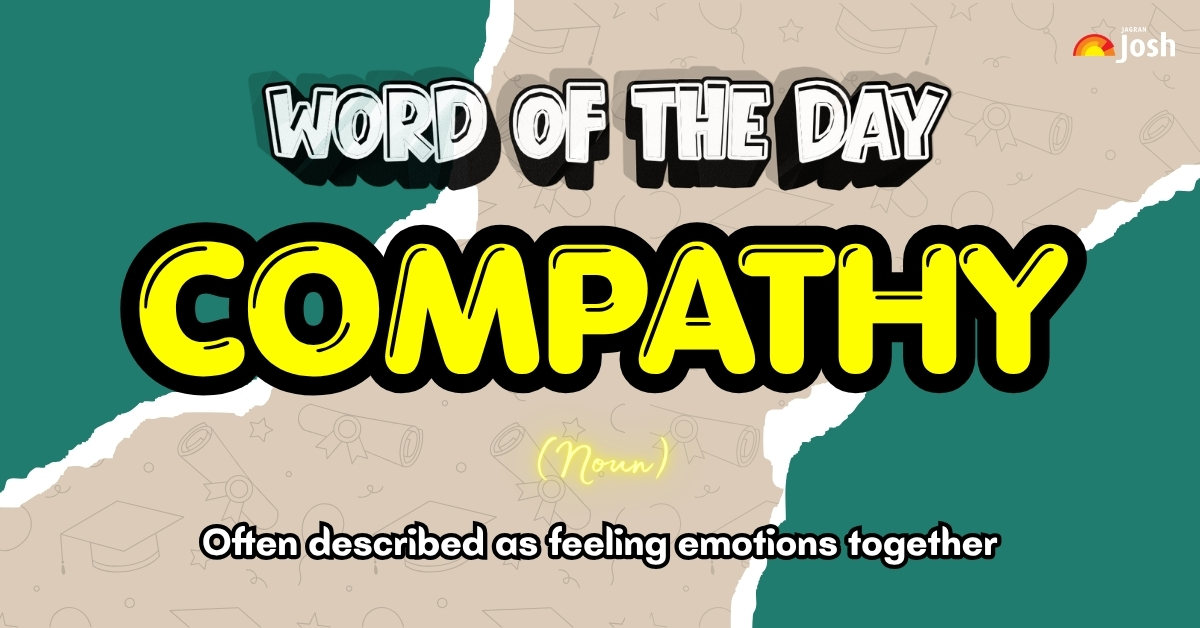
Compathy means feeling an emotion together with someone else. Most people are familiar with the word "empathy", which is about understanding another person's feelings. Compathy is a bit different because it focuses on sharing the same feeling with others.
For example, when a crowd cheers after a goal, everyone shares the same excitement. That is compathy. If a group feels sad together while watching a movie, that is compathy too.
Feature Details
| Feature | Details |
| Type | Noun |
| Pronunciation | KOM-puh-thee |
| Root | Latin com (with) + Greek pathos (feeling) |
Compathy Origin and Etymology
The word "compathy" has a very logical background. It is built from two ancient pieces. The first part is the Latin prefix "com-", which means "with" or "together". You see this in words like 'community' or 'combine'. The second part comes from the Greek word "pathos", which means "feeling" or "suffering".
When scientists and thinkers began studying how people interact, they realised they needed a word that meant more than just "feeling sorry" for someone. They wanted a word for "feeling with" someone.
While "empathy" became very popular, "compathy" remained a more specialised term used in psychology and philosophy. It was created to highlight the "shared" nature of human life.
How to Use Compathy in a Sentence
Using "compathy" helps you explain those moments when everyone in a room is on the same "wavelength".
- Examples: The compathy in the room was clear when the teacher announced the field trip.
- Best friends often experience compathy without even saying a word.
- There was a sense of compathy among the fans when their team lost the game.
- Laughing together at a funny movie is a great example of compathy.
- The sisters felt a deep compathy during their long walk in the park.
- Compathy helps people support each other during difficult times.
- You can see compathy in action when a whole group starts smiling at once.
- Their shared compathy made the holiday celebration feel very special.
- Scientists study compathy to learn how humans connect with one another.
- The choir felt a surge of compathy as they hit the final perfect note.
Compathy Synonyms and Antonyms
These words help you understand the difference between shared feelings and feeling alone.
Synonyms (Similar Words):
- Shared feeling: An emotion held by more than one person.
- Fellow-feeling: A feeling of sympathy or shared experience.
- Sympathy: Feelings of pity and sorrow for someone else's misfortune.
- Communion: The sharing or exchanging of intimate thoughts and feelings.
Antonyms (Opposite Words):
- Apathy: A lack of interest, enthusiasm, or concern.
- Isolation: The state of being alone or separate from others.
- Indifference: A lack of interest or sympathy.
- Detachment: The state of being objective or aloof from others' feelings.
Did You Know?
Psychologists sometimes talk about "compathic" pain. This is when someone sees a person get hurt and actually feels a little "twinge" of pain in their own body. It is your brain's way of using compathy to help you understand and protect the people around you.

Kriti Barua is a skilled digital journalist and communications professional with 4+ years of experience, currently writing for the General Knowledge section at Jagran New Media. She has established herself as a subject matter expert in History, Geography, Trending National and International News, Sports, Science, and Defence, producing clear, reliable, and search-optimised content that connects with readers worldwide.
Kriti holds a BA degree from Delhi University and a one-year diploma in TV Production and Journalism, an academic background that adds research depth and strong storytelling instincts to her writing. Her experience spans brand writing, content marketing, and digital media, giving her a sharp understanding of what makes content both helpful to readers and visible in search.
At Jagran New Media, she applies this expertise to national and international news coverage, query-based articles, and in-depth pieces across her specialist subject areas. Her content is defined by easy language, factual accuracy, strong keyword strategy, and reader-friendly storytelling.