What Is The Plural Of "Radius"?
Do you know what is the plural of "Radius"? While most English words simply add an "s", this word follows ancient Latin rules, often resulting in a unique double-letter ending. Let’s discover the history and proper usage of this term.
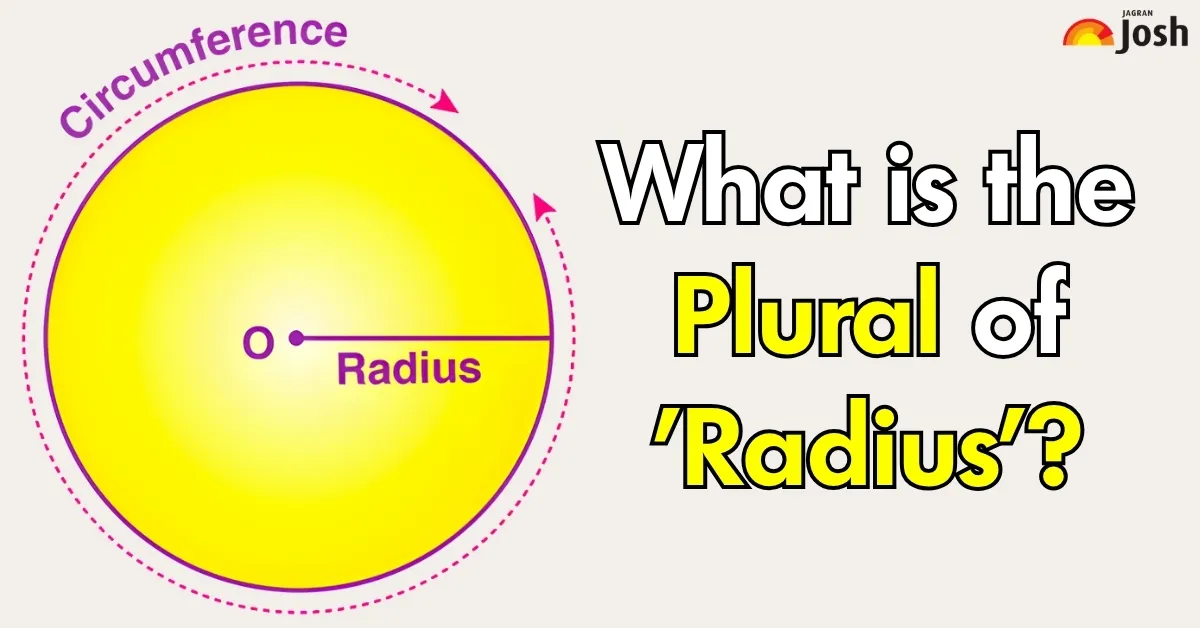
English usually has simple rules for forming plurals, such as adding "s" or "es" to the end of a noun. But when words come from Latin, the rules can change. These exceptions sometimes confuse even experienced writers. But before we get started, do you know the plural of "radius"? In this article, we'll look at the history of this word and see how the rules for plurals can change in science and everyday language.
What Is The Plural Of "Radius"?
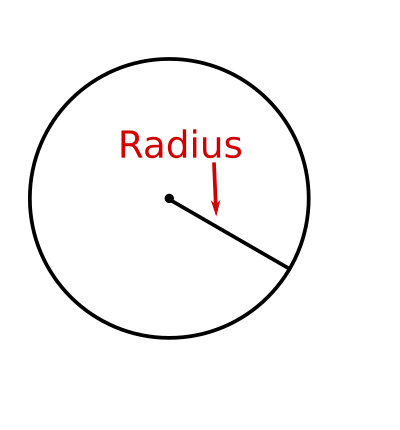
You can write the plural of radius in two ways, depending on the situation. Both forms are correct, but one is used more often in math and science.
The Plural Forms
| Plural Form | Usage Context |
| Radii | The most common and preferred form in technical, mathematical, and scientific writing. |
| Radiuses | An accepted English plural, though it is used much less frequently and often sounds informal. |
The Logical Reason
The reason for the two spellings comes down to the word's origin and how English adopts foreign terms.
- The word "radius" comes from Latin. In Latin, nouns ending in -us usually change to -i in the plural form. That's why we have words like 'cactus' becoming 'cacti' and 'stimulus' becoming 'stimuli'.
- You might wonder why 'radii' has two 'i's. The singular word ends in '-ius', so when you change '-us' to '-i' following the Latin rule, you keep the original 'i' and add another for the plural.
- Here's how it works: Rad-i-us becomes Rad-i-i.
- Over time, English speakers have often made foreign words simpler by adding the usual -es ending. That's why "radiuses" is technically correct, even if it's not the traditional form.
- If you’re writing for school, a technical report, or a geometry article, use "radii". It’s seen as the more professional and mathematically accurate option.

Kriti Barua is a skilled digital journalist and communications professional with 4+ years of experience, currently writing for the General Knowledge section at Jagran New Media. She has established herself as a subject matter expert in History, Geography, Trending National and International News, Sports, Science, and Defence, producing clear, reliable, and search-optimised content that connects with readers worldwide.
Kriti holds a BA degree from Delhi University and a one-year diploma in TV Production and Journalism, an academic background that adds research depth and strong storytelling instincts to her writing. Her experience spans brand writing, content marketing, and digital media, giving her a sharp understanding of what makes content both helpful to readers and visible in search.
At Jagran New Media, she applies this expertise to national and international news coverage, query-based articles, and in-depth pieces across her specialist subject areas. Her content is defined by easy language, factual accuracy, strong keyword strategy, and reader-friendly storytelling.