What is a Group of Parrots Called?
Parrots are colorful, intelligent, and highly social birds whose loud calls and lively flocks inspired the collective noun “pandemonium.” Rooted in literary history and popularized through language and observation, the term reflects their noisy group behavior in tropical habitats, while highlighting how collective nouns enrich vocabulary, education, and wildlife appreciation.
Key Points
- Parrot flocks are called a 'pandemonium,' coined by John Milton in 1667.
- Parrots use up to 30 calls for territory, mating, and alarms.
- Parrots live in tropical areas in flocks of 10-100+.
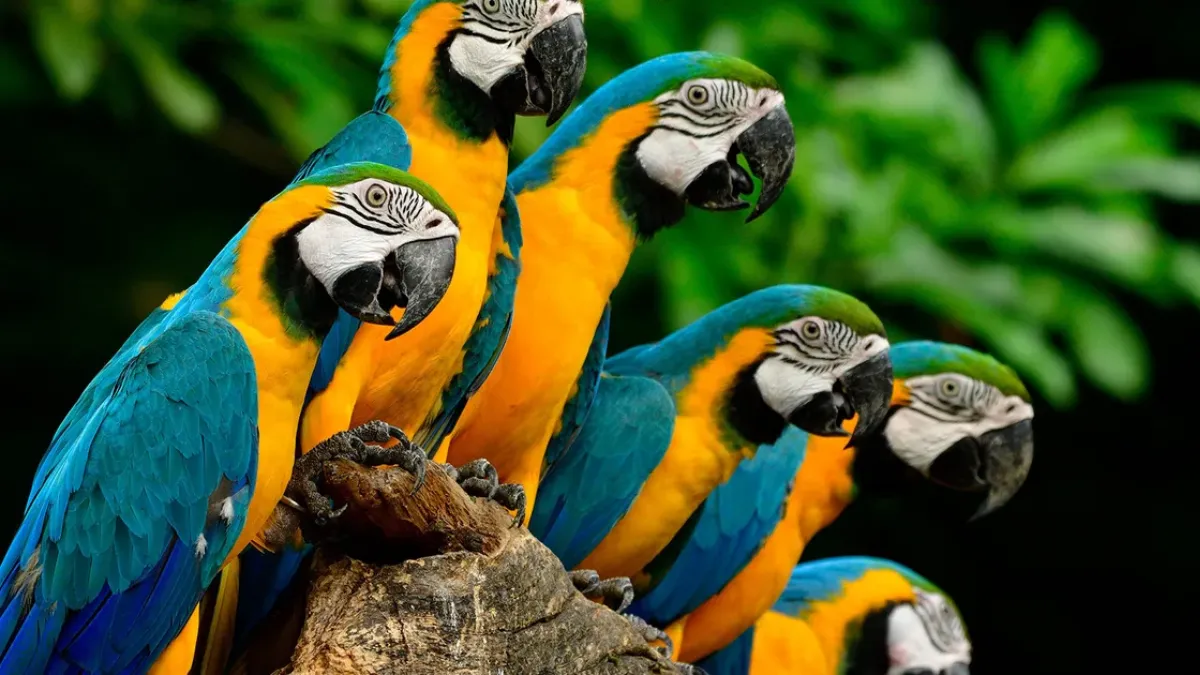
One of the most popular birds in the world attracts bird lovers because of their bright colors, intelligence and mimic ability of about 390 species, Parrots. One of these social birds will be more generally referred to as a pandemonium, suggestive as it is of their noisy sounding and rollicking flocks, though company and prattle are also terms in use.
What are the Origins of these Collective Nouns?
Collective nouns have their origin in the Book of Saint Albans (a work on the art of hunting), which was written in the 15th century, institutionalizing such terms as exaltation of larks.
These became capricious creations in the 18th -19 th centuries by writers and naturalists, combining poetry and observation.
Popular as with parrots, Pandemonium is an invention of John Milton, writing in 1667 of the demonic havoc, Paradise Lost, which best fits the racket of screeching flocks in a tropical canopy.
Dictionaries such as Oxford Dictionaries can confirm the existence of such a word as "pandemonium" and also such a phrase as company of parrots, which has been on the increase in the modern lists in spite of the absence of strict ornithological standardizations in it.
What is Parrot Biology? Understanding Their Behavior
Being of the Psittacidae family, parrots live in the tropical areas between rainforests and savannas in foraging, predator avoidance, and social bonding flocks of 10-100+.
Their calls up to 30 different calls are used to defend their territory, to mate, and alarm; thus, it forms the effect of the pandemonium.
Scarlet macaws are an example of wildlife that can be found in Amazonian pandemoniums at dawn or sulphur-crested cockatoos mobbing in Australian eucalypts.
Keep reading| What was the Lowest Temperature Ever Recorded on Earth? Read Now!
Smaller groups replicate this energy in captivity, but do not have the scale.
Species sizes: Kea parrots travel in loose groups of 10-20, monk parakeets form huge colonies.
Collective nouns add richness to literature, quizzes and the media - consider pirate stories with parrot companies or cartoons that make the difference between pandemonium and pandemonium.
What fits flamingos? (A flamboyance!)
They are used in education as a quiz ingredient to develop vocabulary and pay tribute to ecology. They are celebrated by RSPB-style birdwatching groups, an amalgamation of fun and conservation awareness.
Pandemonium is a bright masterpiece that perfectly captures the colorful, loud nature of the parrot, and calls us to enjoy the playfulness of language and the harmony of nature.
Recommended Reading
Which is the Coldest Planet in the Solar System? It’s Not What You Think

Kirti Sharma is a journalist in the education domain with three and a half years of experience creating high-quality content for the education technology (EdTech) and digital media industries. She has an expertise in covering education news. Kirti has experience in writing data backed informational pieces on General knowledge.
Kirti holds a Bachelor of Arts degree, which helped build her strong foundation in writing and research. Over the course of her career, she has brought her skills to a variety of well-known companies, including ThoughtPartners Global, Infinite Group, and MIM-Essay. Through these roles, she has learned how to take complex information and turn it into engaging, easy-to-understand content for readers online.