What is a Jaguar-Lion Hybrid Called?
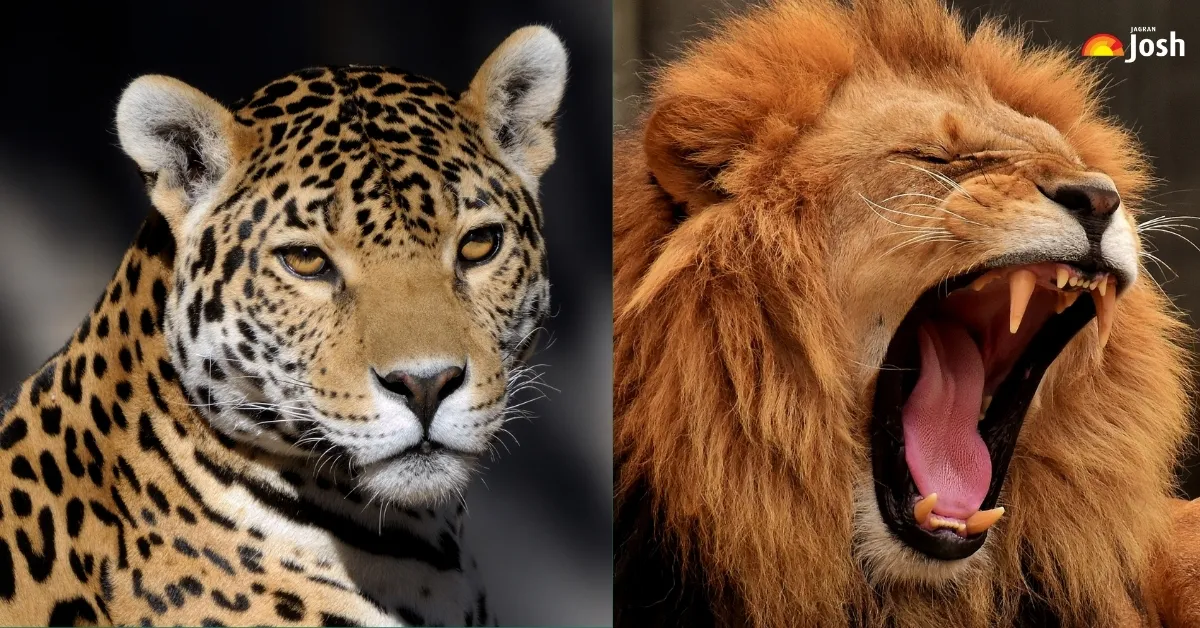
A Jaglion is the rare hybrid of a male jaguar and a female lion. These majestic cats, characterised by their muscular build and dark rosettes, exist only in captivity due to geographic separation in the wild.
Key Points
- Jaglions are rare hybrids of male jaguars and female lions, usually born in captivity.
- Jahzara and Tsunami, the first documented jaglions, were born April 9, 2006, in Canada.
- As of 2026, only one known jaglion, Jahzara, survives after Tsunami died in Oct 2022.
Do you know that hybrids are born when two different species mate and produce an offspring that inherits the traits from both parents?
Mostly, it happens in enclosures, where animals like lions, tigers, and jaguars live closely together. Nature typically keeps these species apart, but humans have been intrigued by these mixes for centuries.
But what happens when a mighty lion encounters a strong jaguar? This rare mix produces an amazing predator with a particular nickname. So, do you know what a jaguar-lion hybrid is called? In this article, we’ll explore the history, appearance, and facts about this amazing feline.
ALSO READ| What Is A Mix Between A Lion And A Tiger Called?
What is the Hybrid between a Jaguar and a Lion Called?
A Jaglion is a rare and strong hybrid between a male jaguar and a female lion. It is a rare sight to see Jaglions in the wild. The reason? Both of their parents resided on different continents. One is found in America (Jaguars), whereas the other is indigenous to Africa (lions).
The first well-documented jaglions, Jahzara and Tsunami, were born on April 9, 2006, at the Bear Creek Wildlife Sanctuary in Ontario, Canada. Their birth was a surprise. A black jaguar named Diablo and a lioness named Lola, who had grown up together, mated.
Jaglions usually live between 12 and 15 years, like their parent species. They have a strong, muscular body similar to a lion, along with the intricate dark rosettes of a jaguar.
10+ Lesser-known Facts About Jaglions

- Jaglions can be born entirely black (melanistic) if the jaguar father carries the dominant melanism gene, as seen in the famous female jaglion, Jahzara.
- They are "artificial" hybrids because a wild meeting is impossible; the Atlantic Ocean separates their natural habitats.
- Unlike leopards, jaglion spots often feature the jaguar's signature "spots within spots" inside their rosettes.
- They are generally larger than jaguars but slightly smaller and more compact than African lions.
- Behaviourally, they often fluctuate between the solitary nature of jaguars and the social curiosity of lions.
- Like many big cat hybrids, male jaglions are typically sterile, though females may occasionally be fertile.
- They inherit the jaguar's "kill style", which is the strongest bite force relative to size among all big cats.
- Unlike pure lions, jaglions often enjoy water and are excellent swimmers, a trait inherited from the jaguar.
- Their roar is a unique mechanical blend, sounding deeper than a jaguar's "saw" but higher than a lion's full roar.
- They often possess the longer body of a lion but the shorter, stockier legs of a jaguar.
- While not a true species, they are taxonomically referred to as Panthera onca × Panthera leo.
IN CASE YOU MISSED| What is a Zorse? Check the Fascinating Science Behind the Zebra-Horse Hybrid
What is the Difference Between a Liger, a Tigon and a Jaglion?
The Jaglion is just one of many fascinating big cat hybrids, despite being an intriguing cross between two continents.
To really understand these animals, we should compare them to familiar relatives like the Liger and the Tigon. Each of these hybrids has its own unique biological traits.
| Feature | Jaglion | Liger | Tigon |
| Parentage | Male Jaguar x Female Lion | Male Lion x Female Tiger | Male Tiger x Female Lion |
| Average Weight | 200–400 lbs | 700 – 1,000+ lbs | 200–500 lbs |
| Size Trend | Intermediate (between parents) | Gigantism (larger than parents) | Smaller (often smaller than parents) |
| Coat Pattern | Dark rosettes (Jaguar style) | Faint stripes and spots | Defined stripes and spots |
| Base Color | Tawny or Black (Melanistic) | Sandy or Golden-tawny | Darker orange or Deep tan |
| Mane (Males) | Sparse or absent | Often present, but short | Small mane or neck ruff |
| Bite Force | High (relative to size) | Massive (due to head size) | Moderate |
| Swim Ability | Strong (enjoys water) | Strong (enjoys water) | Moderate (enjoys water) |
How Many Jaglions Are There In The World?

As of 2026, there is only one known Jaglion in the world. Her name is Jahzara, and she lives at the Bear Creek Wildlife Sanctuary in Ontario, Canada. Born in April 2006, Jahzara is a rare melanistic (black) Jaglion.
These animals are the result of accidental breeding in captivity and do not appear in nature. Therefore, their global population is very small.
For many years, there were two Jaglions: Jahzara and her brother, Tsunami. However, Tsunami, who had a lighter golden coat with dark rosettes, died in October 2022 at the age of 16.
Since no other accredited sanctuaries have reported the birth of this particular hybrid, Jahzara is now the only surviving representative of this unique crossbreed.
WHAT'S NEXT| Which Country Has Both Lions and Tigers?

Kriti Barua is a skilled digital journalist and communications professional with 4+ years of experience, currently writing for the General Knowledge section at Jagran New Media. She has established herself as a subject matter expert in History, Geography, Trending National and International News, Sports, Science, and Defence, producing clear, reliable, and search-optimised content that connects with readers worldwide.
Kriti holds a BA degree from Delhi University and a one-year diploma in TV Production and Journalism, an academic background that adds research depth and strong storytelling instincts to her writing. Her experience spans brand writing, content marketing, and digital media, giving her a sharp understanding of what makes content both helpful to readers and visible in search.
At Jagran New Media, she applies this expertise to national and international news coverage, query-based articles, and in-depth pieces across her specialist subject areas. Her content is defined by easy language, factual accuracy, strong keyword strategy, and reader-friendly storytelling.