Which Country Built the World's Largest Compressed-Air Energy Storage Plant?
Discover which country built the world’s Largest Compressed-Air Energy Storage (CAES) plant utilizes adiabatic technology for 100% green energy storage, meeting 600,000 households' annual demand, making a significant leap in long-duration renewable energy solutions, positioning as a global leader in CAES technology.
Key Points
- China's Guoxin Suyan plant began operations January 27, 2026, with 2.4 GWh capacity.
- The plant uses adiabatic tech, storing heat in molten salt for 70% round-trip efficiency.
- CAES is now a viable rival to pumped-hydro and batteries for carbon-neutral grids.
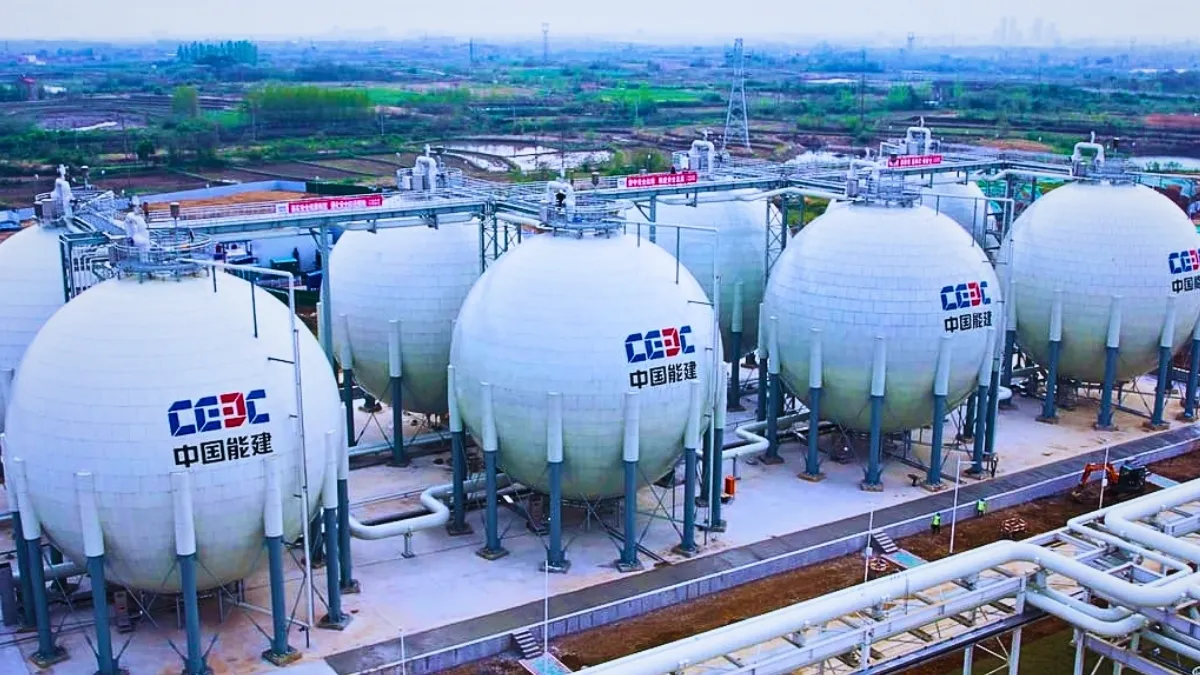
World’s largest compressed-air energy storage (CAES) plant: China built the world's largest CAES plant. The Guoxin Suyan Huai'an project in Jiangsu Province officially began operations on January 27, 2026, boasting a massive capacity of 2.4 GWh and a power output of 600 MW, surpassing all previous facilities globally. As the world is transition toward renewable energy which accelerates the need for long-duration energy storage has become the "holy grail" of power grid stability. Compressed-Air Energy Storage (CAES) has emerged as the most cost-effective solution for large-scale, multi-hour backup.
Key Features of the World's Largest Compressed-Air Energy Storage Plant
-
The world's largest compressed-air energy storage plant is the Guoxin Suyan Huai'an Salt Cavern CAES Project, located in Jiangsu Province, China.
-
The plant represents a monumental shift in how industrial-scale energy is stored, utilizing adiabatic technology, making it a 100% green solution.
-
China's Nengchu-1 plant sets total power output with 300MW power, 1500 MWh capacity with 70% round-trip efficiency advancing green energy storage solutions.
-
It has 2.4 GWh(Gigawatt-hours) Energy Storage Capacity.
-
Impact: Capable of meeting the annual electricity demand of roughly 600,000 households.
| Feature | Detail |
| Location | Huai'an, Jiangsu Province, China |
| Total Power Output | 600 MW (2 × 300 MW Units) |
| Energy Storage Capacity | 2.4 GWh (Gigawatt-hours) |
| System Efficiency | 70% (Round-trip) |
| Technology Type | Non-combustion Advanced Adiabatic |
| Thermal Storage Medium | Molten salt & pressurized thermal water |
| Storage Medium | Underground salt caverns (1,000m deep) |
| Storage Volume | 700,000 m³ |
| Annual Electricity Generation | 792 GWh |
| Operational Lifespan | 25–40 years |
| Environmental Impact | 411,000 tons of CO₂ reduction annually |
| Primary Contractors | Harbin Electric Corporation & Suyan Group |
| Coal Savings | 159,000 tons annually |
Also Read: How One District One Product (ODOP) is Transforming Local Crafts into Global Brands?
How Does a Compressed-Air Energy Plant Work?
The Plant is based on the ‘Science of Salt Caverns’ and operates by using surplus electricity often from wind and solar farms during off-peak hours to drive high-pressure compressors such as
-
Compression: Air is squeezed into massive underground salt caverns located 600+ meters below the surface.
-
Heat Capture: In this advanced adiabatic system, the heat generated during compression is captured and stored in molten salt or pressurized water.
-
Expansion: When demand peaks, the compressed air is released, reheated by the stored thermal energy, and used to spin high-efficiency turbines to generate electricity.
Why Does China Lead the CAES Sector?
China has a strategic advantage due to its vast salt cavern resources and a national mandate to reach 180 GW of new energy storage capacity by 2027. Before the Huai'an plant, China had already set records with the Nengchu-1 plant in Hubei (300 MW/1.5 GWh) and the Shandong Feicheng project. By contrast, the oldest and previously most famous plants, Huntorf in Germany (321 MW) and McIntosh in the USA (110 MW) which rely on older "diabatic" technology that requires burning fossil fuels during the release phase.
The success of the Jiangsu project proves that CAES is no longer just a "demonstration" technology but a viable commercial rival to pumped-hydro and chemical batteries. For countries with suitable geography (salt mines or depleted gas fields), this provides a blueprint for achieving a carbon-neutral grid.
Also Read: UGC Equity Regulations 2026: Key Changes, Powers & Concerns Explained

Manisha Waldia is a distinguished content strategist with 5 years of experience crafting premium educational content for UPSC and State PCS, with a focus on deep conceptual analysis across Polity, Geography, History, and Environment. She currently brings this expertise to Jagran Josh, where she covers major national and international events, current affairs, and static general knowledge. Over her career, Manisha's specialized insights have led her to curate high-impact materials and serve as a UPSC Mains answer-evaluator for India’s top institutes—including Drishti IAS, Shubhra Ranjan IAS, Study IQ, GS Score, and PWonlyIAS. She has also worked alongside leading NGOs like Oxfam India and Avani Kumaon.
Contact: manisha.waldia@jagrannewmedia.com