Fact of the Day: 10 Interesting Facts on the Human Brain
Discover 10 fascinating facts about the human brain—nature’s most extraordinary creation. Learn how neurons communicate, how the brain works even during sleep, and why neuroplasticity keeps us learning for life. This daily fact helps students and aspirants understand key biology concepts essential for UPSC, SSC, Banking, and state exams.
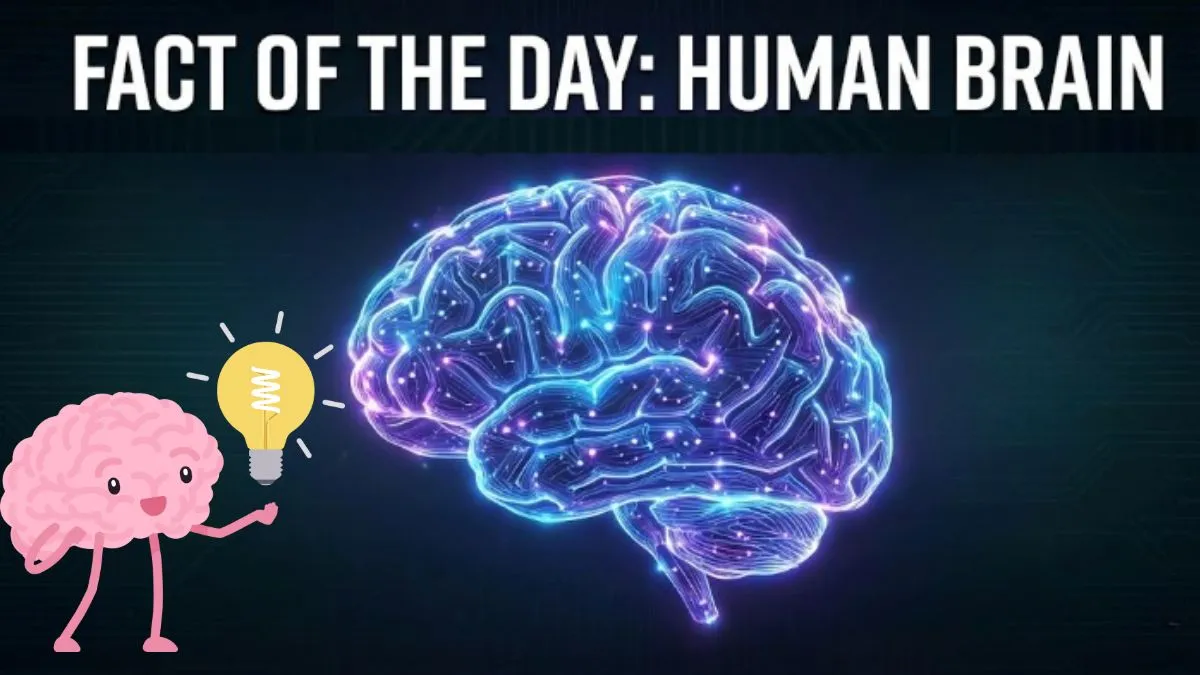
Fact of the Day: In today’s series of daily facts, we will discuss and explore the Human Brain, which is also known as the best creation of nature. This three-pound, soft organ quietly controls all the things that we do, breathing and moving, dreaming, speaking, and planning, remembering, and even making our identity. The brain is the most delicate and complex aspect of the body, despite its protection and padding by fluid within the skull.
It is the knowledge of the mechanism and the way it does it that makes us not only appreciate its brilliance but also learn better how to take care of it.
Understanding how it works not only helps us appreciate its brilliance but also teaches us how to take better care of it.
Daily reading and knowing these facts will help you to understand the core understanding of this topic, which will also help you in clearing various exams like UPSC, SSC, Banking and also many other state exams.
So, let’s explore the Human Brain, which is one of the important topics in Biology, in detail.
About the Human Brain
The Human Brain is the most important part of the Body, and the Brain acts as a well-coordinated control centre. It interprets all the incoming messages that come by senses, it stores memories, feelings and controls voluntary and involuntary actions. It is organised into specific areas of specialism- each assigned to various abilities- though the various sections interact perfectly as a unit.
The brain is broadly divided into:
-
Forebrain – Thinking, memory, emotions, imagination and decision-making.
-
Midbrain – Assists in controlling reflexes, eye coordination and eye movement.
-
Hindbrain – This controls the essential processes such as breathing, cardiovascular rate, and balance.

Source: ninds.nih.gov
The brain is an elaborate system of cells known as neurons, which are in charge of the brain communicating with each other via electrical impulses and chemical substances known as neurotransmitters. It is through this system of communication that we can think, move, feel and respond to the world.

10 Fascinating Facts About the Human Brain
1. The Brain Contains Over 86 Billion Neurons
Every neuron is a miniature messenger in that it produces and receives signals. These billions of neurons held together form trillions of connections, which form the basis of thought, memory and learning.
2. Your Brain Works Even While You Sleep
While you sleep, it does not mean that your brain is not working while sleeping. One of the functions that the brain undertakes during rest is the reinforcement of memories, cleaning of the waste toxins and reenergizing the body to be able to perform the following day adequately.

Source: ninds.nih.gov
3. The Cerebrum Handles Thinking, Planning & Creativity
The cerebrum is the largest part of the brain and helps with language, imagination, logic, and conscious decision-making. Its two hemispheres specialise in different skills: the left often handles language, while the right supports creativity.
4. The Cerebellum Controls Balance & Skilled Movements
Located at the back of the brain, the cerebellum helps you walk, play sports, dance, and perform precise movements. It fine-tunes coordination and muscle timing.
5. Signals Travel Across the Brain at High Speeds
The neurons interconnect via electrical impulses, which may go as high as 250 miles per minute. This is the reason why reactions, thoughts and movements occur almost immediately.
6. The Brain Uses About 20% of the Body’s Energy
Although it is small, the brain is a large consumer of oxygen and glucose. This is the energy which drives learning, thinking, focus, and other important processes.
7. The Hippocampus Acts as the Brain’s Memory Librarian
This miniature allows the coherence of memory and retention within the various regions of the brain. It contributes significantly to learning, experience recall and navigation.

Source: ninds.nih.gov
8. Neurotransmitters Shape Your Mood & Behaviour
Drugs such as dopamine, serotonin, GABA and acetylcholine determine our response, movement, sleeping patterns and reactions. Violation of these chemicals may cause mood disorders or neurological disorders.
9. The Brain Processes Visual Information in the Occipital Lobe
The rear part of the brain perceives shapes, colour and motion. The impairment of this region can influence the sight despite the healthy condition of the eyes.
10. The Brain Continues to Change Throughout Life
This capacity is known as neuroplasticity, which enables the brain to become restructured through new path creation. New skills, physical activity and activities that involve stimulating the mind enhance these pathways and provide brain health over the long term.
Conclusion
The brain of a man is a wonder, versatile, intricate, and the engine on which everything we are depends. Through knowing how it works, we get to know about our behaviour, our emotions, our memory, and our general health. More to the point, the knowledge about the brain helps us remember to take care of it by means of proper nutrition, sleep, stimulation on a mental level, stress, and physical activities. With a healthy brain, one will have a healthier and satisfying life.
Note: Article reference taken from the National Institute of Neurological Disorders and Stroke

Prabhat Mishra is a Subject Matter Expert and digital journalist with an extensive background in the competitive exam landscape and over 4 years of experience in education, national and international news, and current affairs. Over his tenure with top knowledge platforms like Mentorship India, IAS BABA, IAS SARTHI, and now Jagran Josh, he has a deep understanding of government exams like UPSC and State PCS, including UP and Bihar, as he has already qualified for the UPPCS 2022 Mains and Bihar 68th Mains. With his core expertise in history, polity, geography & current affairs, he specialises in creating well-researched, aspirant-centric content and simplifying complex topics for competitive examinations.


.jpg)



![[OUT] UPSSSC PET Admit Card 2026 LIVE: यूपी पीईटी एडमिट कार्ड जारी, upsssc.gov.in पर Direct Link](https://img.jagranjosh.com/images/2026/October/15102026/UPSSSC-PET-Admit-Card-2026.jpg)