ISRO's Chandrayaan-3 Honored with Prestigious 2026 AIAA Goddard Astronautics Award
The Indian Space Research Organisation (ISRO) has been awarded the prestigious 2026 Goddard Astronautics Award by the American Institute of Aeronautics and Astronautics (AIAA). The award recognizes the soft landing of Chandrayaan-3 near the lunar south pole region on August 23, 2023.
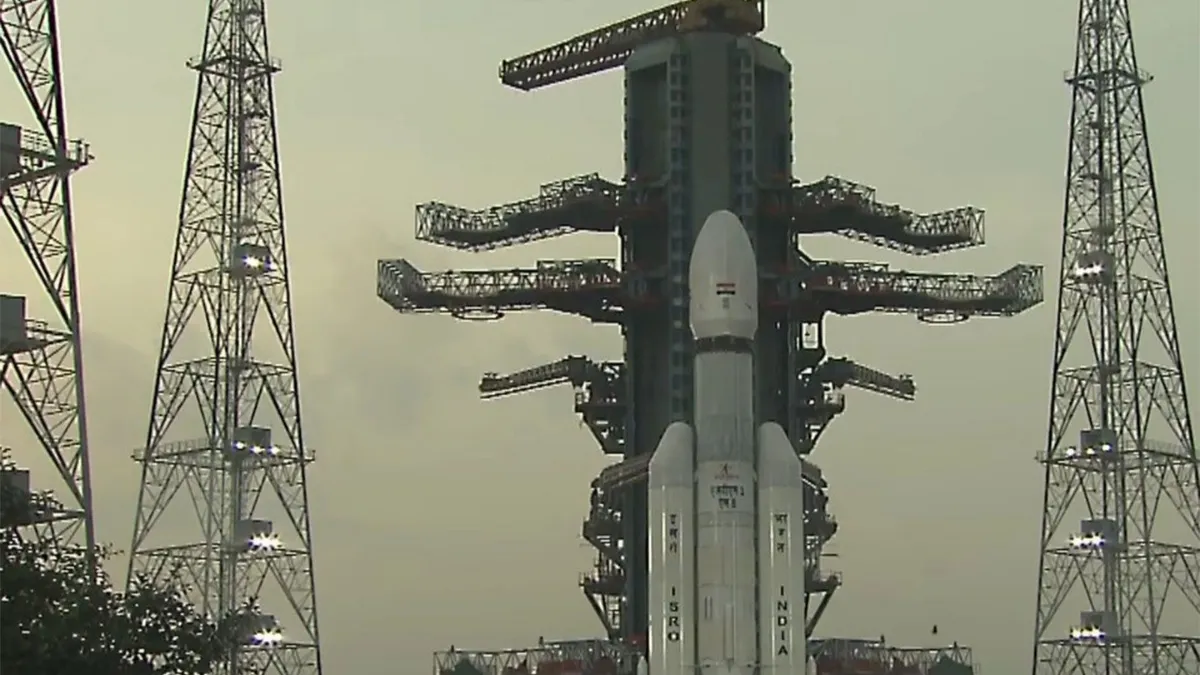
The Indian Space Research Organisation (ISRO) has been conferred with the 2026 Goddard Astronautics Award by the American Institute of Aeronautics and Astronautics (AIAA). Presented at the AIAA ASCEND 2026 Conference in Washington, D.C., on May 21, 2026, the award celebrates the historic success of the Chandrayaan-3 mission.
This recognition places ISRO alongside an elite group of past recipients, including Blue Origin founder Jeff Bezos and veteran NASA engineer Michael Hawes, cementing India's footprint in elite astronautical engineering.
Chandrayaan-3 Wins the 2026 AIAA Goddard Astronautics Award
The Goddard Astronautics Award is the highest honor bestowed by the AIAA for notable achievements in the field of astronautics. Endowed to commemorate Robert H. Goddard the pioneer of modern rocketry. The award recognizes individuals or teams who have pushed the absolute boundaries of space technology.
According to the official AIAA citation, ISRO was selected for the groundbreaking landing of the ISRO's Chandrayaan-3 near the lunar south pole region, to deepen our understanding of the moon and beyond.
India's Ambassador to the US, Vinay Mohan Kwatra, accepted the honor on behalf of ISRO at the AIAA ASCEND 2026 conference in Washington, D.C., highlighting India’s rising status in global deep-space exploration.
Chandrayaan-3 Mission
Chandrayaan-3 Mission launched on July 14, 2023, and culminated in a flawless touchdown on August 23, 2023. It etched India's name permanently into space history by pulling off this feat. India became the first country to successfully execute a soft landing near the challenging lunar south pole, and only the fourth nation to land a spacecraft on the Moon. The key aspects of the Mission:
-
The mission consisted of a propulsion module, the Vikram lander, and the Pragyan rover.
-
Chandrayaan-3 targeted the rugged, shadowed terrain of the south pole, a region of intense scientific and strategic value.
-
The mission confirmed the presence of key chemical elements, including sulfur, aluminum, calcium, iron, and titanium in the lunar soil.
The timing of the 2026 award highlights the strategic forward momentum of India’s space program. During the ASCEND conference, Ambassador Kwatra emphasized how the success of Chandrayaan-3 fuels India's Space Vision 2047. This roadmap includes upcoming crewed missions under the Gaganyaan program, independent space station plans, and sophisticated deep-space exploration ventures.
Also Read: What is the Ebola Virus? Origin, Symptoms, Variant, Prevention and latest Outbreak in DRC

Manisha Waldia is a distinguished content strategist with 5 years of experience crafting premium educational content for UPSC and State PCS, with a focus on deep conceptual analysis across Polity, Geography, History, and Environment. She currently brings this expertise to Jagran Josh, where she covers major national and international events, current affairs, and static general knowledge. Over her career, Manisha's specialized insights have led her to curate high-impact materials and serve as a UPSC Mains answer-evaluator for India’s top institutes—including Drishti IAS, Shubhra Ranjan IAS, Study IQ, GS Score, and PWonlyIAS. She has also worked alongside leading NGOs like Oxfam India and Avani Kumaon.
Contact: manisha.waldia@jagrannewmedia.com