Why Japan, Located on Ring of Fire, Sees the World's Most Earthquakes With 1,500 Annually, Yet it Never Collapses?
The most powerful shaking was recorded in Aichi Prefecture, where the city of Chita witnessed an upper 5 on Japan's seven-level seismic intensity scale. Tremors were also experienced in neighbouring prefectures, including Nagano and Gifu.
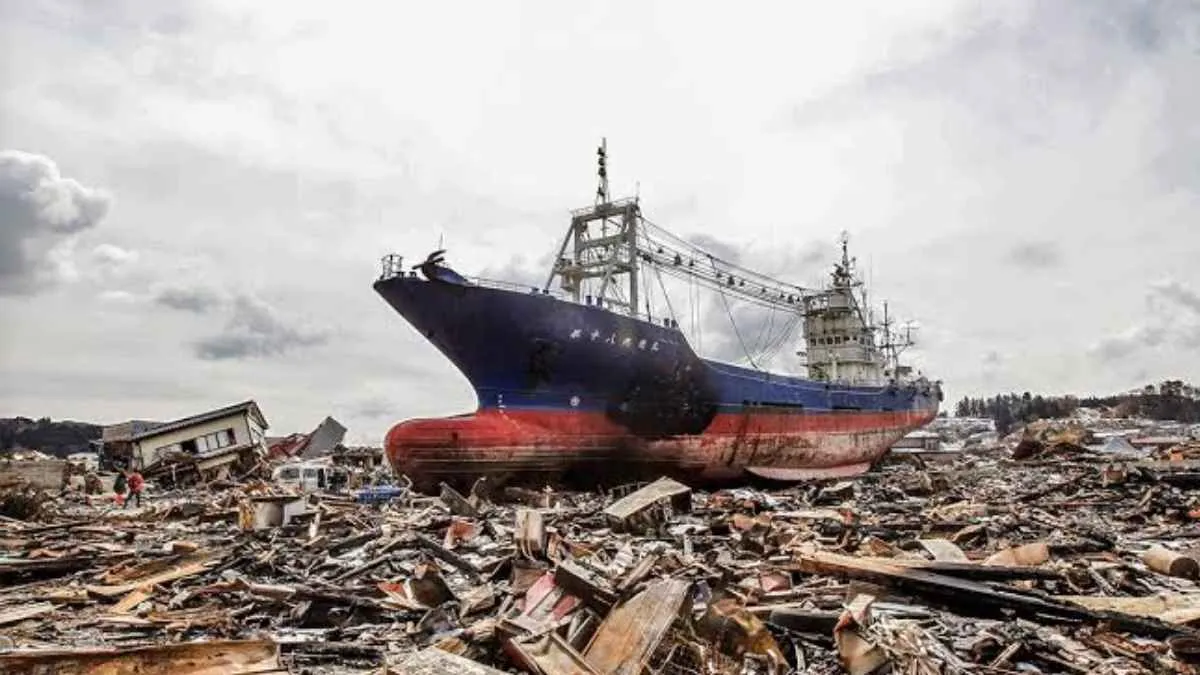
More than 20 people were injured after a 5.7-magnitude earthquake hit central Japan during the wee hours of Sunday. The tremor stuck numerous areas, destroying shop windows and compelling people to flee buildings. No tsunami warning was issued.
The earthquake struck at around 1.04 am local time, with its epicentre in the western part of Shizuoka Prefecture, at a depth of 40 km, according to the Japan Meteorological Agency (JMA).
As per a report by Japan Today, the most powerful shaking was recorded in Aichi Prefecture, where the city of Chita witnessed an upper 5 on Japan's seven-level seismic intensity scale. Tremors were also experienced in neighbouring prefectures, including Nagano and Gifu.
Consequently, at least 22 people have been injured in the earthquake. Some sustained injuries while escaping from damage buildings.
What Japan is the world's most earthquake-prone country
Japan is one of the world's most earthquake-prone countries. It sits at the meeting point of four major tectonic plates and experiences around 1,500 earthquakes strong enough to be felt by people every year. Yet, its major cities rarely witness widespread building collapses. The reason is not geography or luck. It is decades of scientific research, advanced engineering, strict construction rules and a society trained to live with earthquakes.
So, how has Japan managed to turn a constant natural threat into a relatively manageable risk?
Why Japan Experiences So Many Earthquakes
Japan's geographical location makes it particularly vulnerable to seismic activity. The country lies where the Pacific, Philippine Sea, Eurasian and North American plates interact. These enormous sections of Earth's crust constantly move, collide and slide beneath one another, generating pressure that is eventually released through earthquakes.
According to geological estimates cited by the United States Geological Survey, around 10 per cent of the world's earthquakes occur in and around Japan. The country is also located along the Pacific Ring of Fire, one of the most active earthquake and volcanic zones on Earth.
Buildings Designed to Move With Earthquakes
One major reason Japanese cities remain standing is their approach to construction. Instead of making buildings completely rigid, engineers design many modern structures to absorb ground movement.
A technology called base isolation uses rubber and steel bearings between a building's foundation and its main structure. These layers reduce the amount of shaking transferred upwards.
Seismic dampers provide another layer of protection. Similar to shock absorbers in vehicles, they absorb earthquake energy and reduce excessive building movement.
Strict Building Codes Make the Difference
Japan's earthquake-resistant construction standards developed through painful experience. The devastating 1923 Great Kanto earthquake and the 1995 Kobe earthquake exposed serious weaknesses in buildings and prompted stronger regulations.
Modern construction standards require structures to withstand powerful shaking without collapsing, although damage may still occur.
Early Warning Systems and Bullet Trains
Japan also operates an advanced earthquake early warning network. Sensors detect initial seismic waves and provide seconds of warning before stronger shaking arrives.
That short window can make a difference. Mobile alerts are issued, elevators stop and Shinkansen bullet trains automatically apply emergency brakes.
Preparedness Is What Keeps Japan Ahead
Earthquake drills begin in schools and continue in workplaces. Families maintain emergency supplies, while engineers study every major disaster to improve future construction.
Japan's success is not about preventing earthquakes. It is about preparing buildings, infrastructure and people to survive them.
Thus, Japan demonstrates that scientific planning and preparedness can save lives, even when nature is destructive.

At Jagran Josh, she specialises in writing explainers and analytical stories on international news and current affairs. Over the years, she has developed strong expertise in leveraging digital and multimedia tools, along with SEO best practices, to enhance the speed, reach, and impact of her stories.