Diwali 2026: 5 Traditions That Gen Z May Not Know About
Diwali traditions have changed slightly over generations with the arrival of new technologies and changing lifestyles. Here are 5 age-old practices that were once common in Indian households but are now less familiar.
Diwali 2026 is being celebrated across the country and different parts of the world on November 8. It is one of the biggest festivals celebrated by billions of people. However, over the years, several changes have been witnessed in the way people celebrate the festival.
With Gen Z entering adulthood, shifts in traditional practices have also become noticeable. There are certain traditions that were once a regular part of Indian households but are now gradually changing or becoming less common.
With the invention of technology and changing lifestyles, the way people celebrate Diwali has also evolved. Here, we will discuss 5 such traditions that have been part of Diwali celebrations for generations.
From Broom Worship to 14 Diyas: 5 Lesser-Known Traditions of the Festival
1. Lighting 14 Diyas on Chhoti Diwali
Lighting 14 diyas on Chhoti Diwali is one of the traditions that is not regularly practised in many Indian households today. On this day, 14 diyas are lit around the house to remember ancestors and seek their blessings. The ritual is also associated with Yam, the god of death. While this tradition is still followed in some households, it is gradually becoming less common.
2. Worshipping the Broom
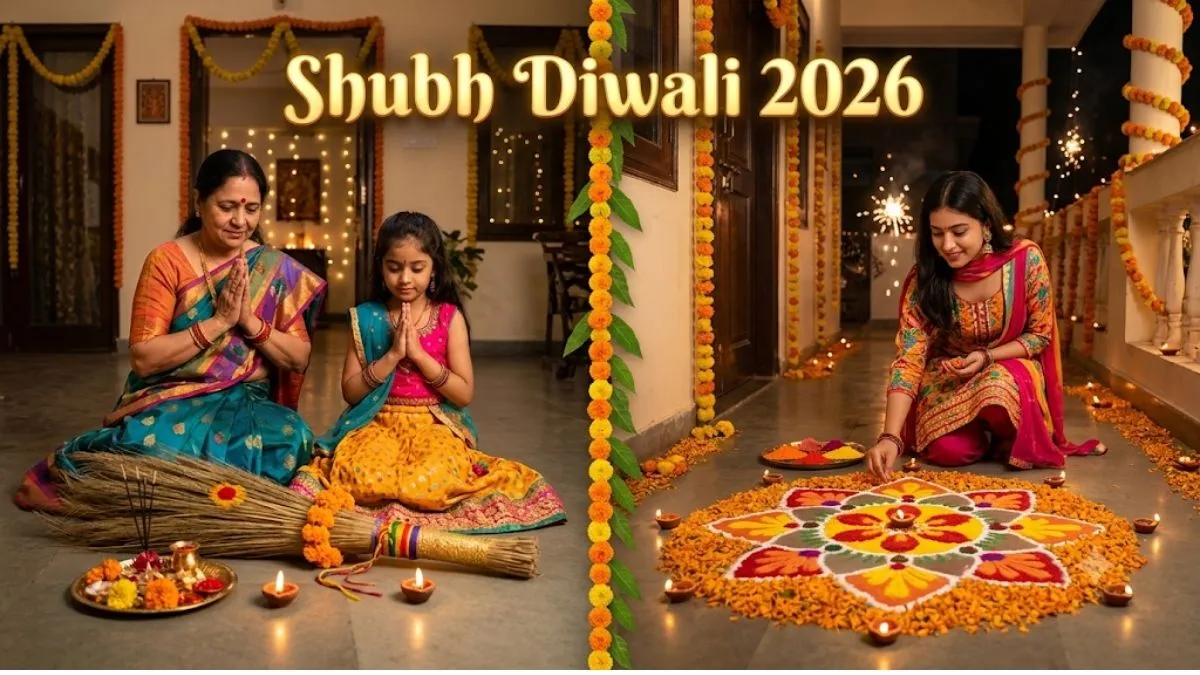
Worshipping a new broom is another tradition associated with Diwali. This practice can still be seen across Indian households. People worship a new broom as it is associated with Goddess Lakshmi and is considered a symbol of cleanliness and prosperity. You can also find special stalls selling brooms in local markets during the Diwali season.
3. Making Rangoli at the Entrance
Making rangoli at the entrance of the house is another popular Diwali tradition. This can be witnessed in households as well as schools, colleges and other educational institutions.
Children and family members gather to make colourful rangoli designs outside their homes. The practice is associated with welcoming Goddess Lakshmi and seeking prosperity. However, artificial rangoli designs and stickers have also become popular in the market. Despite these changes, the significance of rangoli remains very much the same.
4. Keeping Doors and Windows Open
Keeping doors and windows open during Lakshmi Puja is another traditional practice followed in several Indian households. It is believed that Goddess Lakshmi visits homes on Diwali night and keeping the doors and windows open welcomes her into the house. The practice is associated with seeking blessings, happiness and prosperity from the goddess.
5. Writing New Account Books
Writing new account books is a tradition that can particularly be seen among business communities during Diwali. Known as Chopda Pujan, this ritual involves worshipping new account books during Lakshmi Puja.
Business owners perform this practice to seek blessings for prosperity and success in the coming year. It is especially popular among Gujarati business communities.

Varun Verma is an education and sports journalist with over three years of experience in journalism, with a strong focus on cricket . He has previously worked with SportsYaari and CricketTimes.com, where he developed a strong news sense and a knack for storytelling while covering breaking news and major sporting events.
He holds a PG Diploma in English Journalism from the Indian Institute of Mass Communication (IIMC), New Delhi. Beyond sports, his interests include geopolitics, Indian polity and government policies. Inspired by the grit and passion of Ben Stokes, he strives to bring the same depth in his life.
For inquiries or professional insights, you can reach him directly at varun.verma@jagrannewmedia.com