Lake Baikal: Location, Depth, Length, Map & Other Facts
Discover the wonders of Lake Baikal, the world’s oldest and deepest freshwater lake. Explore its unique geography, incredible biodiversity, and key facts about this Siberian marvel.
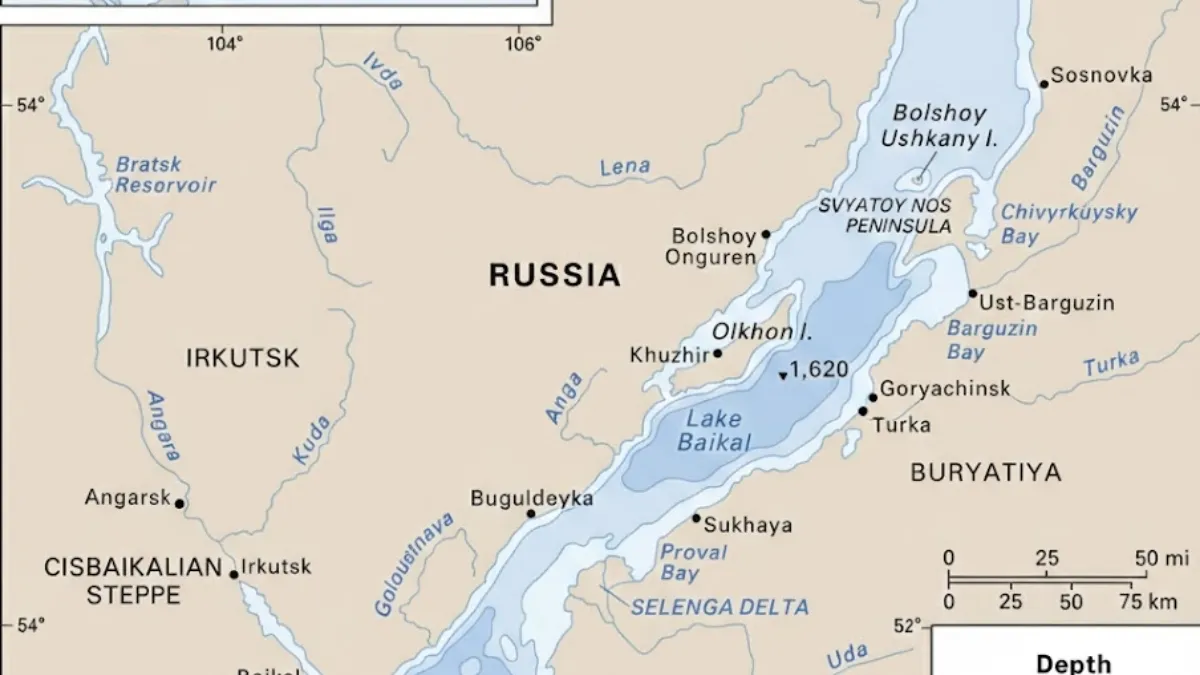
Lake Baikal is the world’s oldest and deepest freshwater lake located in the Southern Siberian region of Russia, holding nearly 20% of the planet's unfrozen surface fresh water. It is renowned for its crystalline clarity and unique endemic wildlife like the Nerpa seal, serving as an irreplaceable "Galapagos of Russia." Lake Baikal is also a UNESCO World Heritage site, offering a profound glimpse into Earth's geological and biological evolution.
Lake Baikal is also known as the Pearl of Siberia and often called the "Galapagos of Russia," its isolation and age have created a biological treasure trove that remains one of the most significant sites on Earth for both scientists and travelers alike.
Where is Lake Baikal Located?
Lake Baikal sits in a massive rift valley where the Earth’s crust is slowly pulling apart. It is located in the southern part of Eastern Siberia near the Mongolian border. The lake is surrounded by the Baikal Mountains and dense Taiga forests, making it one of the most remote yet breathtakingly beautiful destinations in the world.
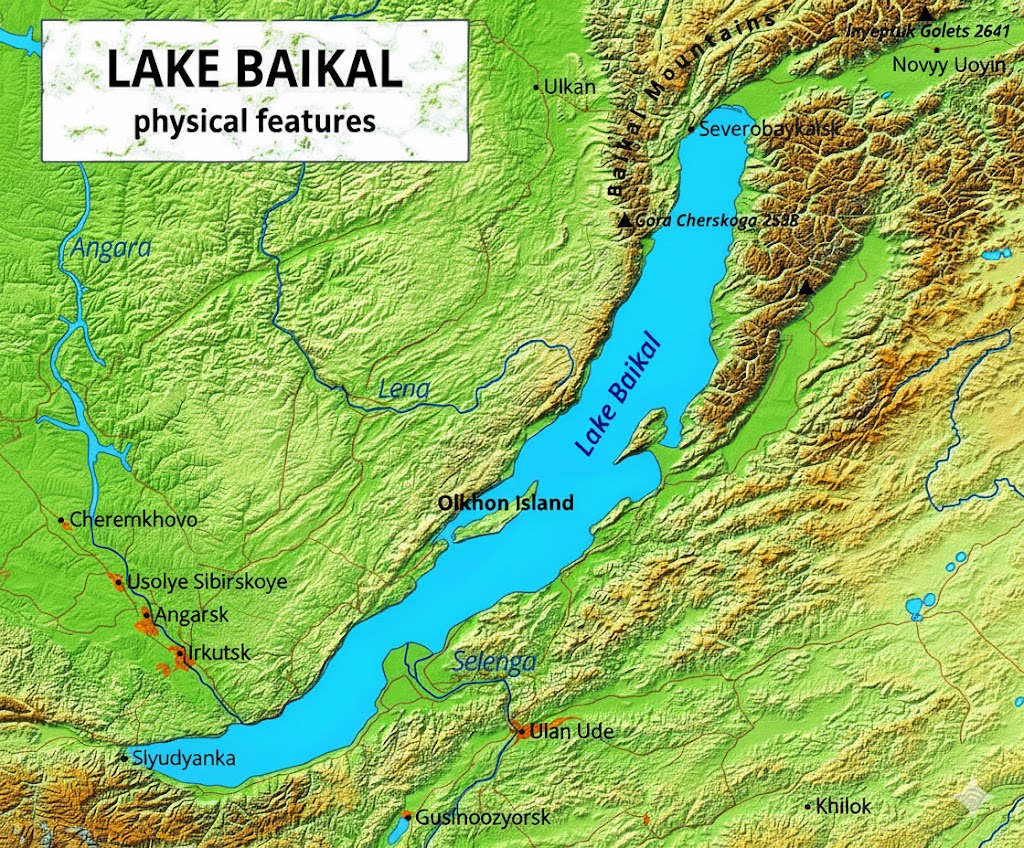
Source: Lake Baikal AI Generated Image
Key Features of the Lake Baikal
| Feature | Explanation |
| Location | Southern Siberia, Russia (between Irkutsk Oblast and Buryat Republic) |
| Maximum Depth | 1,642 meters (5,387 feet) |
| Average Depth | 744 meters (2,442 feet) |
| Length | 636 kilometers (395 miles) |
| Maximum Width | 79 kilometers (49 miles) |
| Surface Area | 31,722 square kilometers (12,248 square miles) |
| Volume | 23,615 cubic kilometers (approx. 20% of Earth's fresh surface water) |
Why is Lake Baikal so Deep?
Lake Baikal is a rift lake and its rift zone is active which means the lake is getting wider and deeper by about 2 centimeters every year that's why Baikal holds the title of the deepest lake in the world due to its geology. It is so deep and the water is so clear, its depth up to 40 meters (130 feet) below the surface during the spring, a clarity rarely matched by any other freshwater body.
Important Facts About Lake Baikal
Ancient Waters: Baikal is estimated to be 25 to 30 million years old, making it the oldest lake in geological history.
The World’s Freshwater Tank: It contains more water than all five of the North American Great Lakes combined. If the world were to run out of water, Baikal could theoretically sustain the entire human population for decades.
Unique Biodiversity: Over 80% of the animals found here are endemic, meaning they exist nowhere else on the planet, including the famous Nerpa, the world’s only exclusively freshwater seal.
The Baikal Zen: In winter, the lake freezes so thick that cars can drive across it. You might see "Baikal Zen"stones balanced on thin "legs" of ice, formed when the sun melts the surrounding ice but the stone's shadow protects the ice directly beneath it.
Significance of Lake Baikal:
-
Its massive water volume creates a unique "microclimate," making the immediate surrounding areas cooler in summer and milder in winter compared to the harsh Siberian interior.
-
Often called the "Galapagos of Russia," its 25-million-year isolation has allowed for the evolution of over 1,500 endemic species, providing scientists with an unparalleled record of evolutionary history.
-
The Angara River, the lake's only outlet, powers a massive chain of hydroelectric stations like the Irkutsk Dam, providing some of the cheapest electricity in Russia.
-
Lake Baikal is also Known as the "Blue Eye of Siberia," the lake attracts millions of visitors annually. This has spurred a "Green Economy," shifting local focus from heavy industry like the now-closed pulp and paper mills to sustainable eco-tourism.
-
The Omul, a delicious endemic whitefish, is a staple of the local economy and a world-renowned delicacy, supporting thousands of local fishing families.
-
The indigenous Buryats, an ethnic Mongol group, have revered the lake for millennia as the "Sacred Sea'' believe the lake is home to powerful spirits, and many sacred sites, such as Shaman Rock on Olkhon Island, remain active centers for shamanic rituals.
-
Baikal is a symbol of national pride for Russians and a focal point for the country’s environmental movement. It was the site of the first major environmental protests in the Soviet Union, leading to the creation of Russia's first nature reserves.
-
Every year, the community celebrates the "crystal season" when the lake freezes. Activities like ice marathons, golf on ice, and traditional festivals turn the frozen surface into a temporary socio-cultural hub.

Manisha Waldia is a distinguished content strategist with 5 years of experience crafting premium educational content for UPSC and State PCS, with a focus on deep conceptual analysis across Polity, Geography, History, and Environment. She currently brings this expertise to Jagran Josh, where she covers major national and international events, current affairs, and static general knowledge. Over her career, Manisha's specialized insights have led her to curate high-impact materials and serve as a UPSC Mains answer-evaluator for India’s top institutes—including Drishti IAS, Shubhra Ranjan IAS, Study IQ, GS Score, and PWonlyIAS. She has also worked alongside leading NGOs like Oxfam India and Avani Kumaon.
Contact: manisha.waldia@jagrannewmedia.com