World’s Largest Whale Graveyard Discovered in Indian Ocean Abyss, Tracking 5-Million-Year History
An international research team has uncovered the world's largest whale graveyard deep inside the Indian Ocean's Diamantina Fracture Zone. Spanning nearly 1,200 kilometres, this ancient underwater necropolis preserves close to 500 cetacean remains, charting over 5 million years of marine evolution.
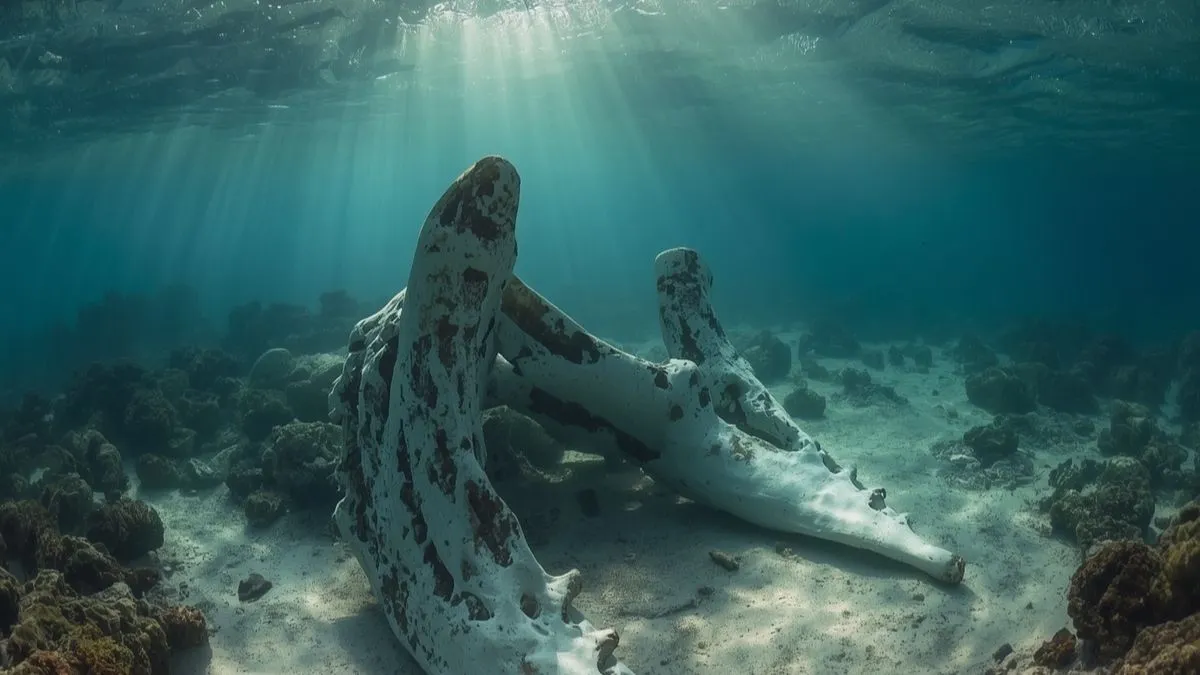
In a groundbreaking maritime discovery, scientists have mapped the world’s largest whale graveyard ever recorded, a finding that is reshaping global oceanography. This huge underwater necropolis is situated in the Diamantina Fracture Zone, almost 7,000 metres beneath the surface in the southeastern corridor of the Indian Ocean.
This abyssal cemetery is the planet’s deepest and oldest graveyard for marine mammals, with over 485 fossil sites preserved, according to a landmark study published in the journal Nature. An international expedition led by the Chinese Academy of Sciences and operating the advanced Fendouzhe crewed submersible has recovered pristine prehistoric samples, revealing a hidden timeline of planetary history that has been undisturbed for millions of years.
What Makes the Diamantina Fracture Zone the Largest Whale Graveyard?
The sheer scale of the newly mapped underwater cemetery dwarfs any previous marine discovery. Extending across a 1,200-kilometre corridor of international waters west of Australia, the site is a massive rift valley formed nearly 50 million years ago when the Australian continent separated from Antarctica.
Scientists suggest that a combination of ancient migration superhighways and unique underwater topography turned this deep-sea trench into a natural repository. The steep, V-shaped topography acts as a giant funnel, gathering carcasses that sink from upper ocean currents.
Due to the extreme depths where oxygen is scarce, and sediment accumulates at a remarkably slow rate, these massive cetacean bones managed to fossilize instead of dissolving entirely.
Key Structural Facts of the Oldest Whale Graveyard
-
Total Length: Approximately 1,200 kilometres (745 miles).
-
Maximum Depth: Over 7,000 metres (4.35 miles) beneath the sea surface.
-
Estimated Mass: Scientists extrapolate that over 10 million carcasses lie across the broader region, accounting for 6.7 million tonnes of sequestered carbon.
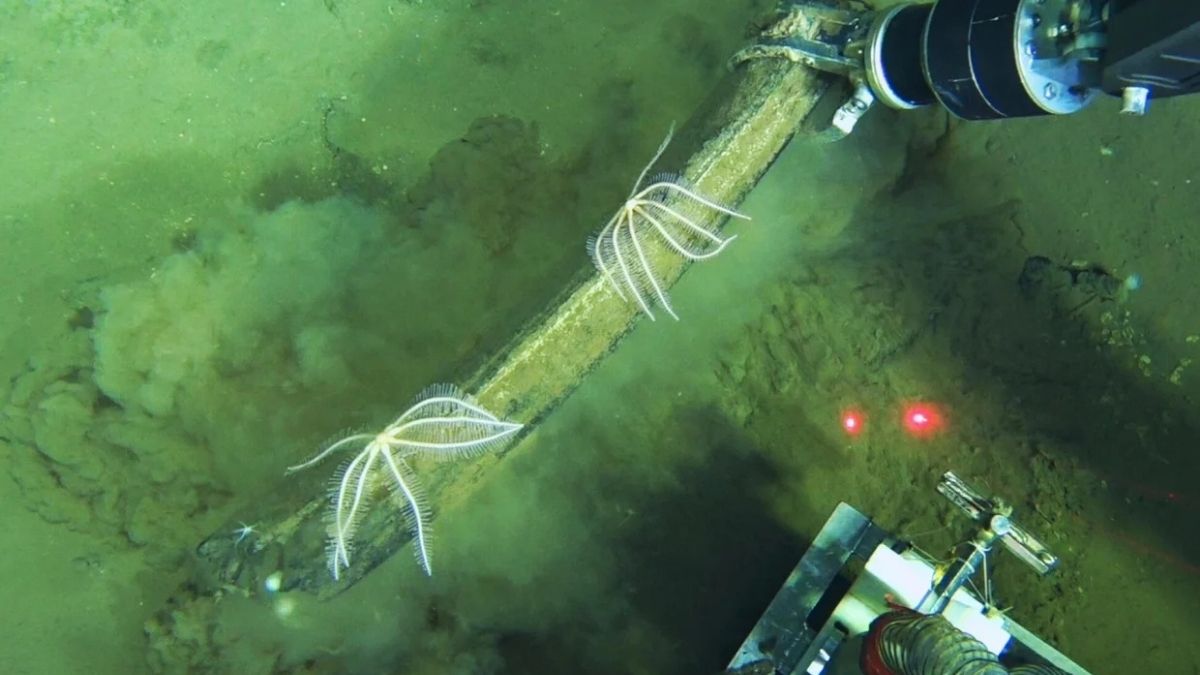
This undated photo from Peng Zhou depicts a Chinese submersible retrieving fossilized whale bones from the Diamantina Fracture Zone's deep seafloor in the southeast Indian Ocean. (Image Credit: CBC News)
How Old is Earth's Deepest and Oldest Graveyard?
To pinpoint the chronological timeline of this abyssal sanctuary, researchers extracted 33 distinct fossil samples using robotic arms. Chemical element testing revealed that the skeletons span an evolutionary window ranging from 120,000 years to an astonishing 5.3 million years old.
The whale graveyard discovery in the Indian Ocean is being hailed as the marine equivalent of the famous La Brea Tar Pits in Los Angeles, capturing millions of years of evolutionary shifts in a single geographic zone. While modern baleen remains, such as a 16-foot Antarctic minke whale, were logged, the vast majority of the skeletons belong to prehistoric beaked whales.
Most notably, researchers discovered a completely new, extinct species of beaked whale, officially named Pterocetus diamantinae, named directly after the fracture zone where it rested.
| Whale Species Identified | Evolutionary Era | Structural Status |
| Pterocetus diamantinae | ~5.3 Million Years Ago | Extinct New Species; Fossilized |
| Pterocetus benguelae | ~5 Million Years Ago | Extinct Beaked Whale; Fossilized |
| Andrews' Beaked Whale | Modern Era | Extant Species; Bone Scraps |
| Antarctic Minke Whale | Recent Decades | Extant Species; Active Whale Fall |
What is a Whale Fall and How Does it Support Abyssal Life?
When a whale perishes, its massive body sinks to the barren ocean floor, creating a phenomenon known as a whale fall. In the pitch-black depths of the ocean abyss, these fallen titans serve as biological oases. The soft tissues and nutrient-dense lipids provide an immense pulse of energy, sustaining highly complex ecosystems for decades.
During 32 deep-sea dives, researchers documented five active whale falls in their later stages of decomposition. The exposed bones were teeming with life, hosting 35 different types of deep-sea organisms. Scavengers like bone-eating worms, squat lobsters, spoon worms, brittle stars, and specialized deep-sea clams were observed thriving on the carcasses. Crucially, marine biologists report that several of these captured organisms do not fit into any known animal classifications, hinting at a treasure trove of species entirely new to science.
The discovery of the largest and oldest whale graveyard, in the depths of the Indian Ocean, offers a new window into prehistoric marine life and how carbon sequestration worked. As submersibles map future return journeys to this dark corridor, the vast necropolis serves as a definitive reminder of how little we know about our planet’s deep oceans.

Harshita Singh is an education and general knowledge journalist with over 5 years of experience in educational writing. Specializing in US affairs and GK, Harshita has a track record of breaking down intricate geopolitical and historical subjects into clear, digestible insights for learners. Her strong background in text analysis, coupled with a Bachelor of Arts (Hons) in English from the University of Delhi, helps her produce authoritative, thoroughly researched content that empowers readers to engage confidently with global current affairs. For inquiries or academic insights, you can reach out to her directly at harshita.singh@jagrannewmedia.com.