10 Bird Species With Longest Beaks In The World (With Pictures)
Meet the incredible coastal bird that holds the record for the world's longest bill, stretching up to 50 cm. Using its massive beak and stretchy pouch like a fishing net, it scoops up fish with ease. Let's discover the top 10 birds with astonishingly long beaks in the world.

Birds are present everywhere. You can find them on any continent, from Antarctica to South America. There are around 11,100 to 11,200 living bird species in the world. Here's an interesting fact for you. You know that the beaks of the birds aren't just for eating. They come with many cool uses.
One such benefit is that these colourful beaks act as an amazing cooling system. It helps birds regulate their body temperature. Another plus is that a bird's beak shape varies with its diet. A flamingo's beak filters tiny shrimp from salty water while the bird is upside down. A colourful crossbill has a twisted and overlapping beak. It is great for prying open tight pinecones.
But here's a question for you: Do you know which bird has the longest beak in the world? And how do their beaks help them in their everyday lives? Is the beak narrow or broad? Is the beak monotonous or colourful? Let's take a look.
List of 10 Birds With the Longest Beaks
Here's the list of the 10 birds with the longest beaks in the world:
| Bird | Picture | Scientific Name | Found In | Approx. Beak Size | How It Helps in Daily Life |
| Australian Pelican |  | Pelecanus conspicillatus | Wetlands & Coasts, Australia, Oceania |
| Acts as a huge fishing net. Its stretchy throat pouch scoops up fish and drains out up to 13 litres of water before swallowing. |
| Great White Pelican |  | Pelecanus onocrotalus | Swamps & Lakes, Africa, Greece, India; Africa & Asia |
| Used for cooperative feeding. Groups form lines to corral fish into shallow water and scoop them up at the same time. |
| Dalmatian Pelican | 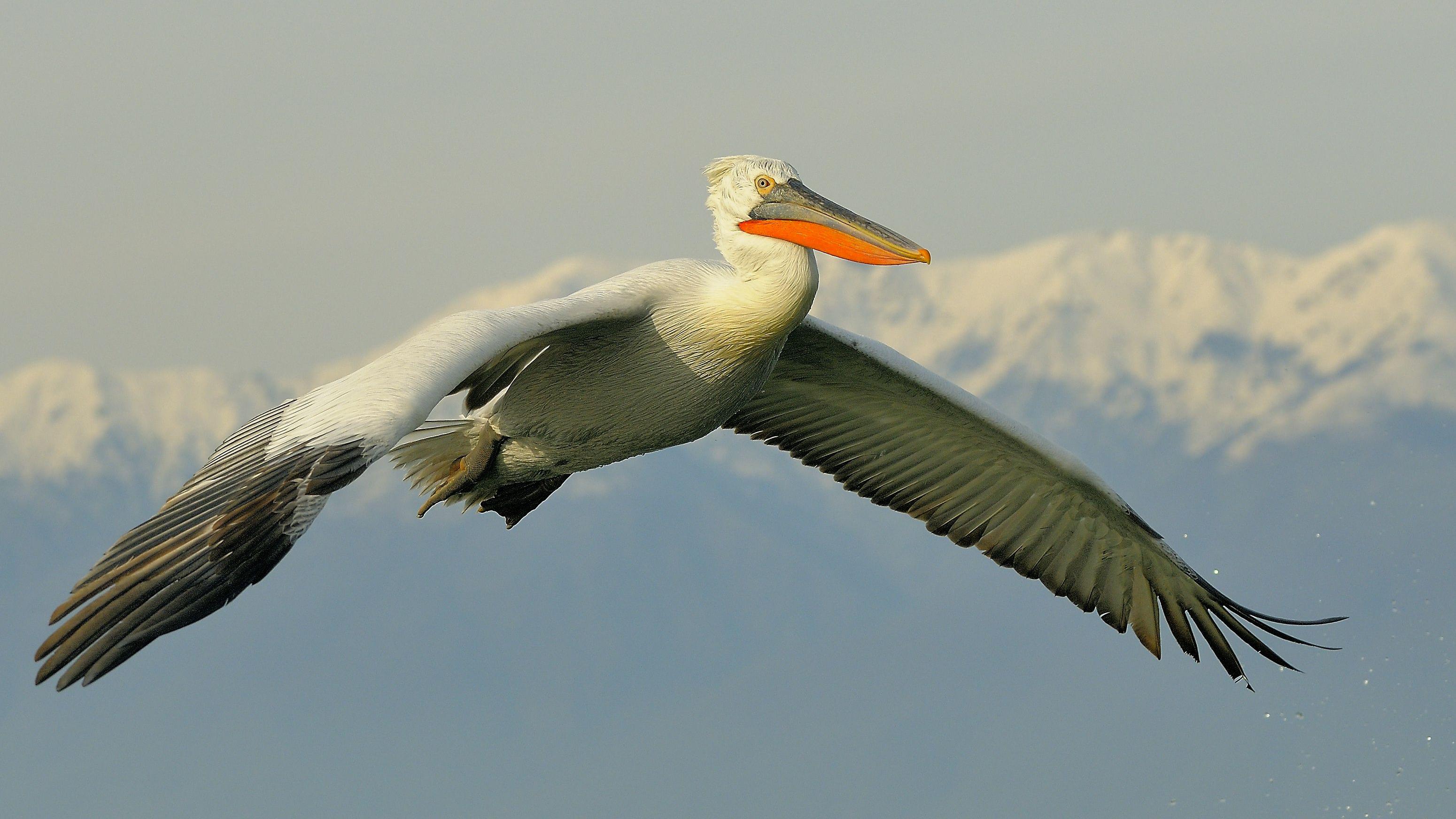 | Pelecanus crispus | Lakes & Deltas, Russia, Greece, China; Europe & Asia |
| Catches and holds large fish weighing over 1 kg. It helps the heavy bird scoop prey while swimming. |
| Saddle-Billed Stork |  | Ephippiorhynchus senegalensis | Floodplains & Marshes, Kenya, South Africa, Africa |
| It functions like a heavy spear. The bird plunges blindly into muddy waters to stab large fish, frogs, and crabs. |
| Marabou Stork |  | Leptoptilos crumenifer | Savannas & Garbage Dumps, Uganda & Kenya, Africa |
| This huge, bone-crushing beak tears apart large animal carcasses. It also helps scare off vultures and swallow big pieces of meat. |
| Jabiru |  | Jabiru mycteria | Pantanal Wetlands, Brazil, Mexico, Argentina. South America |
| A slightly upturned, powerful bill used for tactile foraging. It snaps shut instantly upon touching fish or baby caimans in murky water. |
| Shoebill |  | Balaeniceps rex | Papyrus Swamps, South Sudan and Zambia, Africa |
| Shaped like a heavy clog with a sharp, hooked nail at the tip. It decapitates lungfish, snakes, and baby crocodiles. |
| Southern Ground Hornbill |  | Bucorvus leadbeateri | Open Savannas & Woodlands, South Africa, Africa |
| It works like a heavy pickaxe. It digs into dry soil for insects, smashes venomous snakes, and cracks open small tortoises. |
| Toco Toucan | 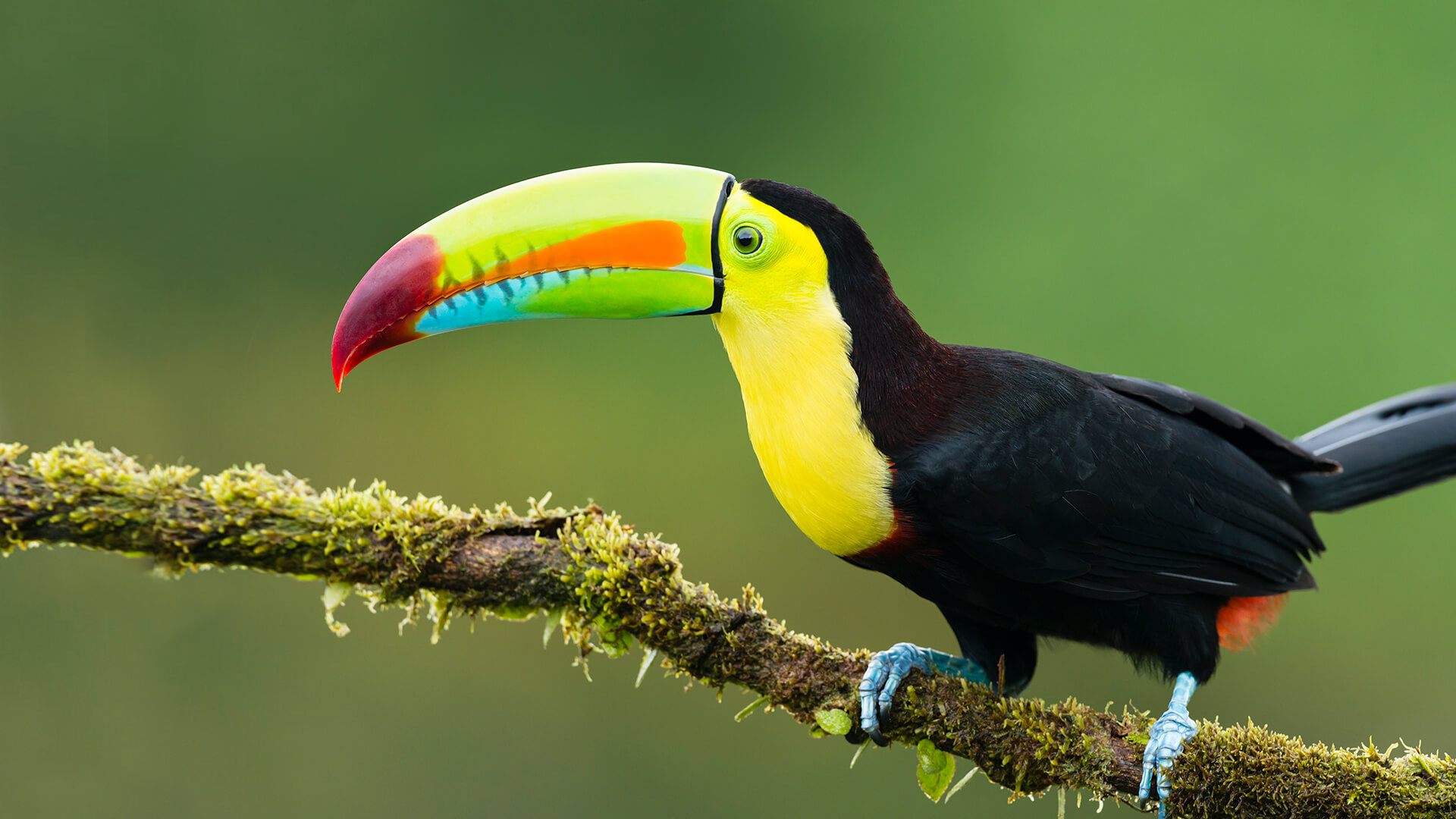 | Ramphastos toco | Canopy & Semi-open forests, Brazil, Argentina, South America |
| Acts as an air conditioner. It has blood vessels that radiate body heat to cool the bird down. It also helps pluck deep-hanging fruit. |
| Sword-Billed Hummingbird |  | Ensifera ensifera | Cloud Forests: Colombia, Ecuador, Peru; South America |
| Longest bill relative to body size (longer than its body!). It allows the bird to sip nectar from deep, tube-shaped flowers that other birds can't reach. |
Birds are the most important part of nature. We all know that these flying creatures evolved from dinosaurs. Because of the birds, we know that dinosaurs existed and that life thrived in the past.
According to the IUCN Red List of Threatened Species, about 13% of all bird species are at risk of extinction. Many birds, such as the Kākāpō, Yellow-Crested Cockatoo, Black-Browed Albatross, Maui Parrotbill (Kiwikiu), Bahama Nuthatch, and California Condor, among others, are listed as Critically Endangered and Endangered.
You know the real reason why these beautiful and innocent animals have come to this point? All because of human greed. You know many intelligent birds, such as parrots and cockatoos, are often poached in large numbers? Why? Just to be sold for millions of dollars to become a decorative piece for someone's house.
Another reason is the most common of all. Habitat loss. Deforestation. Why? For the growth of cities and for humans to become richer and technologically advanced. With fewer or no trees, birds are unable to build nests, which results in them laying eggs on someone's balcony, where they are smashed by children or become prey for predators.
However, various programmes, such as captive breeding programmes for endangered species, have helped in reducing the rate of bird extinction. After the count is maintained, these birds are then reintroduced into the wild.

Kriti Barua is a skilled digital journalist and communications professional with 4+ years of experience, currently writing for the General Knowledge section at Jagran New Media. She has established herself as a subject matter expert in History, Geography, Trending National and International News, Sports, Science, and Defence, producing clear, reliable, and search-optimised content that connects with readers worldwide.
Kriti holds a BA degree from Delhi University and a one-year diploma in TV Production and Journalism, an academic background that adds research depth and strong storytelling instincts to her writing. Her experience spans brand writing, content marketing, and digital media, giving her a sharp understanding of what makes content both helpful to readers and visible in search.
At Jagran New Media, she applies this expertise to national and international news coverage, query-based articles, and in-depth pieces across her specialist subject areas. Her content is defined by easy language, factual accuracy, strong keyword strategy, and reader-friendly storytelling.